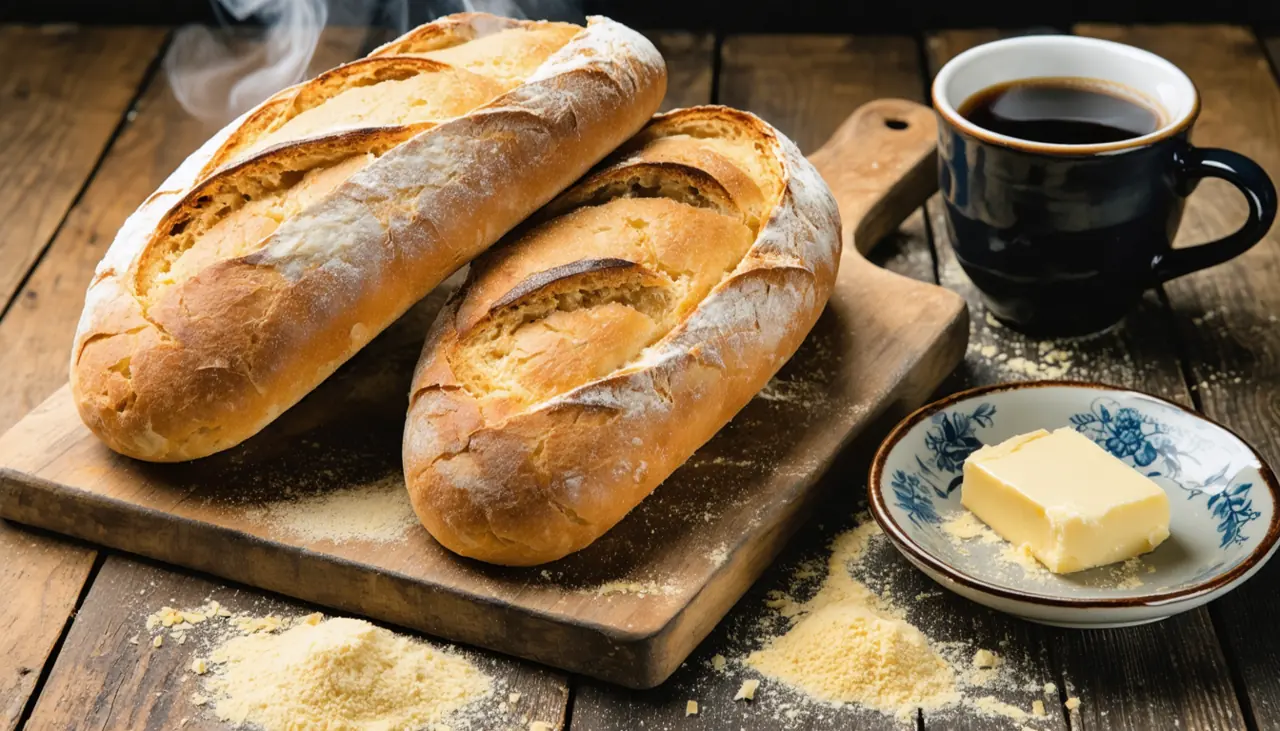
Pain à l'eau portoricain
Pain croustillant et légèrement sucré, à la mie moelleuse, pilier quotidien des boulangeries portoricaines.
Portions
Ingrédients
Nutrition
Par portion
Étapes

Bloom the yeast
In a large bowl, stir the lukewarm water with the sugar and yeast. Let it stand undisturbed for 10 minutes until the surface looks foamy and smells yeasty — this tells you the yeast is alive and the bread will rise.
- 350 ml lukewarm water
- 30 g sugar
- 7 g active dry yeast
✅ C'est prêt quand : the surface is foamy with small bubbles

Mix and knead the dough
Add the flour, salt and softened shortening to the yeast mixture. Mix until it comes together, then knead on a lightly floured surface for about 10 minutes, until the dough is smooth, elastic and no longer sticky. It passes the windowpane test when it stretches thin without tearing.
- 600 g flour
- 12 g salt
- 20 g shortening
✅ C'est prêt quand : the dough is smooth, elastic and springs back when poked
First rise
This step is part of Foodie Premium. Subscribe to unlock the full method, cooking mode and every recipe in the library.
Shape the loaves
This step is part of Foodie Premium. Subscribe to unlock the full method, cooking mode and every recipe in the library.
Second rise
This step is part of Foodie Premium. Subscribe to unlock the full method, cooking mode and every recipe in the library.
Score and bake with steam
This step is part of Foodie Premium. Subscribe to unlock the full method, cooking mode and every recipe in the library.
Cool before slicing
This step is part of Foodie Premium. Subscribe to unlock the full method, cooking mode and every recipe in the library.
Bloom the yeast
In a large bowl, stir the lukewarm water with the sugar and yeast. Let it stand undisturbed for 10 minutes until the surface looks foamy and smells yeasty — this tells you the yeast is alive and the bread will rise.
- 350 ml lukewarm water
- 30 g sugar
- 7 g active dry yeast
✅ C'est prêt quand : the surface is foamy with small bubbles
Mix and knead the dough
Add the flour, salt and softened shortening to the yeast mixture. Mix until it comes together, then knead on a lightly floured surface for about 10 minutes, until the dough is smooth, elastic and no longer sticky. It passes the windowpane test when it stretches thin without tearing.
- 600 g flour
- 12 g salt
- 20 g shortening
✅ C'est prêt quand : the dough is smooth, elastic and springs back when poked
First rise
This step is part of Foodie Premium. Subscribe to unlock the full method, cooking mode and every recipe in the library.
Shape the loaves
This step is part of Foodie Premium. Subscribe to unlock the full method, cooking mode and every recipe in the library.
Second rise
This step is part of Foodie Premium. Subscribe to unlock the full method, cooking mode and every recipe in the library.
Score and bake with steam
This step is part of Foodie Premium. Subscribe to unlock the full method, cooking mode and every recipe in the library.
Cool before slicing
This step is part of Foodie Premium. Subscribe to unlock the full method, cooking mode and every recipe in the library.
The Story Behind the Dish
Pan de agua traces back to the plain, lean breads Spanish colonizers baked across the Caribbean, made with little more than flour, water, yeast and salt — hence the name. Over generations, Puerto Rican bakers settled on the slightly sweeter, softer version known today, shaped into long tapered loaves reminiscent of French bread brought by later immigration.
Every panadería on the island bakes it fresh each morning, and it remains the loaf most Puerto Rican families reach for at breakfast, split and buttered or dunked in café con leche.
⭐ Why It's Famous
Its contrast of a thin, crackling crust against a soft, pillowy crumb makes it endlessly versatile — equally at home holding mallorca-style eggs, soaking up oil and vinegar, or simply spread with butter.
💡 Fun Fact
The name 'water bread' comes from its simplicity: unlike richer egg breads, it relies on water rather than milk or eggs for its dough, which is part of why the crust turns so crisp in the oven.
Puerto Rico, island-wide
18.47°N, -66.11°W
Recettes similaires
Comments (0)
No comments yet. Be the first to share your thoughts!