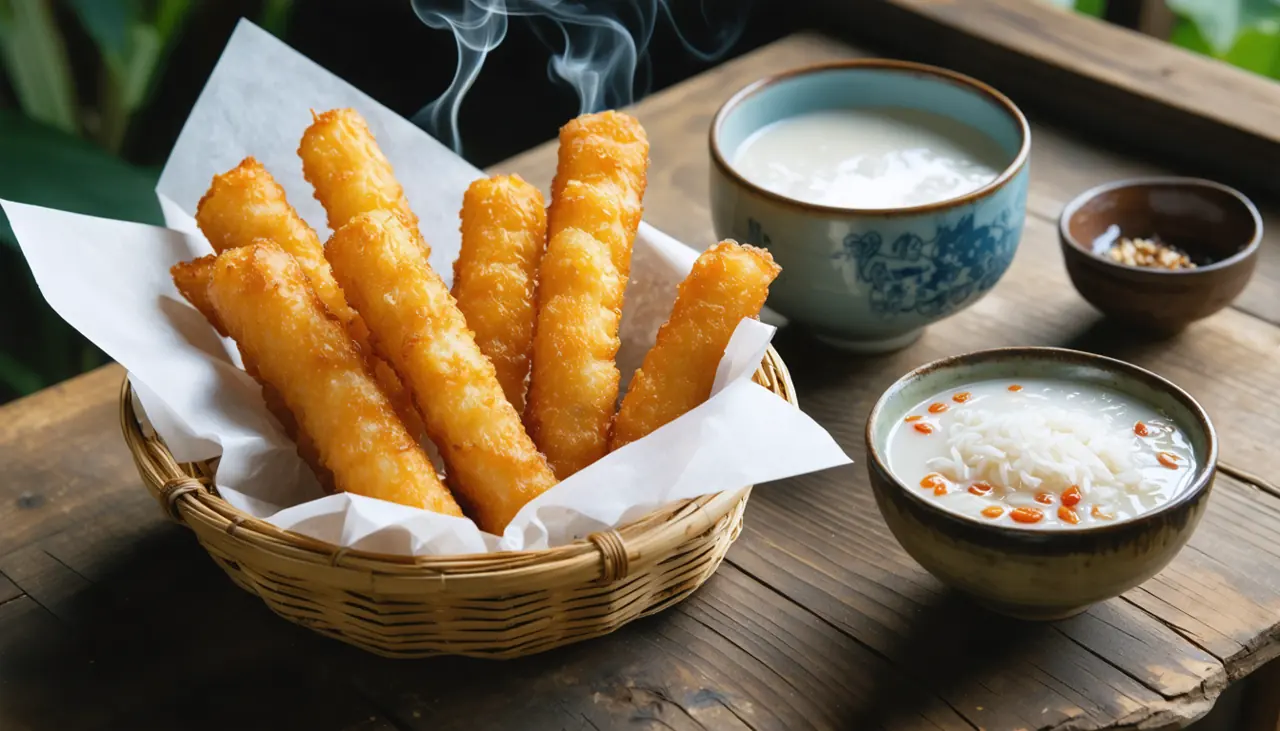
Bâtonnets de pâte frits (Youtiao)
Bâtonnets de pâte frits, légers et creux à l'intérieur, croustillants à l'extérieur, trempés dans du lait de soja chaud ou du congee.
Portions
Ingrédients
Nutrition
Par portion
Étapes
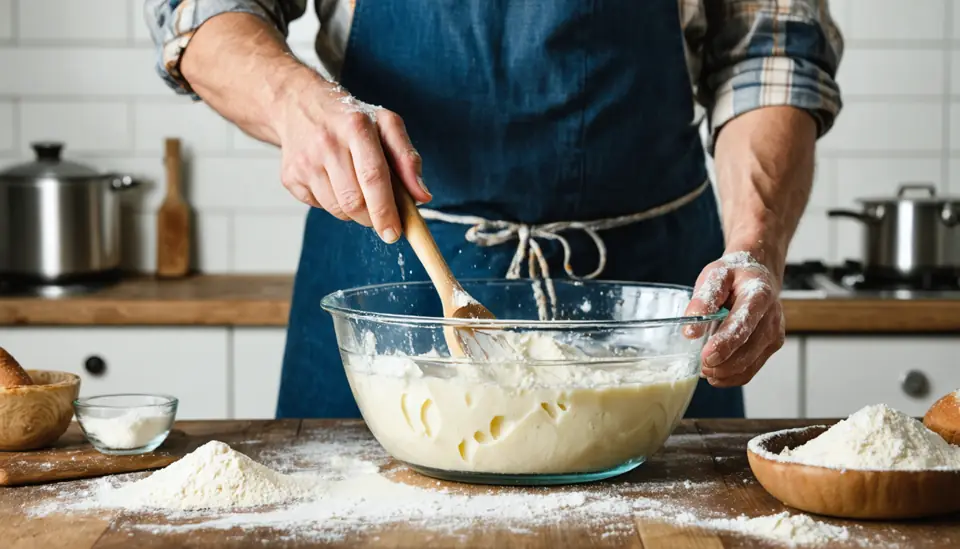
Mix the dough
In a bowl, whisk together the flour, salt, baking powder and baking soda. Add the water and oil and mix with a spoon, then your hands, until you get a rough, slightly sticky dough. Knead gently for 3–4 minutes just until smooth; do not overwork it.
- 400 g flour
- 1 tsp salt
- 1 tsp baking powder
- 1/2 tsp baking soda
- 240 ml water
- 2 tbsp oil
✅ C'est prêt quand : the dough is smooth, soft and only slightly tacky, not stiff
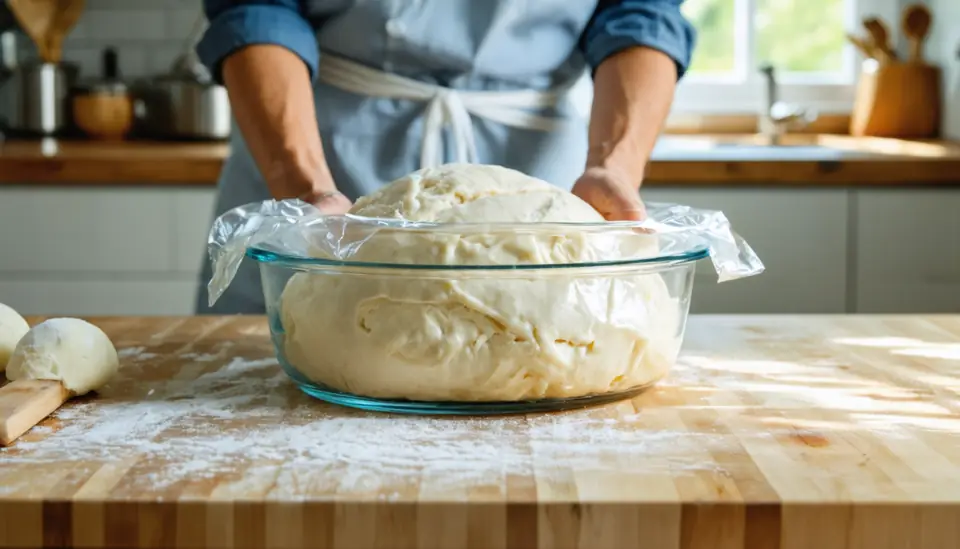
Rest the dough
Rub a little oil over the surface of the dough, cover the bowl tightly with plastic wrap so it cannot dry out, and let it rest at room temperature for about 1.5 hours (or in the fridge overnight for an even lighter texture). This long, undisturbed rest relaxes the gluten and is the real secret to a tender, airy youtiao — do not skip it or knead again afterwards.
- dough from step 1 rested dough
✅ C'est prêt quand : the dough looks slightly puffed, soft and jiggly when the bowl is shaken
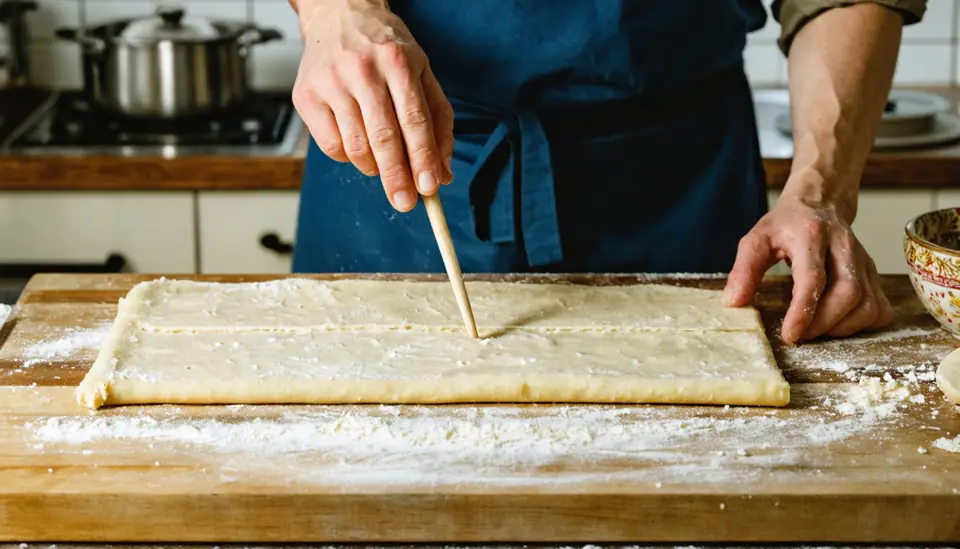
Shape the sticks
Lightly oil the counter and your hands (no extra flour, which would toughen the dough). Press and stretch the dough gently with your fingers into a rectangle about 20 x 15 cm and 1 cm thick — do not use a rolling pin, which deflates the air pockets. Cut into strips about 1.5 cm wide, stack two strips on top of each other, and press a chopstick firmly down the length of the pair to seal them together; this seam is what makes each youtiao puff open into two joined layers.
✅ C'est prêt quand : you have pairs of stacked strips, each pressed down the middle and ready to stretch
Heat the oil
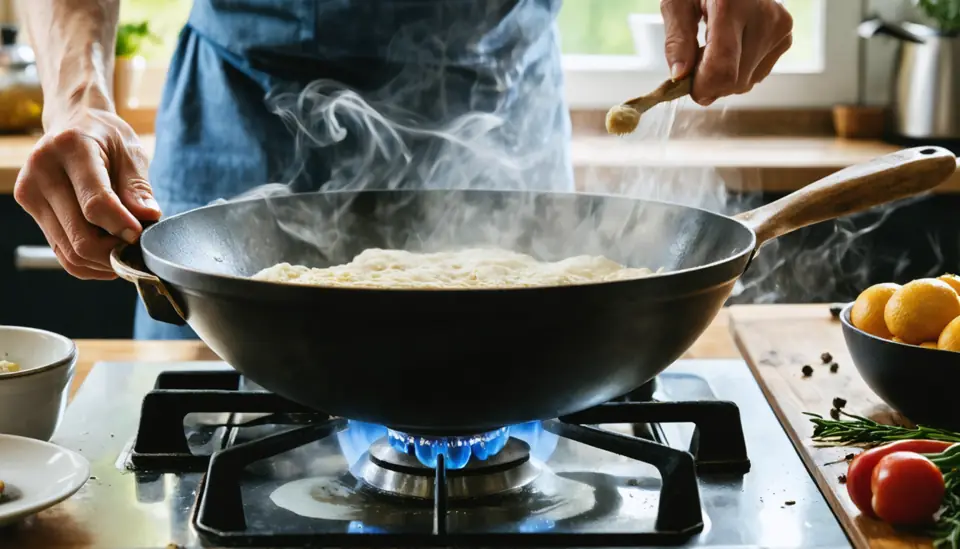
Pour the deep-frying oil into a wok or deep heavy pot, at least 5 cm deep, and heat to 190°C (375°F). Test by dropping in a small scrap of dough: it should sink briefly, then rise and puff within a few seconds. If it browns instantly, the oil is too hot; lower the heat slightly.
- 1 litre oil
✅ C'est prêt quand : a test piece of dough floats and puffs within a few seconds without burning
Fry until puffed
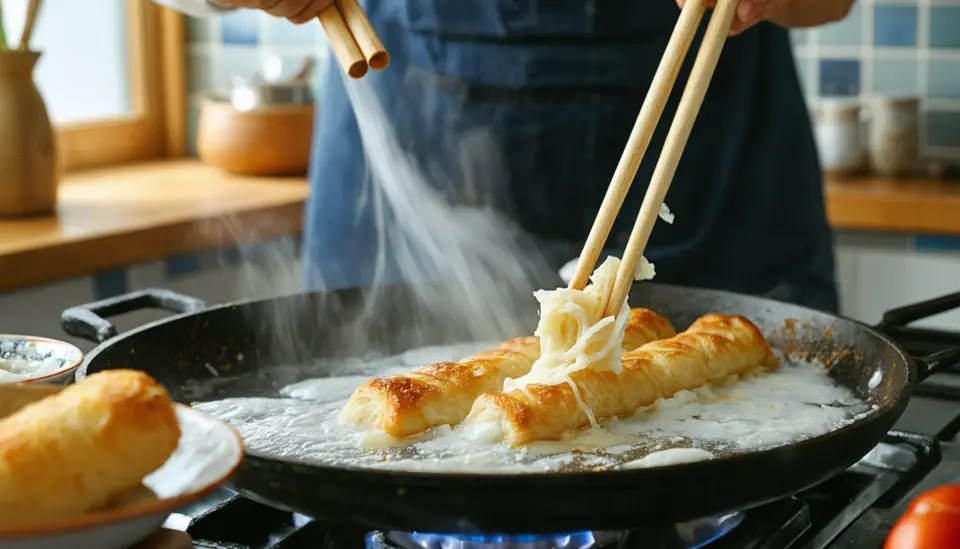
Pick up one sealed pair, stretch it gently lengthwise to about 20 cm, and lower it into the hot oil. As soon as it hits the oil, use chopsticks to roll and flip it constantly for the first 10–15 seconds so it puffs evenly on all sides instead of just one. Fry for about 1.5–2 minutes total, turning several times, until deep golden and crisp all over; break one open to check it is hollow and cooked through, not doughy in the centre. Drain on a rack and repeat with the rest.
✅ C'est prêt quand : each stick is deep golden, crisp, and hollow and light inside when broken
Serve hot
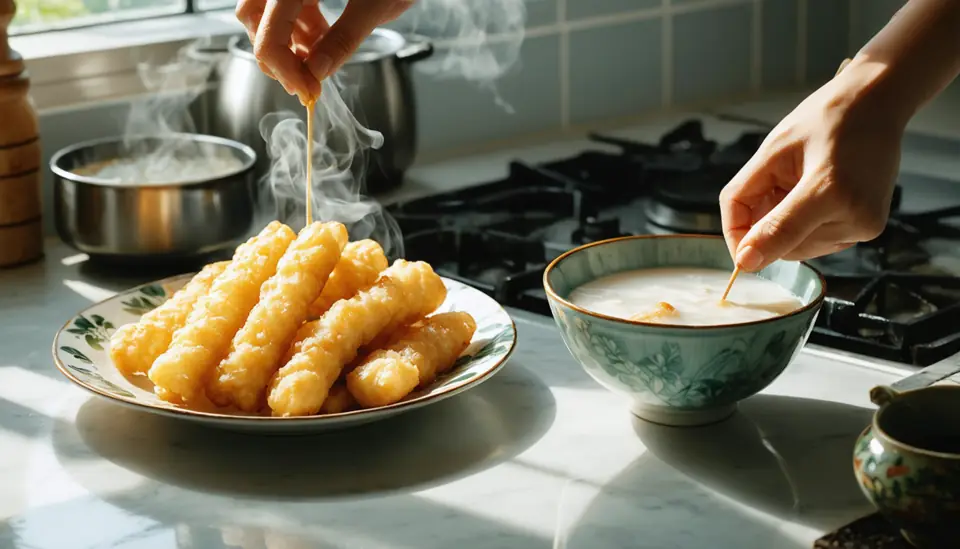
Serve the youtiao as soon as possible after frying, while still warm and crisp, with warm soy milk or rice congee for dipping. They lose their lightness within a few hours, so this is one dish best made and eaten the same morning.
- to serve soy milk or rice congee
Mix the dough
In a bowl, whisk together the flour, salt, baking powder and baking soda. Add the water and oil and mix with a spoon, then your hands, until you get a rough, slightly sticky dough. Knead gently for 3–4 minutes just until smooth; do not overwork it.
- 400 g flour
- 1 tsp salt
- 1 tsp baking powder
- 1/2 tsp baking soda
- 240 ml water
- 2 tbsp oil
✅ C'est prêt quand : the dough is smooth, soft and only slightly tacky, not stiff
Rest the dough
Rub a little oil over the surface of the dough, cover the bowl tightly with plastic wrap so it cannot dry out, and let it rest at room temperature for about 1.5 hours (or in the fridge overnight for an even lighter texture). This long, undisturbed rest relaxes the gluten and is the real secret to a tender, airy youtiao — do not skip it or knead again afterwards.
- dough from step 1 rested dough
✅ C'est prêt quand : the dough looks slightly puffed, soft and jiggly when the bowl is shaken
Shape the sticks
Lightly oil the counter and your hands (no extra flour, which would toughen the dough). Press and stretch the dough gently with your fingers into a rectangle about 20 x 15 cm and 1 cm thick — do not use a rolling pin, which deflates the air pockets. Cut into strips about 1.5 cm wide, stack two strips on top of each other, and press a chopstick firmly down the length of the pair to seal them together; this seam is what makes each youtiao puff open into two joined layers.
✅ C'est prêt quand : you have pairs of stacked strips, each pressed down the middle and ready to stretch
Heat the oil
Pour the deep-frying oil into a wok or deep heavy pot, at least 5 cm deep, and heat to 190°C (375°F). Test by dropping in a small scrap of dough: it should sink briefly, then rise and puff within a few seconds. If it browns instantly, the oil is too hot; lower the heat slightly.
- 1 litre oil
✅ C'est prêt quand : a test piece of dough floats and puffs within a few seconds without burning
Fry until puffed
Pick up one sealed pair, stretch it gently lengthwise to about 20 cm, and lower it into the hot oil. As soon as it hits the oil, use chopsticks to roll and flip it constantly for the first 10–15 seconds so it puffs evenly on all sides instead of just one. Fry for about 1.5–2 minutes total, turning several times, until deep golden and crisp all over; break one open to check it is hollow and cooked through, not doughy in the centre. Drain on a rack and repeat with the rest.
✅ C'est prêt quand : each stick is deep golden, crisp, and hollow and light inside when broken
Serve hot
Serve the youtiao as soon as possible after frying, while still warm and crisp, with warm soy milk or rice congee for dipping. They lose their lightness within a few hours, so this is one dish best made and eaten the same morning.
- to serve soy milk or rice congee
The Story Behind the Dish
Youtiao has been a staple Chinese breakfast food for generations, sold hot from street carts and small shops at dawn alongside soy milk, congee and sesame flatbreads. The dough traditionally gets its spectacular puff from alum and ammonium bicarbonate, though many home cooks and modern vendors now rely on baking powder and baking soda instead.
A well-loved folk story links the shape of youtiao — always fried as two strips pinched together — to an old legend of punishing a disgraced official from the Song dynasty, which gave the snack its popular nickname 'oil-fried demon.' Whether or not the tale is strictly historical, it has stuck in popular memory for centuries.
⭐ Why It's Famous
It is one of the most recognisable breakfast foods in China: crisp outside, hollow and airy inside, perfect for tearing and dipping into warm soy milk or rice porridge.
💡 Fun Fact
Street vendors judge the oil temperature purely by eye and sound, dropping in a scrap of dough and watching how fast it rises and sizzles before they start frying the real batch.
China, widespread especially in the Jiangnan region (around Shanghai, Jiangsu and Zhejiang)
30.27°N, 120.16°E
Recettes similaires
Comments (0)
No comments yet. Be the first to share your thoughts!