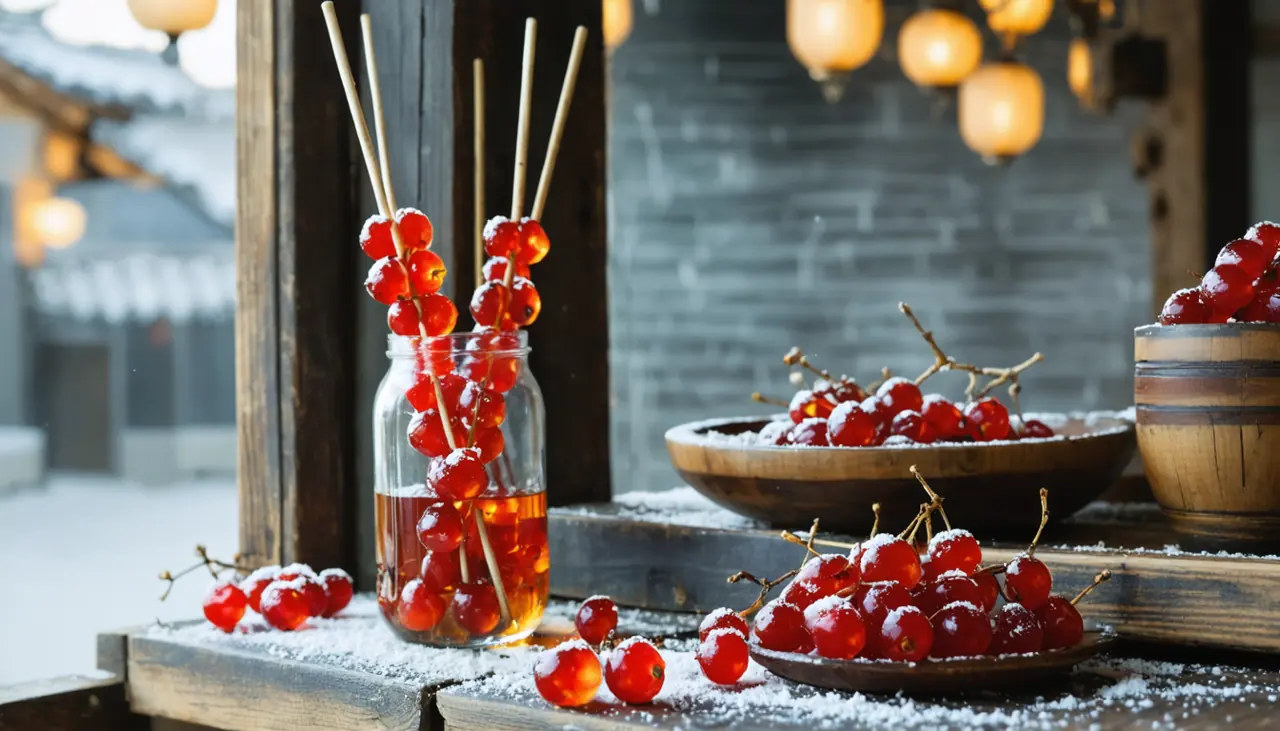
Brochettes d'aubépine caramélisées (Tanghulu)
Petites baies d'aubépine acidulées enrobées d'un caramel craquant et brillant, en-cas de rue hivernal du nord de la Chine.
Portions
Ingrédients
Nutrition
Par portion
Étapes
Prep and skewer the fruit
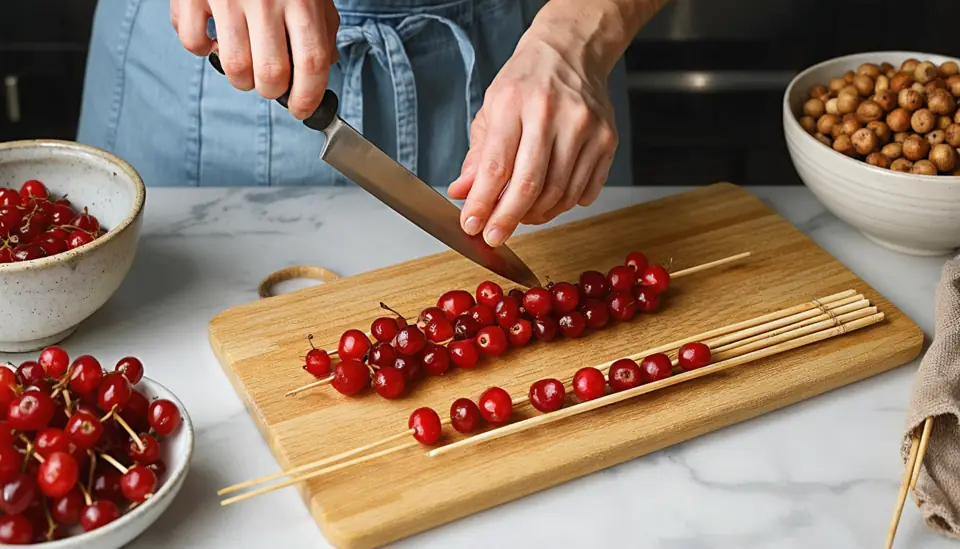
Wash the hawthorn berries and pat them completely dry with a towel — any surface moisture will make the sugar coating turn cloudy or seize later, so take your time here. Halve each berry and flick out the small hard pit with the tip of a knife or a chopstick, then thread 8–9 halves onto each skewer through the centre so they sit snugly together.
- 500 g hawthorn berries
- 10 bamboo skewers
✅ C'est prêt quand : all the fruit is pitted, bone-dry, and threaded onto skewers
Cook the sugar to hard-crack
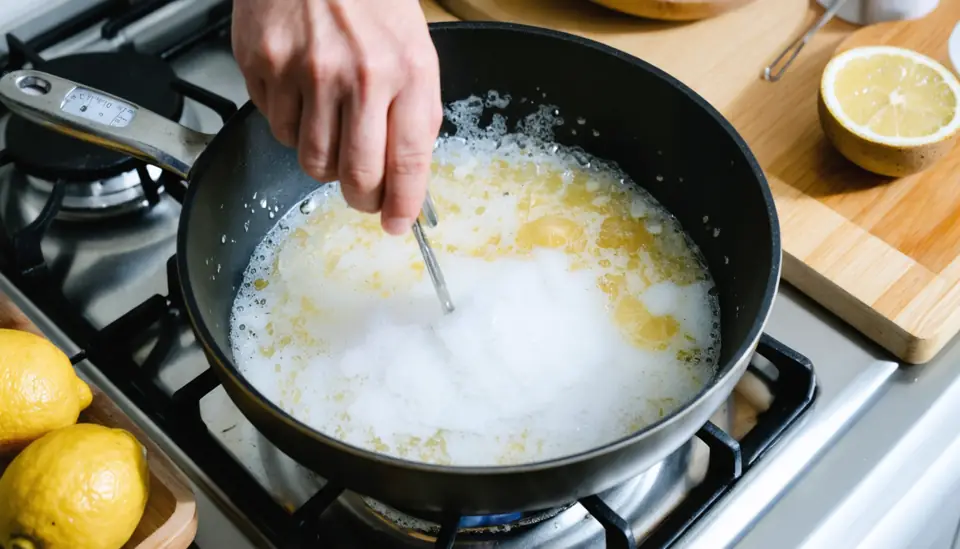
In a small, completely clean and dry heavy-bottomed saucepan, combine the sugar, water and corn syrup. Set over medium heat and bring to a boil without stirring — stirring now can make the sugar crystallise into a grainy, dull mess instead of glass. Once it boils, swirl the pan gently from time to time instead of stirring, add the lemon juice, and keep cooking until the syrup reaches 150–155°C (300–310°F) on a sugar thermometer, about 10–12 minutes.
- 300 g sugar
- 120 ml water
- 30 g corn syrup or maltose
- 1 tsp lemon juice or vinegar
✅ C'est prêt quand : a drop of syrup dripped into cold water hardens instantly into a brittle, snapping thread, and the syrup itself is pale gold, not brown
Dip the skewers
This step is part of Foodie Premium. Subscribe to unlock the full method, cooking mode and every recipe in the library.
Set until hard
This step is part of Foodie Premium. Subscribe to unlock the full method, cooking mode and every recipe in the library.
Serve fresh
This step is part of Foodie Premium. Subscribe to unlock the full method, cooking mode and every recipe in the library.
Prep and skewer the fruit
Wash the hawthorn berries and pat them completely dry with a towel — any surface moisture will make the sugar coating turn cloudy or seize later, so take your time here. Halve each berry and flick out the small hard pit with the tip of a knife or a chopstick, then thread 8–9 halves onto each skewer through the centre so they sit snugly together.
- 500 g hawthorn berries
- 10 bamboo skewers
✅ C'est prêt quand : all the fruit is pitted, bone-dry, and threaded onto skewers
Cook the sugar to hard-crack
In a small, completely clean and dry heavy-bottomed saucepan, combine the sugar, water and corn syrup. Set over medium heat and bring to a boil without stirring — stirring now can make the sugar crystallise into a grainy, dull mess instead of glass. Once it boils, swirl the pan gently from time to time instead of stirring, add the lemon juice, and keep cooking until the syrup reaches 150–155°C (300–310°F) on a sugar thermometer, about 10–12 minutes.
- 300 g sugar
- 120 ml water
- 30 g corn syrup or maltose
- 1 tsp lemon juice or vinegar
✅ C'est prêt quand : a drop of syrup dripped into cold water hardens instantly into a brittle, snapping thread, and the syrup itself is pale gold, not brown
Dip the skewers
This step is part of Foodie Premium. Subscribe to unlock the full method, cooking mode and every recipe in the library.
Set until hard
This step is part of Foodie Premium. Subscribe to unlock the full method, cooking mode and every recipe in the library.
Serve fresh
This step is part of Foodie Premium. Subscribe to unlock the full method, cooking mode and every recipe in the library.
The Story Behind the Dish
Legend places the dish's beginnings in the imperial court, where a physician treated a sick concubine by having her eat hawthorn berries simmered with rock sugar before meals — she recovered, and the remedy spread beyond the palace walls. Over time street vendors in Beijing began skewering the fruit and dipping it in hot sugar syrup instead of simmering it, creating the hard, glassy coating known today.
Tanghulu became a fixture of winter in northern China, sold from carts and stalls, often stuck upright in a straw bundle so vendors could carry dozens at once. It remains strongly associated with cold weather, since the sugar shell stays crisp and glassy in dry, chilly air.
⭐ Why It's Famous
The contrast between the brittle, almost glass-like sugar shell and the sharply tart fruit inside makes it one of China's most recognisable street snacks, instantly identified by its shine and its crackling bite.
💡 Fun Fact
While hawthorn is the classic and most traditional fruit, modern vendors make tanghulu with almost anything — strawberries, grapes, mandarin segments, even cherry tomatoes — though purists still consider hawthorn the only true version.
Beijing and northern China
39.90°N, 116.41°E
Recettes similaires
Comments (0)
No comments yet. Be the first to share your thoughts!