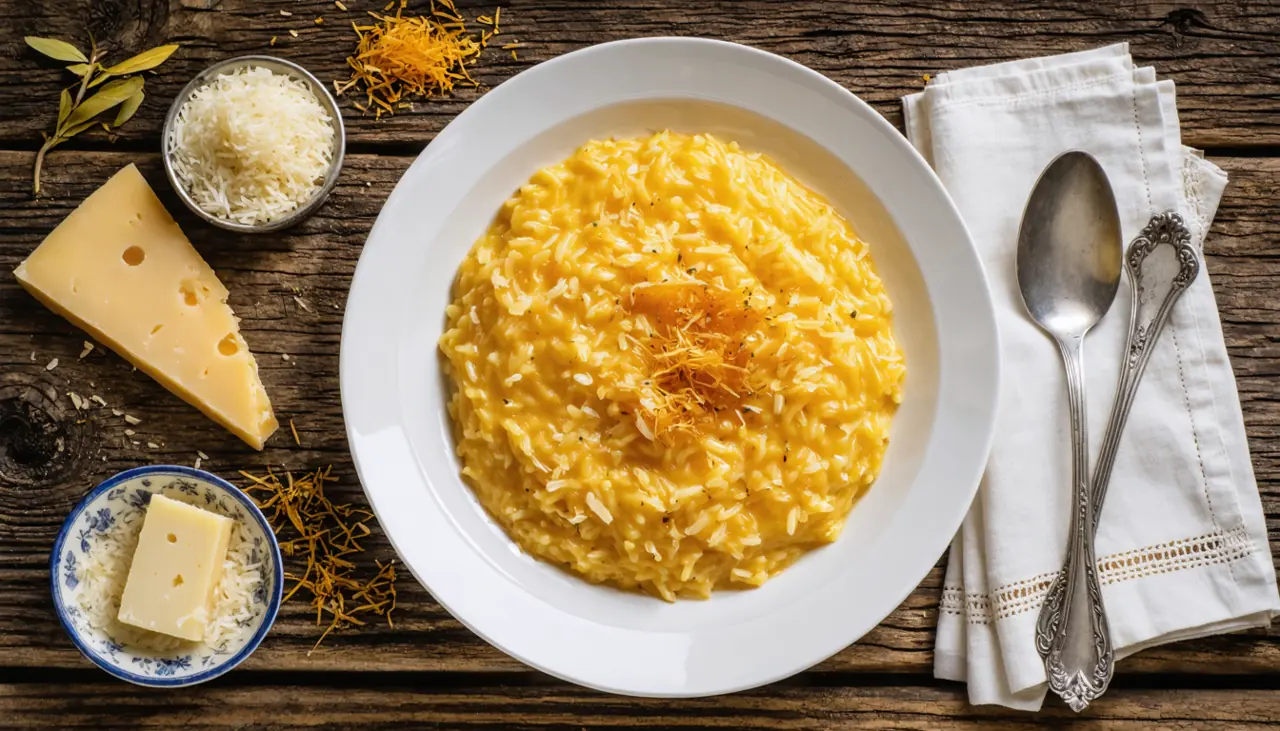
Risotto à la milanaise
Un risotto crémeux de Milan, cuit dans un bouillon de bœuf et doré au safran.
Portions
Ingrédients
Nutrition
Par portion
Étapes

Bloom the saffron
Put the saffron threads in a small bowl with 3 tablespoons of the hot broth and let them steep while you cook; the heat and liquid draw out the colour and aroma. Keep the rest of the broth simmering gently on low heat nearby so it stays hot the whole time.
- 1 pinch saffron threads
- 3 tbsp hot broth
✅ C'est prêt quand : the broth in the bowl turns deep orange and smells of saffron

Make the soffritto
In a wide, heavy pot, melt half the butter with the bone marrow over medium-low heat. Add the onion and cook gently, stirring now and then, until soft and translucent but not browned.
- 45 g butter
- 50 g beef bone marrow
- 1 onion
✅ C'est prêt quand : the onion is soft, glassy and has no colour on it

Toast the rice
Add the rice straight to the pot and stir constantly for about 2 minutes with no liquid added yet. This toasting step, tostatura, coats every grain in fat and warms it through, which is what later lets the rice release starch slowly and stay creamy instead of turning mushy.
- 480 g rice
✅ C'est prêt quand : the grains feel hot and look slightly glassy at the edges

Deglaze with wine
Pour in the white wine and stir until it is fully absorbed and you no longer smell alcohol, about 1 minute.
- 150 ml white wine
✅ C'est prêt quand : the wine has evaporated and the pot smells clean, not boozy

Cook the risotto
Add a ladleful of hot broth and let it simmer gently, stirring often; wait until it is almost absorbed before adding the next ladle, keeping the rice just barely covered in liquid at all times. Carry on this way for 16–18 minutes in total, tasting for salt partway through, since the broth may already be seasoned.
- remaining hot broth
- to taste salt
✅ C'est prêt quand : the rice is nearly tender and the mixture looks like a loose, creamy porridge

Stir in the saffron
About 2 minutes before the rice is done, stir in the bloomed saffron with its liquid, plus a last small splash of broth if the pot looks dry. The risotto is ready when the rice is tender but still has a firm little bite at the centre.
- steeped saffron and its liquid
✅ C'est prêt quand : the risotto is evenly golden and the rice is al dente

Finish with mantecatura
Take the pot off the heat. Beat in the remaining cold butter and the Parmigiano Reggiano vigorously with a wooden spoon until the risotto turns glossy, creamy and loose — this final beating, mantecatura, is what gives real Milanese risotto its silky, wave-like texture, all'onda. Cover, rest for 1 minute, then spoon straight onto warmed plates with extra Parmigiano on top.
- 45 g butter
- 100 g Parmigiano Reggiano
✅ C'est prêt quand : a spoonful spreads slowly into a wave shape on a tilted plate
Bloom the saffron
Put the saffron threads in a small bowl with 3 tablespoons of the hot broth and let them steep while you cook; the heat and liquid draw out the colour and aroma. Keep the rest of the broth simmering gently on low heat nearby so it stays hot the whole time.
- 1 pinch saffron threads
- 3 tbsp hot broth
✅ C'est prêt quand : the broth in the bowl turns deep orange and smells of saffron
Make the soffritto
In a wide, heavy pot, melt half the butter with the bone marrow over medium-low heat. Add the onion and cook gently, stirring now and then, until soft and translucent but not browned.
- 45 g butter
- 50 g beef bone marrow
- 1 onion
✅ C'est prêt quand : the onion is soft, glassy and has no colour on it
Toast the rice
Add the rice straight to the pot and stir constantly for about 2 minutes with no liquid added yet. This toasting step, tostatura, coats every grain in fat and warms it through, which is what later lets the rice release starch slowly and stay creamy instead of turning mushy.
- 480 g rice
✅ C'est prêt quand : the grains feel hot and look slightly glassy at the edges
Deglaze with wine
Pour in the white wine and stir until it is fully absorbed and you no longer smell alcohol, about 1 minute.
- 150 ml white wine
✅ C'est prêt quand : the wine has evaporated and the pot smells clean, not boozy
Cook the risotto
Add a ladleful of hot broth and let it simmer gently, stirring often; wait until it is almost absorbed before adding the next ladle, keeping the rice just barely covered in liquid at all times. Carry on this way for 16–18 minutes in total, tasting for salt partway through, since the broth may already be seasoned.
- remaining hot broth
- to taste salt
✅ C'est prêt quand : the rice is nearly tender and the mixture looks like a loose, creamy porridge
Stir in the saffron
About 2 minutes before the rice is done, stir in the bloomed saffron with its liquid, plus a last small splash of broth if the pot looks dry. The risotto is ready when the rice is tender but still has a firm little bite at the centre.
- steeped saffron and its liquid
✅ C'est prêt quand : the risotto is evenly golden and the rice is al dente
Finish with mantecatura
Take the pot off the heat. Beat in the remaining cold butter and the Parmigiano Reggiano vigorously with a wooden spoon until the risotto turns glossy, creamy and loose — this final beating, mantecatura, is what gives real Milanese risotto its silky, wave-like texture, all'onda. Cover, rest for 1 minute, then spoon straight onto warmed plates with extra Parmigiano on top.
- 45 g butter
- 100 g Parmigiano Reggiano
✅ C'est prêt quand : a spoonful spreads slowly into a wave shape on a tilted plate
The Story Behind the Dish
Saffron was already a prized spice in Lombardy by the Renaissance, used both in cooking and in dyeing fabrics for Milan's wool and silk guilds. A well-loved local legend credits a stained-glass worker on the Duomo with being the first to add a pinch of saffron to a pot of rice as a joke about adding 'gold' to the dish, and the golden colour stuck in the city's imagination ever since.
Over time the dish settled into the rich, slow-cooked risotto Milanese cooks still make today, built on good broth, butter and patience rather than any single invented moment. It became the natural partner to osso buco, the braised veal shank also beloved in Milan, and the two are still served together at family tables and trattorias across the city.
⭐ Why It's Famous
It is considered one of the defining dishes of Milanese and Lombard cooking, prized for turning humble rice into something golden, creamy and deeply savoury through slow, attentive cooking rather than complicated ingredients.
💡 Fun Fact
The saffron that gives the risotto its colour is also what tints Milan's famous panettone-adjacent pastries and was once so valuable it was traded almost like a precious metal.
Milan, Lombardy
45.46°N, 9.19°E
Recettes similaires

Comments (0)
No comments yet. Be the first to share your thoughts!