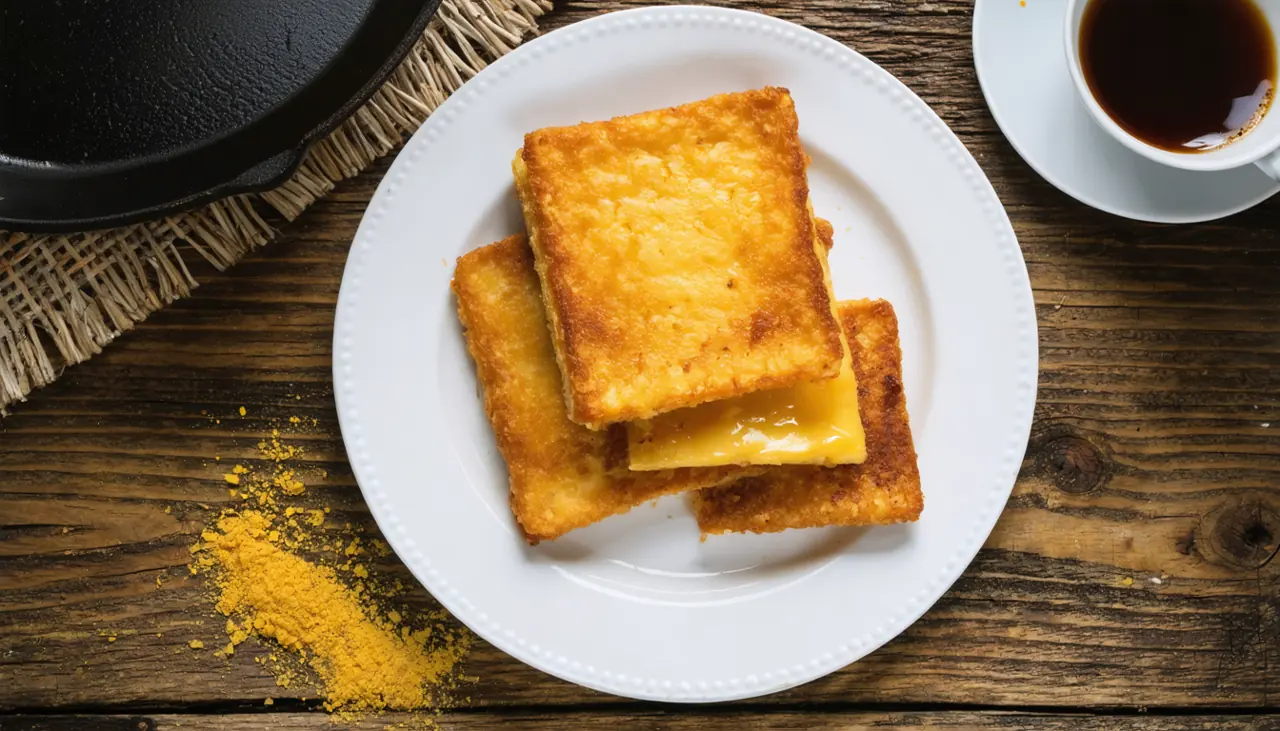
Fromage frit dominicain
Épaisses tranches de fromage semi-dur, frites jusqu'à devenir dorées et croustillantes, fermes à l'intérieur.
Portions
Ingrédients
Nutrition
Par portion
Étapes
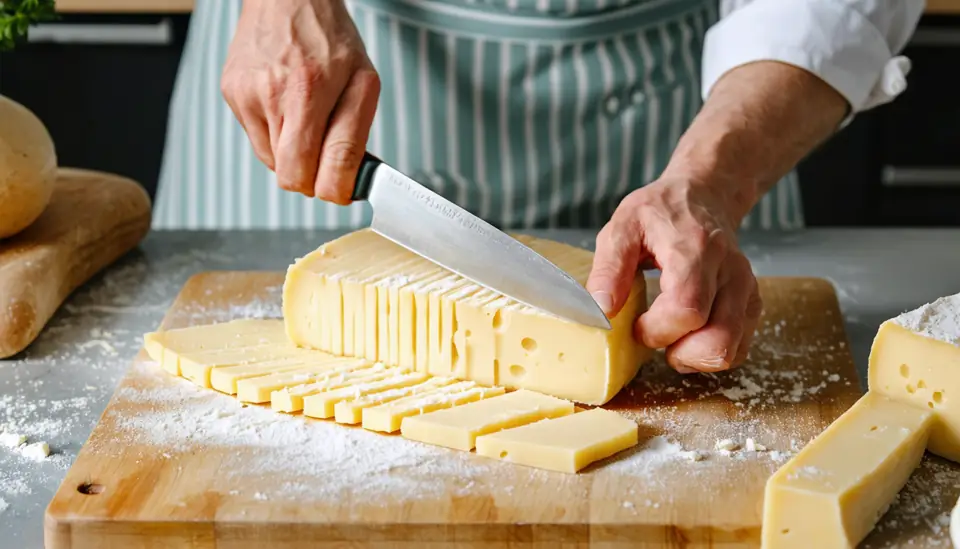
Slice the cheese
Cut the cheese into slices about 1.5 cm (½ inch) thick. Thick slices matter here: thin slices dry out and turn rubbery before they get a good crust, while thick ones stay soft and squeaky inside while the outside browns.
- 500 g frying cheese
✅ C'est prêt quand : the slices are evenly thick and hold their shape
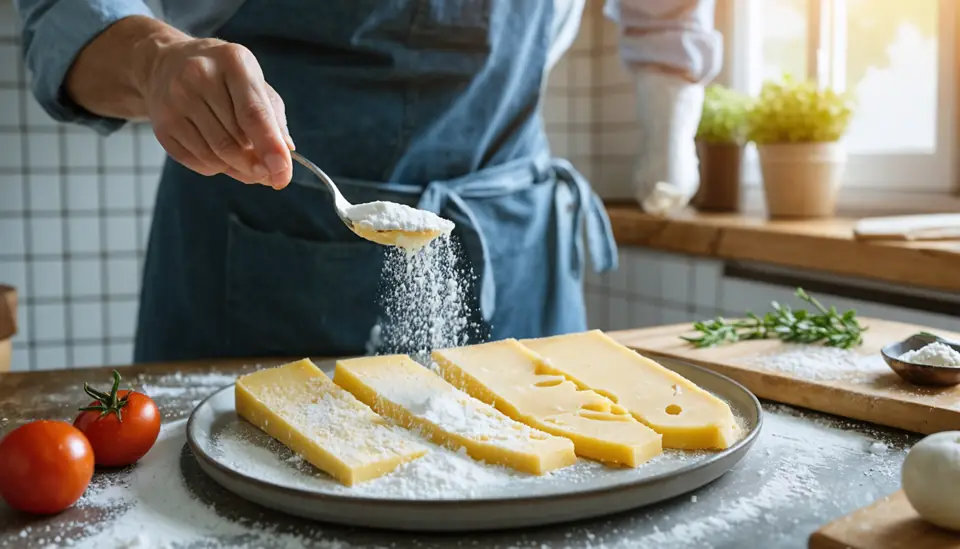
Dust lightly
Pat the slices dry with a paper towel, then dust both sides very lightly with cornstarch, shaking off any excess. This thin coating is what gives the deep golden crust without needing a heavy batter.
- 500 g cheese slices (from step 1)
- 2 tbsp cornstarch
✅ C'est prêt quand : the slices look matte and barely covered, not caked in starch

Heat the pan
Heat the oil and butter in a nonstick or well-seasoned cast-iron skillet over medium heat until the butter stops foaming and the oil shimmers, about 180°C (350°F). Medium heat is key: too hot and the outside burns before the cheese softens inside; too low and it leaks fat instead of forming a crust.
- 60 ml vegetable oil
- 1 tbsp butter
✅ C'est prêt quand : the oil shimmers and a cheese edge sizzles gently on contact

Fry the first side
Lay the cheese slices in the pan with space between them and leave them undisturbed. Resist the urge to move them: the crust needs time to form, and moving the cheese too soon can tear the softened surface.
- 500 g coated cheese slices (from step 2)
✅ C'est prêt quand : the bottom is deep golden brown and lifts cleanly off the pan

Flip and finish
Flip each slice carefully with a thin spatula and press down gently so it browns evenly. Fry until the second side is golden too, then move to a plate right away so the slices don't steam and go soggy.
✅ C'est prêt quand : both sides are golden brown and the slice feels firm when pressed, not mushy
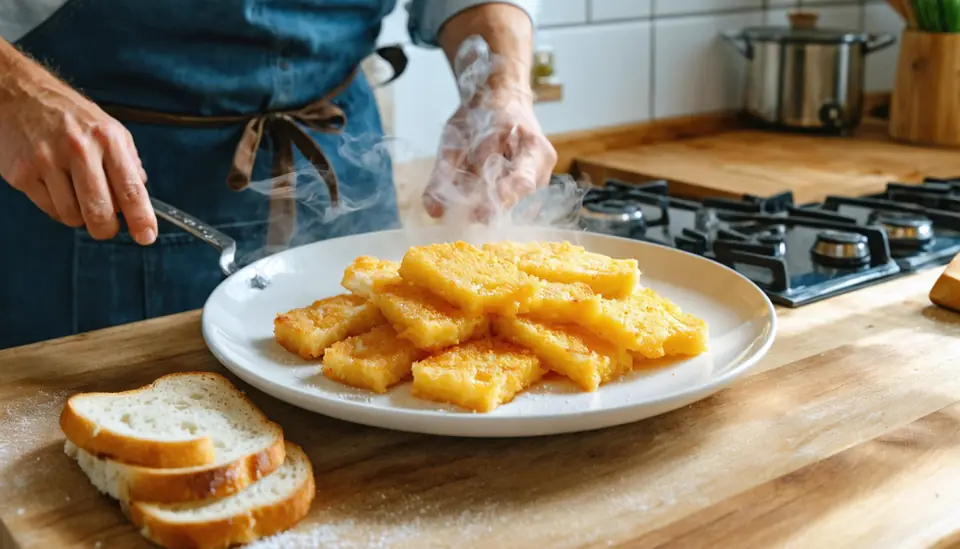
Serve immediately
Serve the queso frito straight from the pan, while it's still hot and squeaky inside. It is at its best in the first minute or two, alongside mangú, fried eggs or Dominican salami, or on its own with bread.
✅ C'est prêt quand : served hot, with a crisp crust and a soft, squeaky centre
Slice the cheese
Cut the cheese into slices about 1.5 cm (½ inch) thick. Thick slices matter here: thin slices dry out and turn rubbery before they get a good crust, while thick ones stay soft and squeaky inside while the outside browns.
- 500 g frying cheese
✅ C'est prêt quand : the slices are evenly thick and hold their shape
Dust lightly
Pat the slices dry with a paper towel, then dust both sides very lightly with cornstarch, shaking off any excess. This thin coating is what gives the deep golden crust without needing a heavy batter.
- 500 g cheese slices (from step 1)
- 2 tbsp cornstarch
✅ C'est prêt quand : the slices look matte and barely covered, not caked in starch
Heat the pan
Heat the oil and butter in a nonstick or well-seasoned cast-iron skillet over medium heat until the butter stops foaming and the oil shimmers, about 180°C (350°F). Medium heat is key: too hot and the outside burns before the cheese softens inside; too low and it leaks fat instead of forming a crust.
- 60 ml vegetable oil
- 1 tbsp butter
✅ C'est prêt quand : the oil shimmers and a cheese edge sizzles gently on contact
Fry the first side
Lay the cheese slices in the pan with space between them and leave them undisturbed. Resist the urge to move them: the crust needs time to form, and moving the cheese too soon can tear the softened surface.
- 500 g coated cheese slices (from step 2)
✅ C'est prêt quand : the bottom is deep golden brown and lifts cleanly off the pan
Flip and finish
Flip each slice carefully with a thin spatula and press down gently so it browns evenly. Fry until the second side is golden too, then move to a plate right away so the slices don't steam and go soggy.
✅ C'est prêt quand : both sides are golden brown and the slice feels firm when pressed, not mushy
Serve immediately
Serve the queso frito straight from the pan, while it's still hot and squeaky inside. It is at its best in the first minute or two, alongside mangú, fried eggs or Dominican salami, or on its own with bread.
✅ C'est prêt quand : served hot, with a crisp crust and a soft, squeaky centre
The Story Behind the Dish
Dominican cooks developed queso de freír as a practical answer to abundant fresh cow's milk and few ways to keep it: pressing curds into firm, salty blocks made the cheese last longer and gave it the structure needed to survive a hot pan without collapsing into a puddle.
It became a breakfast staple served alongside mangú (mashed plantains) and fried eggs or salami, a plate Dominicans affectionately call 'los tres golpes.' Street stalls and colmados sell it hot, wrapped in paper, as a quick bite any time of day.
⭐ Why It's Famous
It delivers everything people want from fried cheese: a crackling golden crust, a salty hit, and a squeaky, chewy centre that holds its shape instead of melting away.
💡 Fun Fact
The cheese is named for its job, not its type: 'queso de freír' simply means 'cheese for frying,' because regular soft cheeses melt flat in a hot pan while this one keeps its structure.
Dominican Republic, countrywide
18.49°N, -69.93°W
Recettes similaires
Comments (0)
No comments yet. Be the first to share your thoughts!