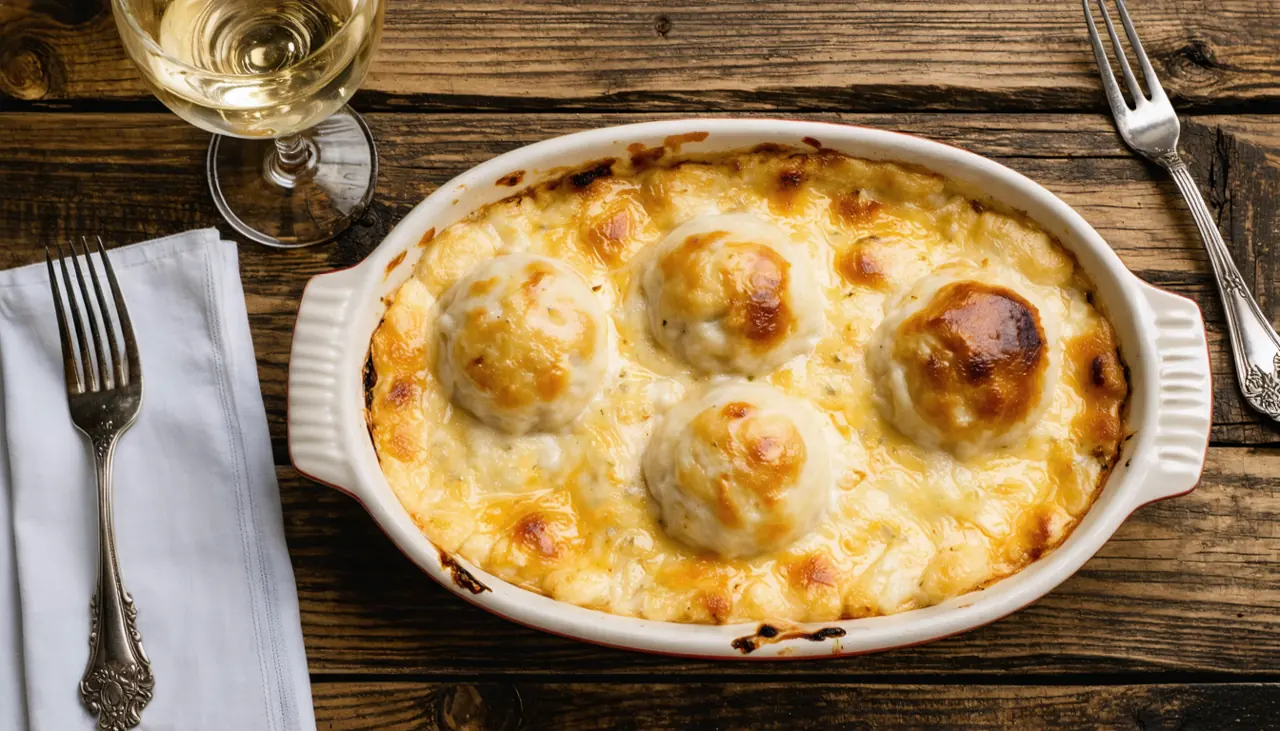
Quenelles lyonnaises
Quenelles de brochet ou de veau, légères et moelleuses, nappées d'une sauce crémeuse gratinée au gruyère.
Portions
Ingrédients
Nutrition
Par portion
Étapes
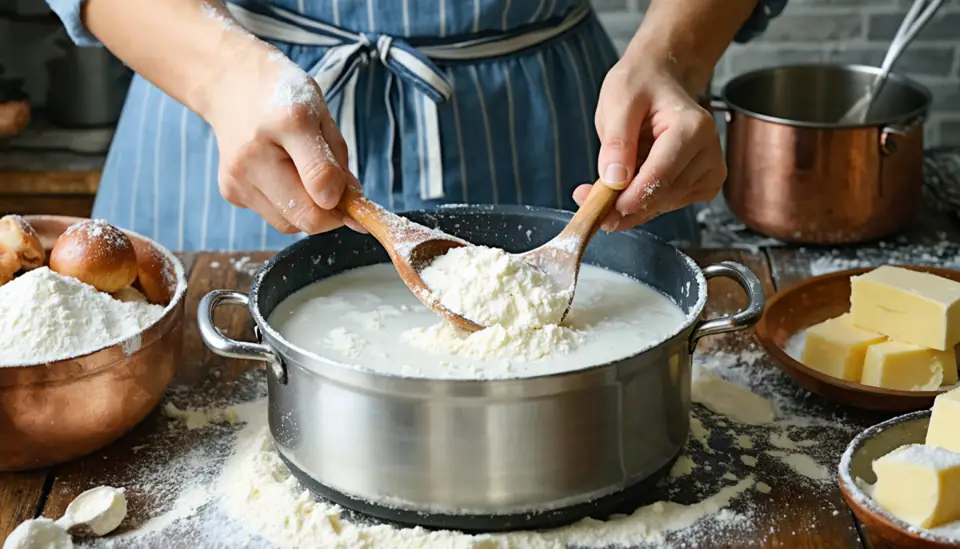
Make the panade
In a small saucepan, bring the milk and butter to a boil. Remove from the heat, add the flour all at once, and stir vigorously with a wooden spoon until smooth. Return to low heat and cook, stirring, for about 2 minutes, until the paste pulls away from the sides of the pan and no longer looks wet. Spread it on a plate and let it cool completely (this thick paste, the panade, is what gives quenelles their light, airy body).
- 125 ml milk
- 50 g butter
- 65 g flour
✅ C'est prêt quand : the paste is smooth, pulls cleanly away from the pan, and is no longer glossy or sticky
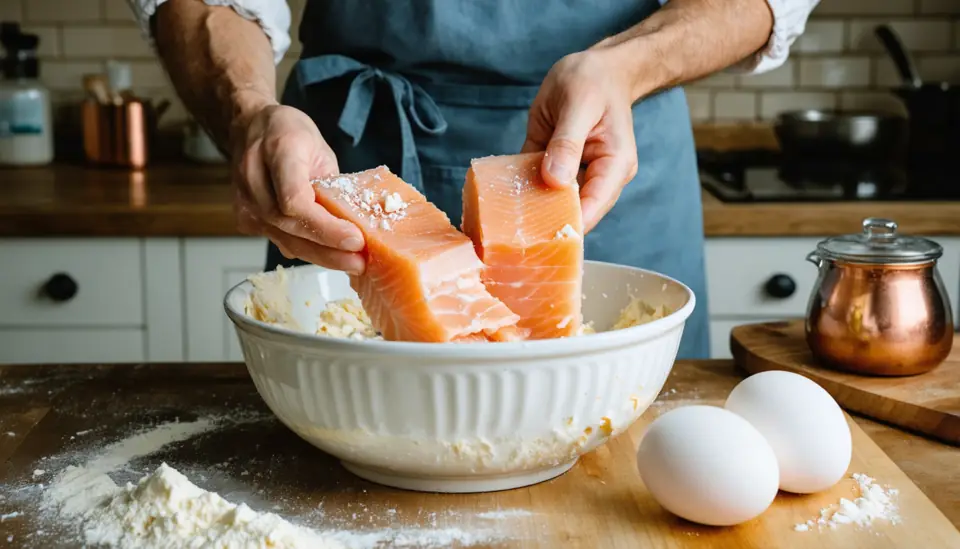
Blend fish and panade
In a food processor, blend the chopped pike (or veal) with the cooled panade and the eggs until smooth and pale. Season with salt, white pepper and half the nutmeg. Scrape into a bowl, cover, and chill for at least 1 hour (the mixture must be very cold before adding the cream, or it will not hold air and the quenelles will turn out heavy instead of light).
- 400 g pike or veal
- 2 eggs
- 1 tsp salt
- 1/4 tsp white pepper
- 1/2 pinch nutmeg
✅ C'est prêt quand : the mixture is smooth, pale, and very cold to the touch
Fold in the cream
This step is part of Foodie Premium. Subscribe to unlock the full method, cooking mode and every recipe in the library.
Shape and poach
This step is part of Foodie Premium. Subscribe to unlock the full method, cooking mode and every recipe in the library.
Drain and arrange
This step is part of Foodie Premium. Subscribe to unlock the full method, cooking mode and every recipe in the library.
Make the sauce
This step is part of Foodie Premium. Subscribe to unlock the full method, cooking mode and every recipe in the library.
Bake and serve
This step is part of Foodie Premium. Subscribe to unlock the full method, cooking mode and every recipe in the library.
Make the panade
In a small saucepan, bring the milk and butter to a boil. Remove from the heat, add the flour all at once, and stir vigorously with a wooden spoon until smooth. Return to low heat and cook, stirring, for about 2 minutes, until the paste pulls away from the sides of the pan and no longer looks wet. Spread it on a plate and let it cool completely (this thick paste, the panade, is what gives quenelles their light, airy body).
- 125 ml milk
- 50 g butter
- 65 g flour
✅ C'est prêt quand : the paste is smooth, pulls cleanly away from the pan, and is no longer glossy or sticky
Blend fish and panade
In a food processor, blend the chopped pike (or veal) with the cooled panade and the eggs until smooth and pale. Season with salt, white pepper and half the nutmeg. Scrape into a bowl, cover, and chill for at least 1 hour (the mixture must be very cold before adding the cream, or it will not hold air and the quenelles will turn out heavy instead of light).
- 400 g pike or veal
- 2 eggs
- 1 tsp salt
- 1/4 tsp white pepper
- 1/2 pinch nutmeg
✅ C'est prêt quand : the mixture is smooth, pale, and very cold to the touch
Fold in the cream
This step is part of Foodie Premium. Subscribe to unlock the full method, cooking mode and every recipe in the library.
Shape and poach
This step is part of Foodie Premium. Subscribe to unlock the full method, cooking mode and every recipe in the library.
Drain and arrange
This step is part of Foodie Premium. Subscribe to unlock the full method, cooking mode and every recipe in the library.
Make the sauce
This step is part of Foodie Premium. Subscribe to unlock the full method, cooking mode and every recipe in the library.
Bake and serve
This step is part of Foodie Premium. Subscribe to unlock the full method, cooking mode and every recipe in the library.
The Story Behind the Dish
Quenelles have roots that reach back to German and Alsatian dumpling traditions, but it was in Lyon, fed by the pike of the Saône and Rhône rivers, that they became an icon of the city's cooking. The mères lyonnaises, the skilled home cooks who ran the city's famous bouchons, perfected the technique of binding delicate fish or veal with a buttery panade and cream so the dumplings would poach up light and airy rather than dense.
In grand versions, quenelles are served with sauce Nantua, a rich crayfish cream, but the everyday home version, baked under a simple cheese-and-cream sauce, is just as beloved and far more often made at home.
⭐ Why It's Famous
Quenelles lyonnaises show off the Lyonnais gift for turning humble, careful technique into something that tastes luxurious, a dish of real skill hidden behind a very simple-looking bowl of dumplings in sauce.
💡 Fun Fact
Lyon is sometimes called the gastronomic capital of France, and the quenelle, along with the saucisson and the praline tart, is one of the dishes locals point to as proof.
Lyon, Rhône-Alpes region
45.76°N, 4.84°E
Recettes similaires
Comments (0)
No comments yet. Be the first to share your thoughts!