
Croissant
Une pâte feuilletée au beurre, croustillante à l'extérieur et moelleuse à l'intérieur, préparée selon la méthode traditionnelle des boulangeries françaises.
Portions
Ingrédients
Nutrition
Par portion
Étapes
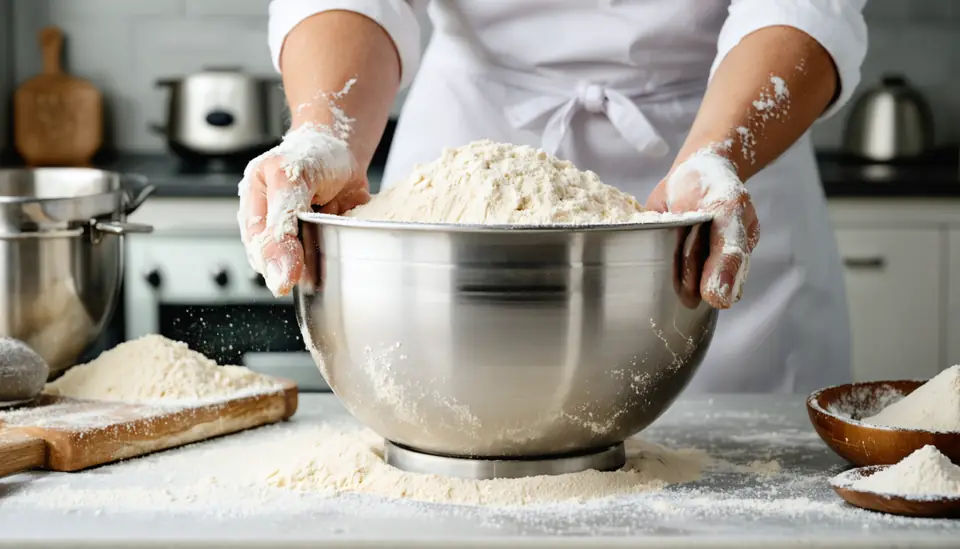
Make the dough
In a large bowl or stand mixer, combine the flour, sugar, salt and yeast, then add the cold milk and softened butter. Knead for 8–10 minutes until smooth and elastic, shape into a flat rectangle, wrap and chill.
- 500 g flour
- 55 g sugar
- 10 g salt
- 10 g yeast
- 300 ml milk
- 40 g softened butter
✅ C'est prêt quand : the dough is smooth, slightly tacky, and firm after at least 1 hour in the fridge (overnight is fine too)
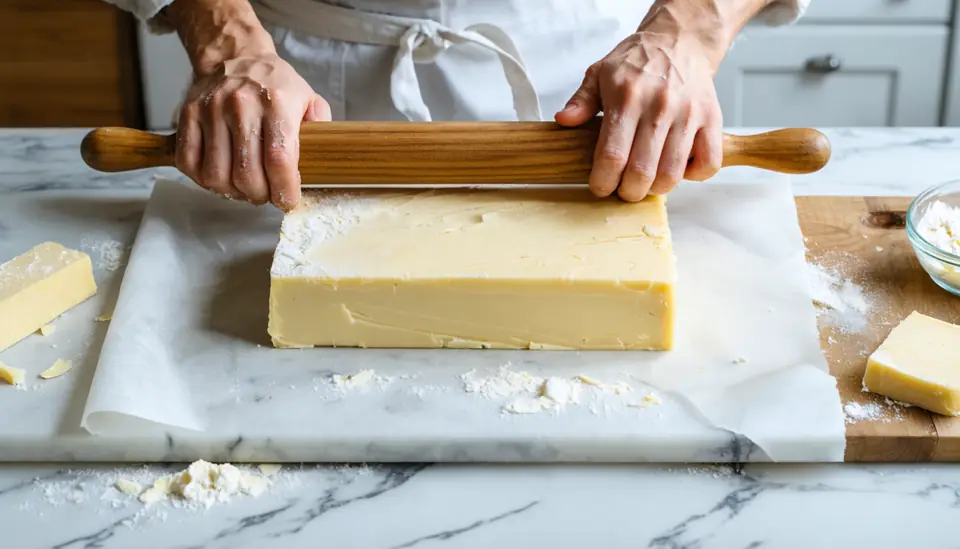
Shape the butter block
Place the cold lamination butter between two sheets of parchment paper and pound and roll it with a rolling pin into an even 18 x 18 cm square. Keep it cold until needed.
- 300 g cold butter
✅ C'est prêt quand : the butter is a flat, even square that still feels cool and firm, not greasy or melting
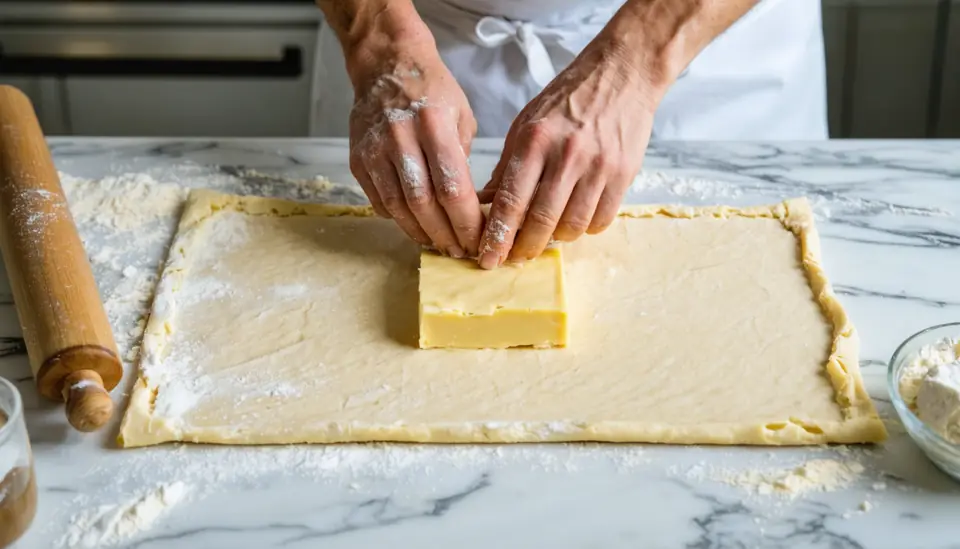
Encase the butter
Roll the chilled dough into a rectangle about twice the size of the butter square. Place the butter in the centre and fold the dough over it like closing an envelope, pinching the edges to seal completely so no butter shows. Roll this block out gently into a long rectangle, then fold it in thirds like a letter. Wrap and chill.
- dough (from step 1)
- 300 g butter block (from step 2)
✅ C'est prêt quand : the dough rests firm and cold for 45 minutes and no butter has leaked through the seams
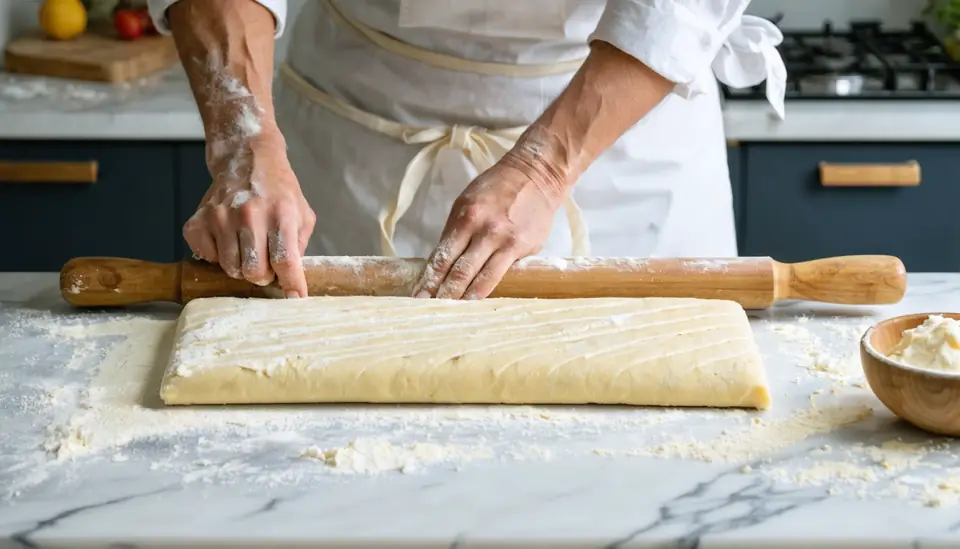
Second fold
Unwrap the dough with the short side facing you and roll it out again into a long rectangle, about 1 cm thick. Fold it in thirds once more, the same letter fold as before. Wrap and chill again.
- laminated dough (from step 3)
✅ C'est prêt quand : the dough is firm and cold after 45 minutes and feels even, with no soft or warm spots
Shape the croissants
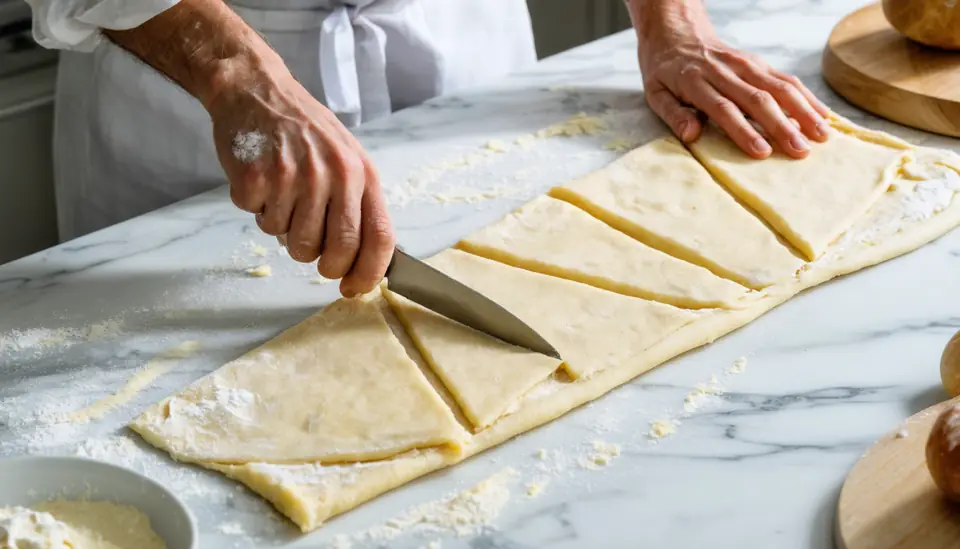
Roll the dough into a long rectangle about 4 mm thick, trimming the ragged edges. Cut it into triangles with a base of about 10 cm, make a small notch in the centre of each base, then roll each triangle up from base to tip, curving the ends slightly inward as you go.
- laminated dough (from step 4)
✅ C'est prêt quand : you have 8 evenly rolled croissants with the tip tucked underneath

Proof
Arrange the shaped croissants on a tray lined with parchment, leaving space between them, and cover loosely with a cloth or plastic. Let them proof in a warm spot (about 24–26°C (75–79°F)) until noticeably puffy.
✅ C'est prêt quand : they have nearly doubled in size and wobble gently when the tray is shaken

Bake
Brush the proofed croissants gently with the beaten egg, taking care not to press down on the layers. Bake at 200°C (392°F) for 18–20 minutes, until deep golden and crisp.
- 1 egg wash
✅ C'est prêt quand : the croissants are a deep golden brown all over and sound light and crisp when tapped
Make the dough
In a large bowl or stand mixer, combine the flour, sugar, salt and yeast, then add the cold milk and softened butter. Knead for 8–10 minutes until smooth and elastic, shape into a flat rectangle, wrap and chill.
- 500 g flour
- 55 g sugar
- 10 g salt
- 10 g yeast
- 300 ml milk
- 40 g softened butter
✅ C'est prêt quand : the dough is smooth, slightly tacky, and firm after at least 1 hour in the fridge (overnight is fine too)
Shape the butter block
Place the cold lamination butter between two sheets of parchment paper and pound and roll it with a rolling pin into an even 18 x 18 cm square. Keep it cold until needed.
- 300 g cold butter
✅ C'est prêt quand : the butter is a flat, even square that still feels cool and firm, not greasy or melting
Encase the butter
Roll the chilled dough into a rectangle about twice the size of the butter square. Place the butter in the centre and fold the dough over it like closing an envelope, pinching the edges to seal completely so no butter shows. Roll this block out gently into a long rectangle, then fold it in thirds like a letter. Wrap and chill.
- dough (from step 1)
- 300 g butter block (from step 2)
✅ C'est prêt quand : the dough rests firm and cold for 45 minutes and no butter has leaked through the seams
Second fold
Unwrap the dough with the short side facing you and roll it out again into a long rectangle, about 1 cm thick. Fold it in thirds once more, the same letter fold as before. Wrap and chill again.
- laminated dough (from step 3)
✅ C'est prêt quand : the dough is firm and cold after 45 minutes and feels even, with no soft or warm spots
Shape the croissants
Roll the dough into a long rectangle about 4 mm thick, trimming the ragged edges. Cut it into triangles with a base of about 10 cm, make a small notch in the centre of each base, then roll each triangle up from base to tip, curving the ends slightly inward as you go.
- laminated dough (from step 4)
✅ C'est prêt quand : you have 8 evenly rolled croissants with the tip tucked underneath
Proof
Arrange the shaped croissants on a tray lined with parchment, leaving space between them, and cover loosely with a cloth or plastic. Let them proof in a warm spot (about 24–26°C (75–79°F)) until noticeably puffy.
✅ C'est prêt quand : they have nearly doubled in size and wobble gently when the tray is shaken
Bake
Brush the proofed croissants gently with the beaten egg, taking care not to press down on the layers. Bake at 200°C (392°F) for 18–20 minutes, until deep golden and crisp.
- 1 egg wash
✅ C'est prêt quand : the croissants are a deep golden brown all over and sound light and crisp when tapped
The Story Behind the Dish
The croissant's distant ancestor is the Austrian kipferl, a crescent-shaped bread brought to France and reimagined by Parisian bakers. It was in France, during the 19th century, that bakers developed the laminated, yeasted butter dough that gives the croissant its airy, flaky structure, turning a simple crescent roll into something far more refined.
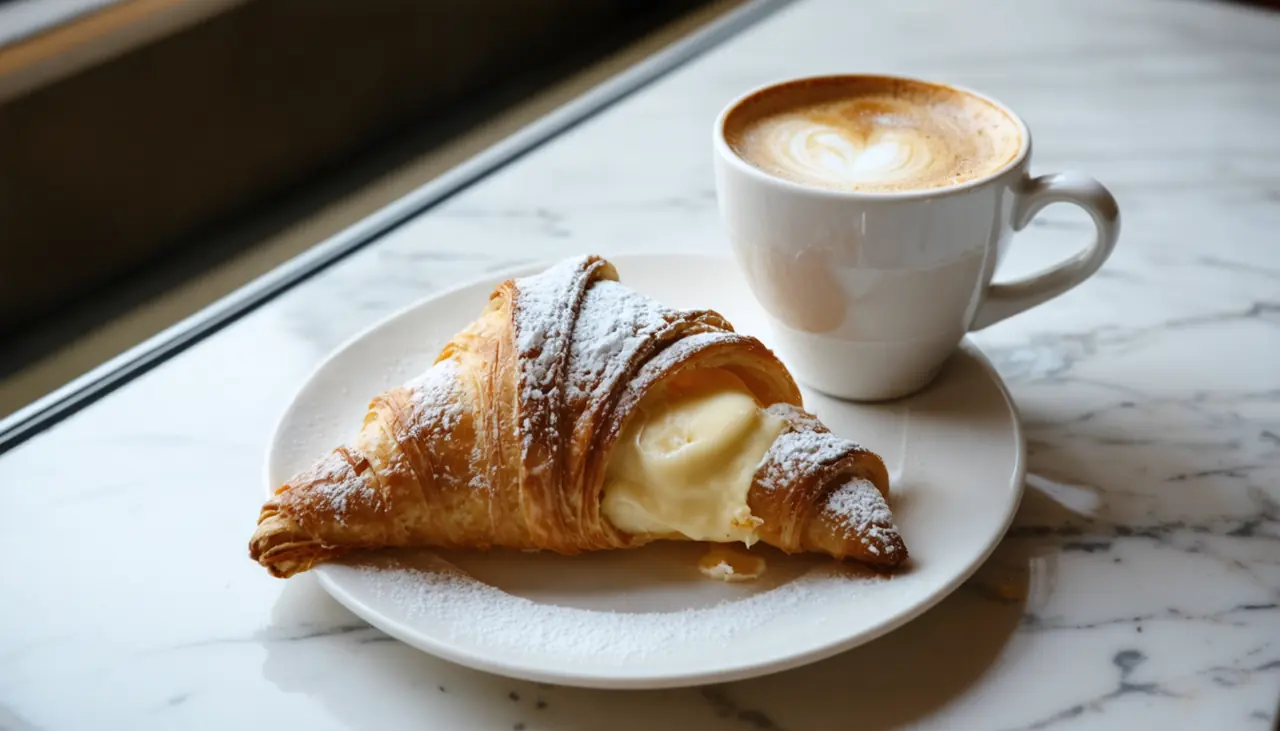
By the early 20th century, the croissant had become a fixture of French bakeries and the cornerstone of the classic French breakfast, served with coffee at home or standing at a café counter.
⭐ Why It's Famous
Its hundreds of thin, buttery layers create a pastry that is crisp and shattering outside, soft and airy inside, a texture achieved only through patient, careful lamination.
💡 Fun Fact
In France, bakeries legally must call a croissant made with margarine a 'croissant ordinaire', reserving 'croissant au beurre' for the real, all-butter version.
Paris, France
48.86°N, 2.35°E
Recettes similaires


Comments (0)
No comments yet. Be the first to share your thoughts!