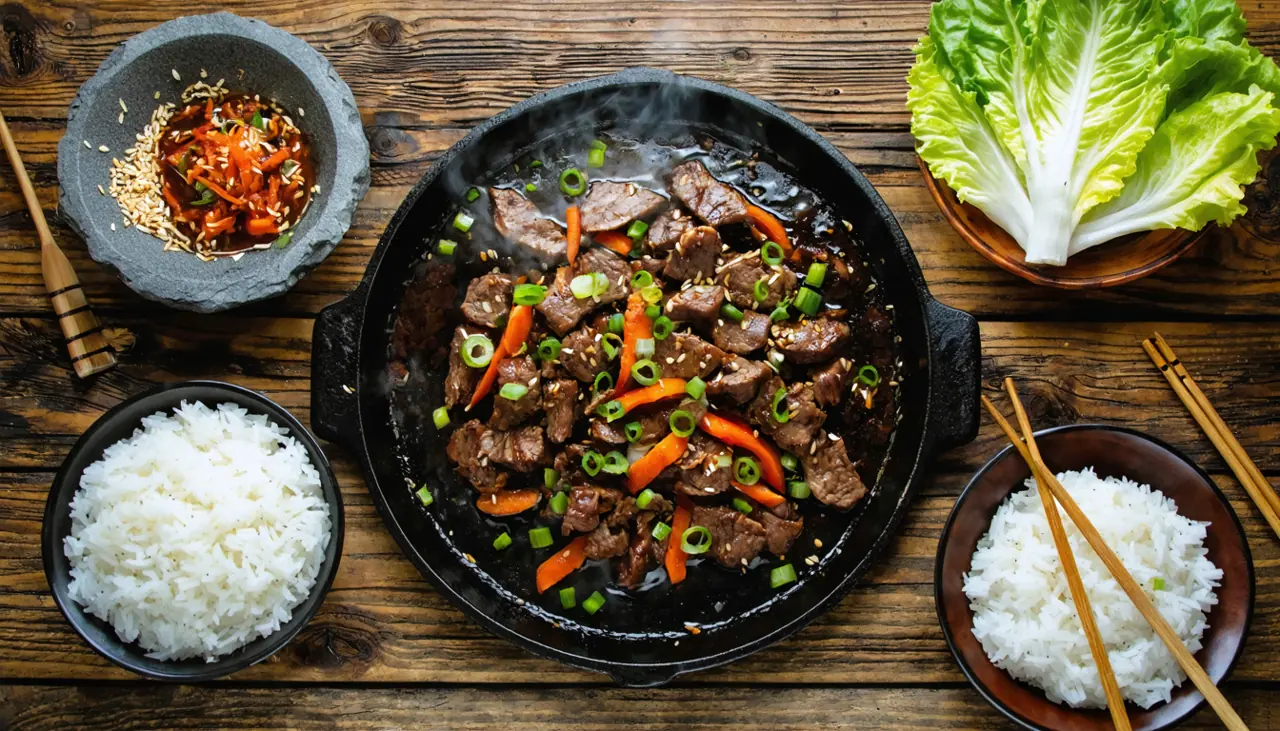
Bulgogi coréen
Fines tranches de bœuf marinées dans une sauce soja sucrée à l'ail et au sésame, grillées jusqu'à caramélisation.
Portions
Ingrédients
Nutrition
Par portion
Étapes

Slice the beef thin
If your beef isn't already thinly sliced, freeze it for about 30 minutes until firm but not solid, then slice against the grain as thin as you can, about 3 mm. Thin slices soak up marinade fast and cook in seconds.
- 700 g beef, sliced thin

Blend the marinade
Grate the pear on the fine side of a box grater or purée it in a blender, then mix it with the soy sauce, brown sugar, sesame oil, garlic, ginger and black pepper. The grated pear is the Korean secret: its natural enzymes tenderize the meat and balance the salty soy with real sweetness.
- 1 Asian pear, grated
- 80 ml soy sauce
- 30 g brown sugar
- 2 tbsp sesame oil
- 6 cloves garlic
- 1 tsp ginger
- 1 tsp black pepper

Marinate the beef
Toss the sliced beef with the marinade, onion, carrot and gochugaru if using, making sure every slice is coated. Cover and refrigerate for at least 1 hour, or overnight for deeper flavor.
- 1 onion
- 1 carrot
- 1 tsp gochugaru (optional)
✅ C'est prêt quand : the beef looks glossy and slightly darker, and smells sweetly of garlic and sesame

Heat the pan very hot
Heat a wide skillet or griddle over high heat, about 220°C (428°F), until a drop of water sizzles instantly on contact. Add the neutral oil and swirl to coat the pan just before cooking. A properly hot pan is what caramelizes the edges instead of just steaming the meat into a gray, watery pile.
- 1 tbsp neutral oil

Sear in batches
Spread a single layer of beef and vegetables in the hot pan without crowding; crowding traps steam and the meat won't brown. Cook for 2–3 minutes per batch, turning once, until the edges are caramelized and no pink remains in the beef.
- 700 g marinated beef (from step 3)
- 4 scallions
✅ C'est prêt quand : the meat is browned at the edges, fully cooked through with clear juices, and the onion is softened

Serve
Pile the bulgogi onto a plate, scatter with toasted sesame seeds, and serve right away with steamed rice and lettuce leaves for wrapping bite-sized portions.
- 1 tbsp sesame seeds
- to serve rice and lettuce
Slice the beef thin
If your beef isn't already thinly sliced, freeze it for about 30 minutes until firm but not solid, then slice against the grain as thin as you can, about 3 mm. Thin slices soak up marinade fast and cook in seconds.
- 700 g beef, sliced thin
Blend the marinade
Grate the pear on the fine side of a box grater or purée it in a blender, then mix it with the soy sauce, brown sugar, sesame oil, garlic, ginger and black pepper. The grated pear is the Korean secret: its natural enzymes tenderize the meat and balance the salty soy with real sweetness.
- 1 Asian pear, grated
- 80 ml soy sauce
- 30 g brown sugar
- 2 tbsp sesame oil
- 6 cloves garlic
- 1 tsp ginger
- 1 tsp black pepper
Marinate the beef
Toss the sliced beef with the marinade, onion, carrot and gochugaru if using, making sure every slice is coated. Cover and refrigerate for at least 1 hour, or overnight for deeper flavor.
- 1 onion
- 1 carrot
- 1 tsp gochugaru (optional)
✅ C'est prêt quand : the beef looks glossy and slightly darker, and smells sweetly of garlic and sesame
Heat the pan very hot
Heat a wide skillet or griddle over high heat, about 220°C (428°F), until a drop of water sizzles instantly on contact. Add the neutral oil and swirl to coat the pan just before cooking. A properly hot pan is what caramelizes the edges instead of just steaming the meat into a gray, watery pile.
- 1 tbsp neutral oil
Sear in batches
Spread a single layer of beef and vegetables in the hot pan without crowding; crowding traps steam and the meat won't brown. Cook for 2–3 minutes per batch, turning once, until the edges are caramelized and no pink remains in the beef.
- 700 g marinated beef (from step 3)
- 4 scallions
✅ C'est prêt quand : the meat is browned at the edges, fully cooked through with clear juices, and the onion is softened
Serve
Pile the bulgogi onto a plate, scatter with toasted sesame seeds, and serve right away with steamed rice and lettuce leaves for wrapping bite-sized portions.
- 1 tbsp sesame seeds
- to serve rice and lettuce
The Story Behind the Dish
Bulgogi traces back to grilled meat dishes eaten in ancient Korea, including a version called maekjeok cooked on skewers over fire. Over centuries the dish evolved, and by the Joseon era it had become a prized dish for special occasions, since beef was costly and reserved for honored guests.
The soy-and-pear marinade we know today took shape more recently, as sugar and soy sauce became household staples. Now bulgogi is everyday home cooking as much as it is a star of Korean barbecue restaurants worldwide.
⭐ Why It's Famous
The combination of sweet, savory and smoky caramelized edges, achieved with a few humble pantry ingredients, makes it Korea's most beloved beef dish both at home and abroad.
💡 Fun Fact
Grated Asian pear or kiwi is used in many Korean marinades not just for sweetness but because their enzymes break down tough muscle fibers, a trick cooks relied on long before meat tenderizer powders existed.
Korea, nationwide
37.57°N, 126.98°E
Recettes similaires
Comments (0)
No comments yet. Be the first to share your thoughts!