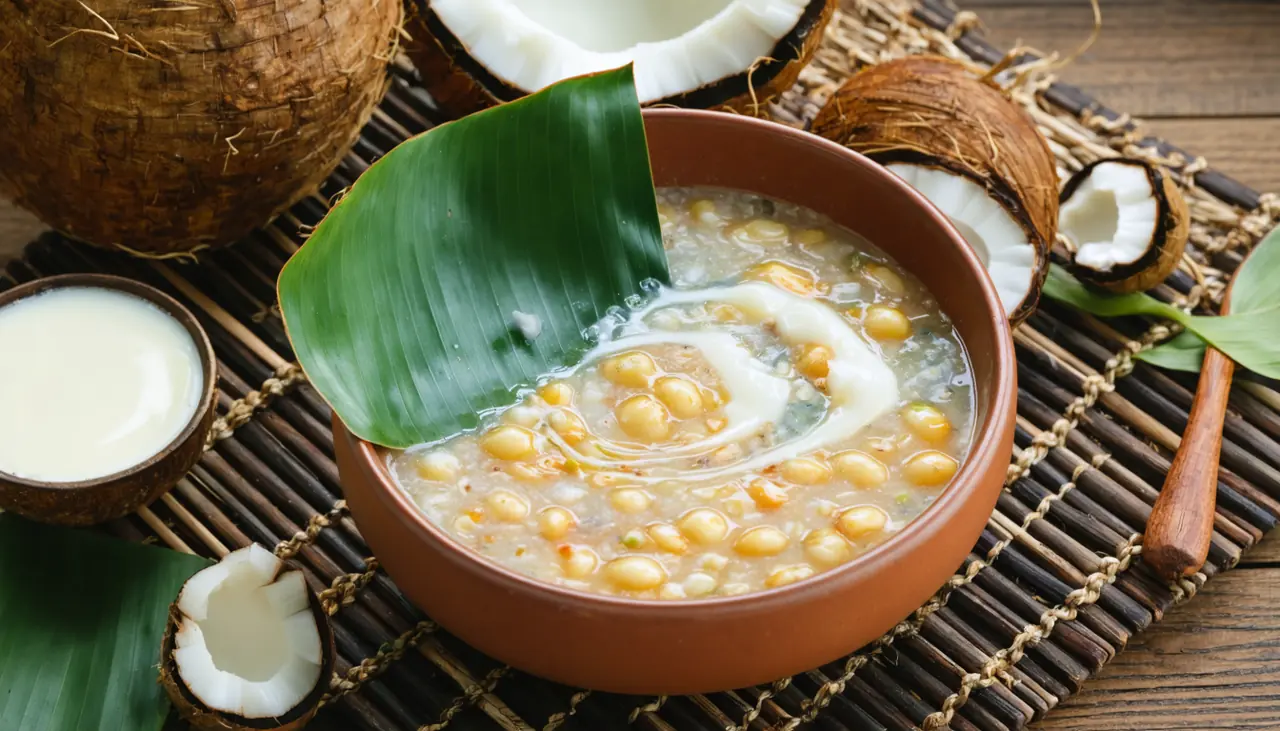
Bubur Kacang Hijau
Bouillie de haricots mungo au lait de coco et au sucre de palme, un petit-déjeuner réconfortant indonésien.
Portions
Ingrédients
Nutrition
Par portion
Étapes

Rinse the beans
Put the mung beans in a sieve and rinse under cold water, picking out any small stones or loose husks. There's no need to soak them first; a long gentle simmer is enough to make them tender.
- 200 g mung beans
✅ C'est prêt quand : the beans look clean and the rinsing water runs mostly clear

Boil until soft
Put the rinsed beans, 1.4 litres of the water and 2 of the pandan leaves (tied in a knot) in a large heavy pot. Bring to a boil, then lower the heat and simmer uncovered, skimming off any foam that rises to the top — this keeps the porridge tasting clean instead of bitter. Simmer for 40–45 minutes, topping up with a little hot water if the pot looks dry, until the beans are fully soft and some skins have burst open.
- 200 g mung beans (from step 1)
- 1.4 litres water
- 2 pandan leaves
✅ C'est prêt quand : the beans crush easily between two fingers and look like a loose porridge

Strain the palm sugar
While the beans cook, put the chopped palm sugar and the remaining 100 ml water in a small saucepan over low heat. Stir until the sugar melts completely, then pour it through a fine sieve into the bean pot. Straining catches bits of bark or grit that often hide inside blocks of palm sugar, so the finished porridge stays smooth.
- 120 g palm sugar
- 100 ml water
✅ C'est prêt quand : the sugar has melted into a clear, dark syrup with no lumps

Add ginger and sweeten
Stir the crushed ginger, granulated sugar and salt into the pot along with the strained palm sugar syrup. Simmer gently for 10 minutes, stirring now and then, so the beans soak up the sweetness evenly.
- 2 cm piece ginger
- 50 g granulated sugar
- 1/4 tsp salt
✅ C'est prêt quand : the sugar is fully mixed in and the porridge looks glossy and slightly thicker

Stir in coconut milk
Pour in 300 ml of the coconut milk. Keep the heat low and stir gently and often — if it boils hard, the coconut milk can split into oily flecks instead of staying smooth. Simmer for 8–10 minutes until creamy, then fish out and discard the ginger and pandan leaf.
- 300 ml coconut milk
- ginger (to remove)
- pandan leaf (to remove)
✅ C'est prêt quand : the porridge is thick and creamy and coats the back of a spoon

Make coconut sauce
In a small saucepan, warm the remaining 200 ml coconut milk with the last pandan leaf and a pinch of salt over low heat, just until steaming — don't let it boil (90°C/194°F is plenty). Ladle the hot porridge into bowls and spoon the salted coconut sauce over the top; the contrast between the sweet porridge and the lightly salted coconut is what makes this dish so good.
- 200 ml coconut milk
- 1 pandan leaf
- 1 pinch salt
✅ C'est prêt quand : the coconut sauce is hot and steaming but not boiling
Rinse the beans
Put the mung beans in a sieve and rinse under cold water, picking out any small stones or loose husks. There's no need to soak them first; a long gentle simmer is enough to make them tender.
- 200 g mung beans
✅ C'est prêt quand : the beans look clean and the rinsing water runs mostly clear
Boil until soft
Put the rinsed beans, 1.4 litres of the water and 2 of the pandan leaves (tied in a knot) in a large heavy pot. Bring to a boil, then lower the heat and simmer uncovered, skimming off any foam that rises to the top — this keeps the porridge tasting clean instead of bitter. Simmer for 40–45 minutes, topping up with a little hot water if the pot looks dry, until the beans are fully soft and some skins have burst open.
- 200 g mung beans (from step 1)
- 1.4 litres water
- 2 pandan leaves
✅ C'est prêt quand : the beans crush easily between two fingers and look like a loose porridge
Strain the palm sugar
While the beans cook, put the chopped palm sugar and the remaining 100 ml water in a small saucepan over low heat. Stir until the sugar melts completely, then pour it through a fine sieve into the bean pot. Straining catches bits of bark or grit that often hide inside blocks of palm sugar, so the finished porridge stays smooth.
- 120 g palm sugar
- 100 ml water
✅ C'est prêt quand : the sugar has melted into a clear, dark syrup with no lumps
Add ginger and sweeten
Stir the crushed ginger, granulated sugar and salt into the pot along with the strained palm sugar syrup. Simmer gently for 10 minutes, stirring now and then, so the beans soak up the sweetness evenly.
- 2 cm piece ginger
- 50 g granulated sugar
- 1/4 tsp salt
✅ C'est prêt quand : the sugar is fully mixed in and the porridge looks glossy and slightly thicker
Stir in coconut milk
Pour in 300 ml of the coconut milk. Keep the heat low and stir gently and often — if it boils hard, the coconut milk can split into oily flecks instead of staying smooth. Simmer for 8–10 minutes until creamy, then fish out and discard the ginger and pandan leaf.
- 300 ml coconut milk
- ginger (to remove)
- pandan leaf (to remove)
✅ C'est prêt quand : the porridge is thick and creamy and coats the back of a spoon
Make coconut sauce
In a small saucepan, warm the remaining 200 ml coconut milk with the last pandan leaf and a pinch of salt over low heat, just until steaming — don't let it boil (90°C/194°F is plenty). Ladle the hot porridge into bowls and spoon the salted coconut sauce over the top; the contrast between the sweet porridge and the lightly salted coconut is what makes this dish so good.
- 200 ml coconut milk
- 1 pandan leaf
- 1 pinch salt
✅ C'est prêt quand : the coconut sauce is hot and steaming but not boiling
The Story Behind the Dish
Mung beans and sweet bean soups travelled to the Indonesian archipelago with Chinese immigrants and traders, who had long cooked beans with sugar. Indonesian home cooks made the dish their own by simmering the beans in coconut milk and local palm sugar, scenting it with pandan leaf and sometimes ginger.
Today bubur kacang hijau is sold from steaming pots by street vendors across Java and Sumatra, eaten for breakfast, as an afternoon snack, or to break the fast during Ramadan, often alongside sticky rice porridge or fried bread.
⭐ Why It's Famous
Its warm, nutty sweetness and the salted coconut sauce poured over the top make it one of Indonesia's most beloved breakfast porridges and street-food staples.
💡 Fun Fact
Street vendors often ladle bubur kacang hijau side by side with black sticky rice porridge into the same bowl, a mixed version known as bubur campur.
Java, Indonesia
-7.80°S, 110.37°E
Recettes similaires
Comments (0)
No comments yet. Be the first to share your thoughts!