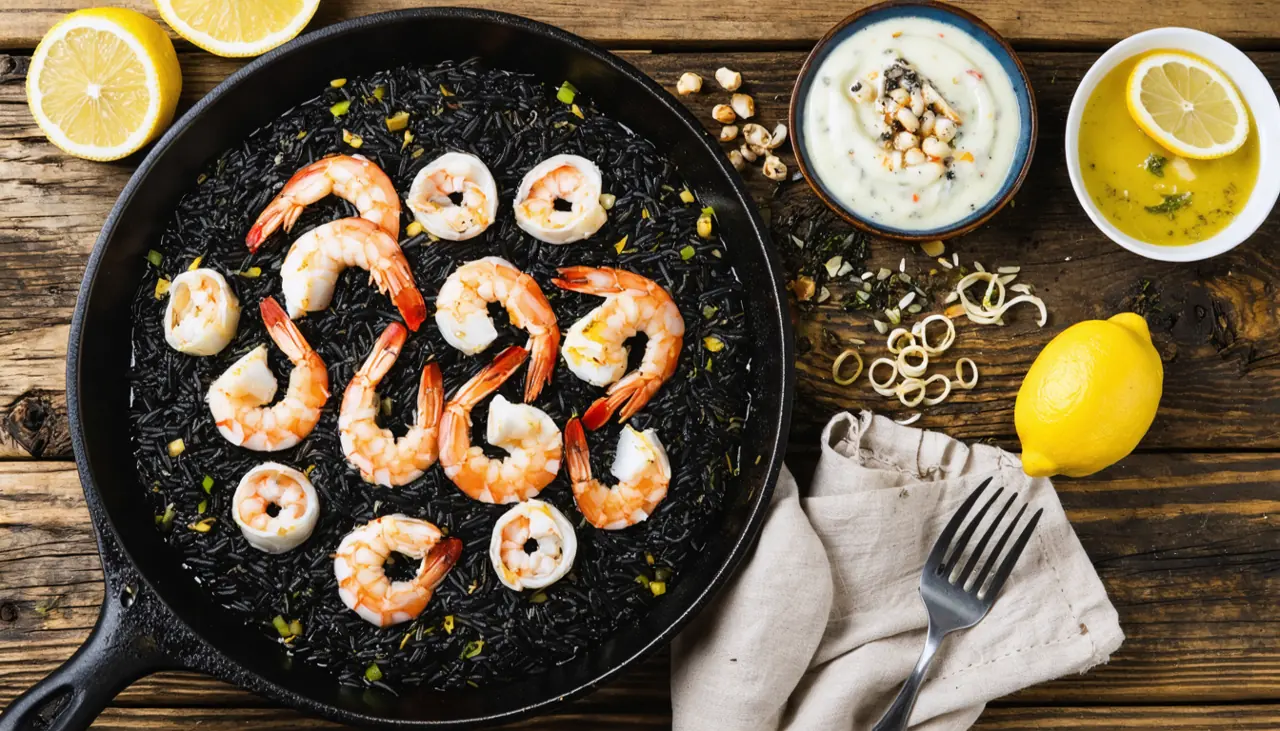
Riz noir à l'encre de seiche
Riz valencien cuit avec calamars, crevettes et encre de seiche, pour une couleur noire spectaculaire et un goût profond de la mer.
Portions
Ingrédients
Nutrition
Par portion
Étapes
Dry and season seafood
Pat the squid and shrimp completely dry with paper towels and season lightly with salt. Dry seafood sears instead of steaming, which matters for flavor later.
- 400 g squid
- 200 g shrimp
- to taste salt
Sear the seafood
Heat the olive oil in a wide, shallow paella pan over high heat. Sear the squid and shrimp for 2–3 minutes, just until lightly golden at the edges, then lift out onto a plate and set aside; they'll finish cooking later in the rice.
- 60 ml olive oil
- 400 g squid
- 200 g shrimp
✅ C'est prêt quand : the squid and shrimp are lightly golden but not fully cooked through
Build the sofrito
This step is part of Foodie Premium. Subscribe to unlock the full method, cooking mode and every recipe in the library.
Toast the rice
This step is part of Foodie Premium. Subscribe to unlock the full method, cooking mode and every recipe in the library.
Add ink and stock, then simmer
This step is part of Foodie Premium. Subscribe to unlock the full method, cooking mode and every recipe in the library.
Crisp the bottom
This step is part of Foodie Premium. Subscribe to unlock the full method, cooking mode and every recipe in the library.
Rest and serve
This step is part of Foodie Premium. Subscribe to unlock the full method, cooking mode and every recipe in the library.
The Story Behind the Dish
Arroz negro grew out of the same rice-growing culture that produced paella, but it belongs to the fishing towns along Spain's eastern coast rather than the inland fields. Cooks used squid ink, a byproduct of cleaning the day's catch, to turn an everyday seafood rice into something striking, stirring in the ink along with the stock so every grain turned glossy black.
It spread from home kitchens and beachside chiringuitos to tapas bars across Spain, where it's now ordered as much for its drama on the table as for its deep, briny flavor.
⭐ Why It's Famous
The jet-black color is unforgettable, but what keeps people ordering it is the flavor underneath: sweet seared squid, a rich tomato sofrito, and a crisp socarrat crust, all carrying the clean taste of the sea.
💡 Fun Fact
The ink doesn't just color the rice, it also seasons it with a subtle sweetness and brininess that plain stock alone can't give.
Mediterranean coast of Spain, especially Valencia, Alicante and Murcia
38.35°N, -0.48°W
Recettes similaires
Comments (0)
No comments yet. Be the first to share your thoughts!