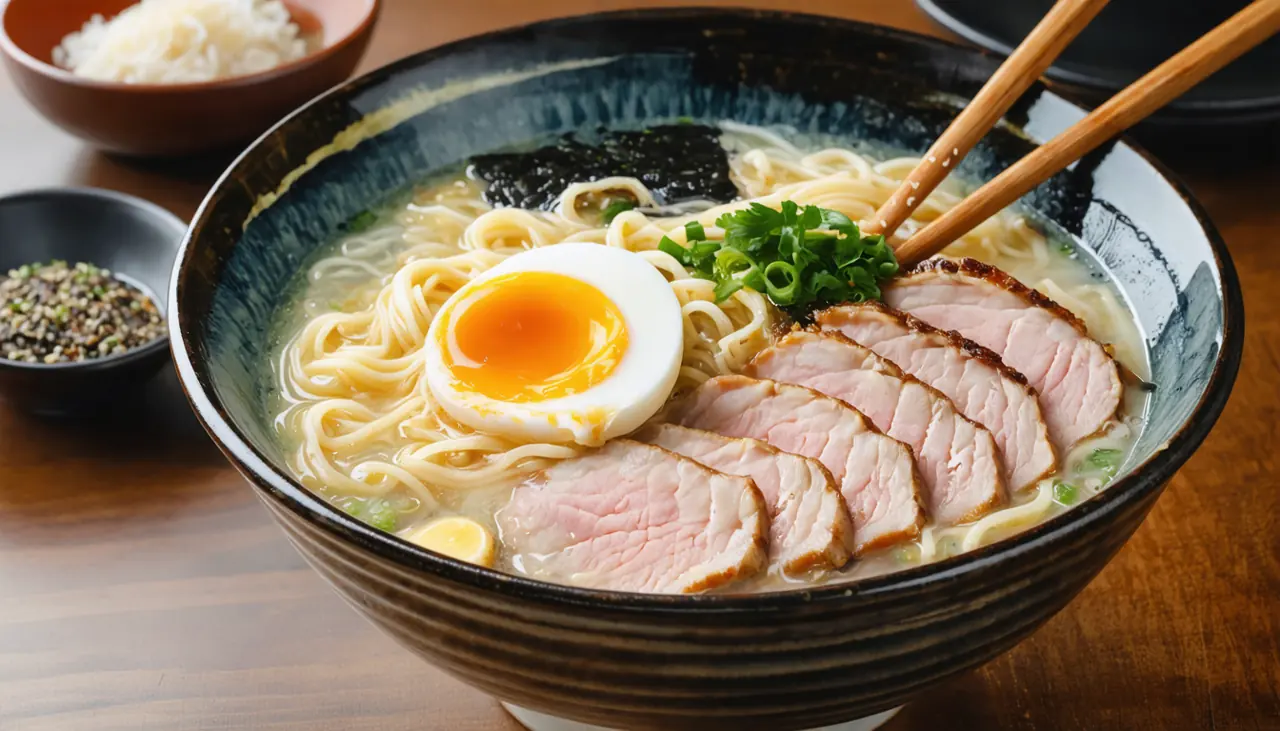
Ramen tonkotsu
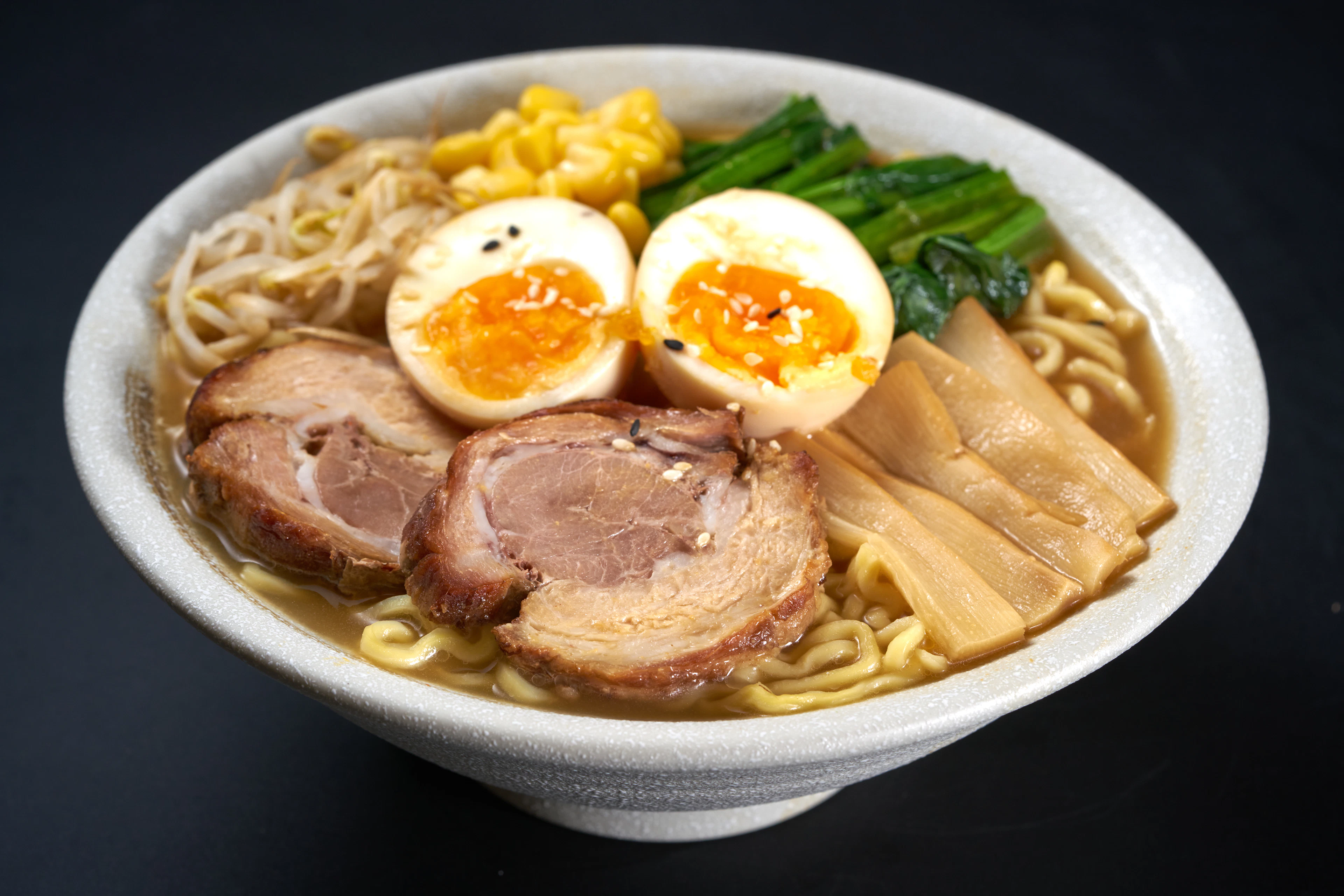
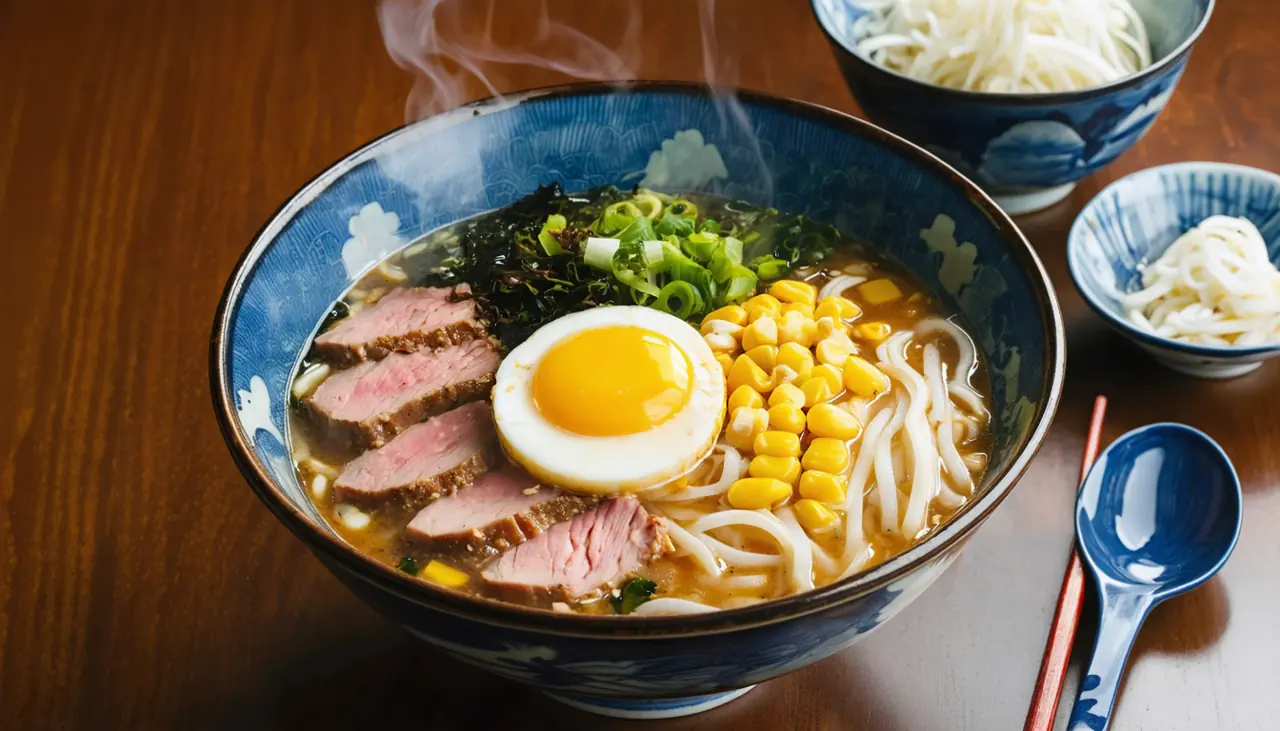
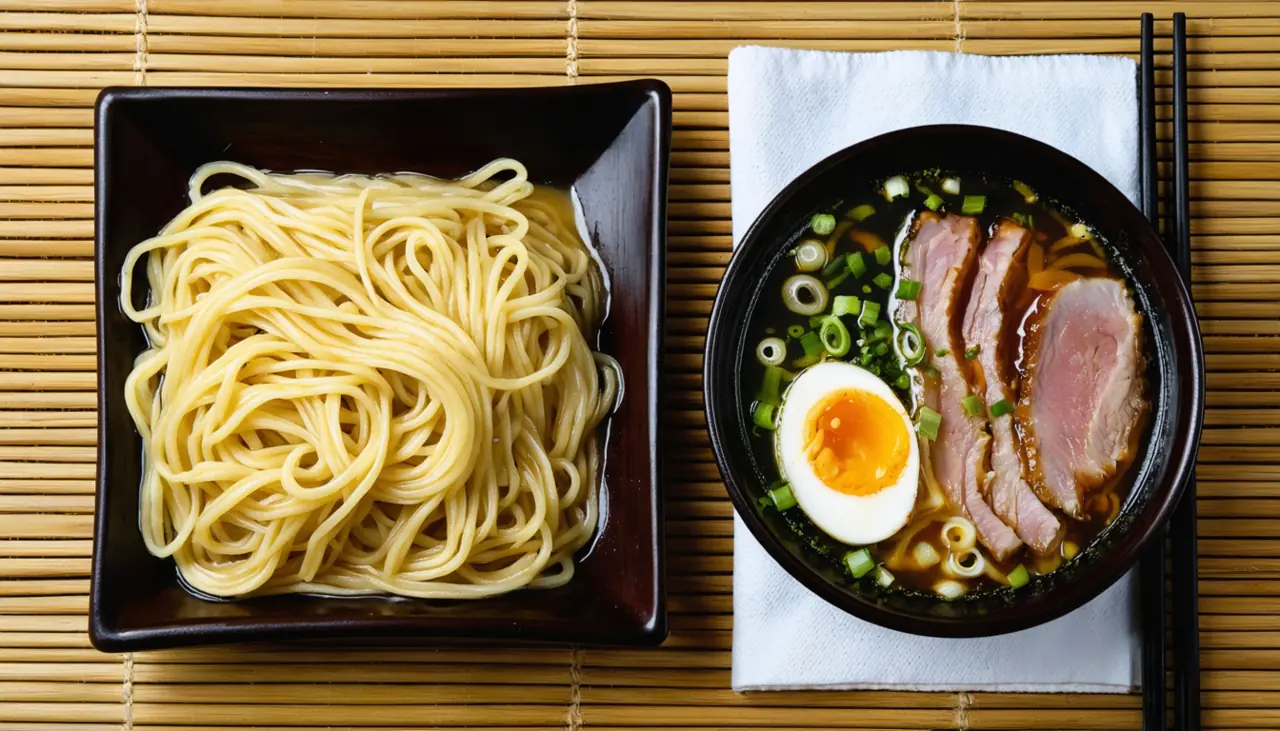
Un bouillon d'os de porc riche et crémeux, servi avec des nouilles, du porc chashu, un œuf mariné et des oignons verts.
Portions
Ingrédients
Nutrition
Par portion
Étapes
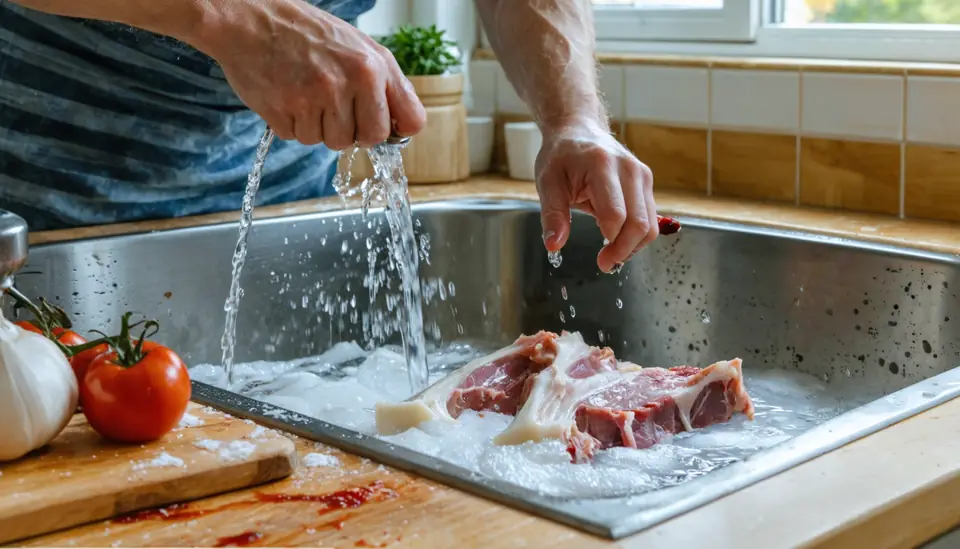
Clean the bones
Soak the bones in cold water for 1-2 hours, then put them in a pot with fresh cold water and bring to a rolling boil; boil hard for 10 minutes. Drain and scrub every bone clean under running water, including inside the joints, to remove all blood and grey scum.
- 1.5 kg pork bones
- 2 litres cold water, for soaking and blanching
✅ C'est prêt quand : bones look clean and white, with no blood or scum left
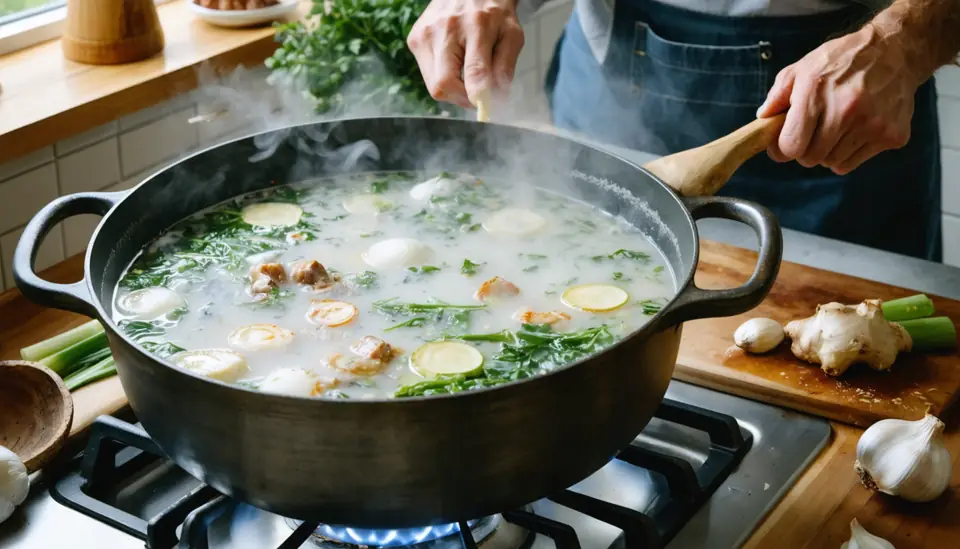
Boil the broth hard
Put the clean bones in a large, heavy pot with the garlic, ginger and leek greens, and cover with the cold water. Bring to a full rolling boil and keep it boiling hard, uncovered, for 10-12 hours, topping up with water whenever it drops below the bones; skim off dark scum only in the first hour, then leave it to cook unattended.
- 1.5 kg the cleaned bones
- 3 litres cold water
- 1 head garlic, halved
- 50 g ginger, sliced
- 2 leek greens
✅ C'est prêt quand : broth has turned thick and milky white
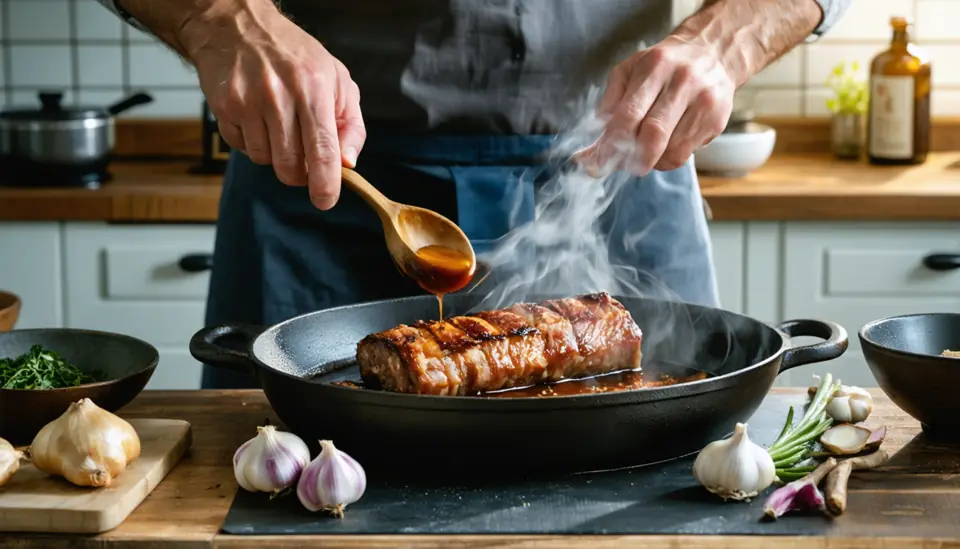
Braise the chashu
Sear the rolled pork belly in a dry pan over medium-high heat on all sides until deep golden, about 8-10 minutes total. Add the soy sauce, mirin, sake, sugar, water, garlic and ginger, bring to a boil, cover and simmer gently for 2 hours, turning once. Let the pork cool completely in its liquid before slicing thinly; strain and keep the liquid.
- 600 g pork belly
- 100 ml soy sauce
- 100 ml mirin
- 50 ml sake
- 30 g sugar
- 300 ml water
- 2 cloves garlic
- 2 slices ginger
✅ C'est prêt quand : a skewer slides into the pork with no resistance
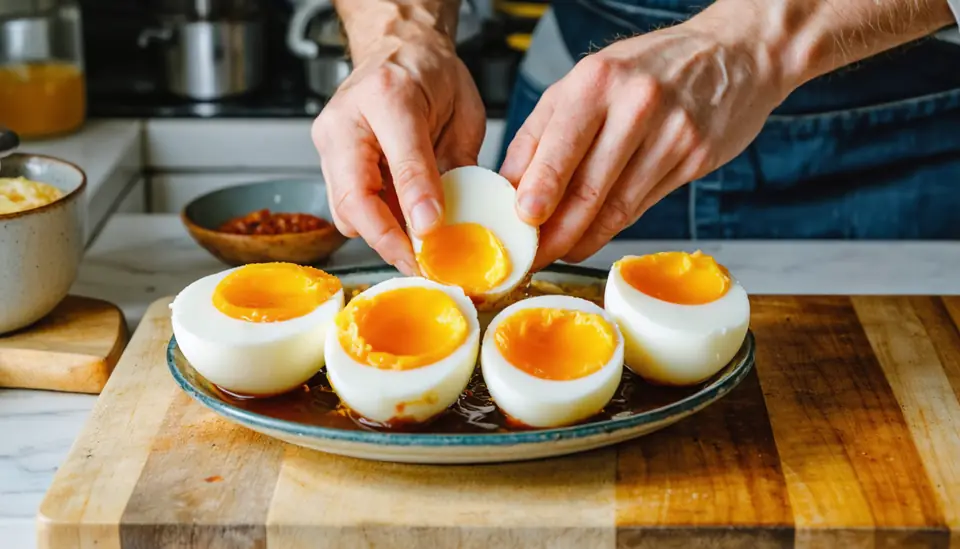
Marinate the eggs
Lower the eggs into boiling water and cook for exactly 6.5-7 minutes for a soft, jammy yolk, then plunge into the ice water and peel gently once cool. Mix 100 ml of the strained chashu liquid with the extra 100 ml water and marinate the eggs in it for at least 4 hours, or overnight in the fridge, turning once.
- 4 eggs
- 1 litre water, for boiling
- 500 g ice cubes
- 100 ml strained chashu braising liquid, from step 3
- 100 ml water, for marinade
✅ C'est prêt quand : eggs are evenly light brown on the outside
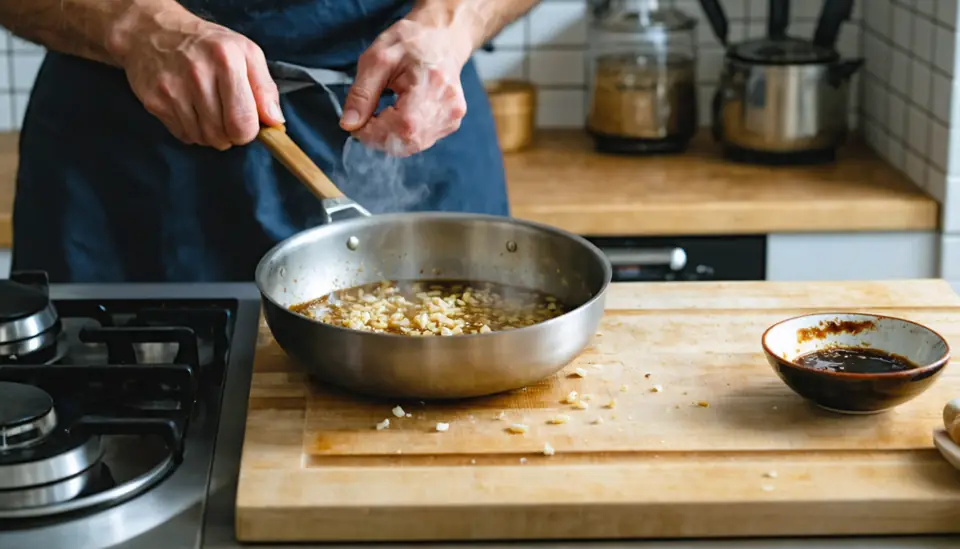
Make the tare and mayu
For the mayu, cook the minced garlic in the neutral oil over low-medium heat, stirring often, until deep brown and toasty-smelling, 5-6 minutes; set aside. Keep the plain soy sauce aside separately as the base for the tare.
- 4 cloves garlic, minced
- 60 ml neutral oil
- 60 ml soy sauce, for tare
✅ C'est prêt quand : oil is dark brown and smells toasted, not burnt
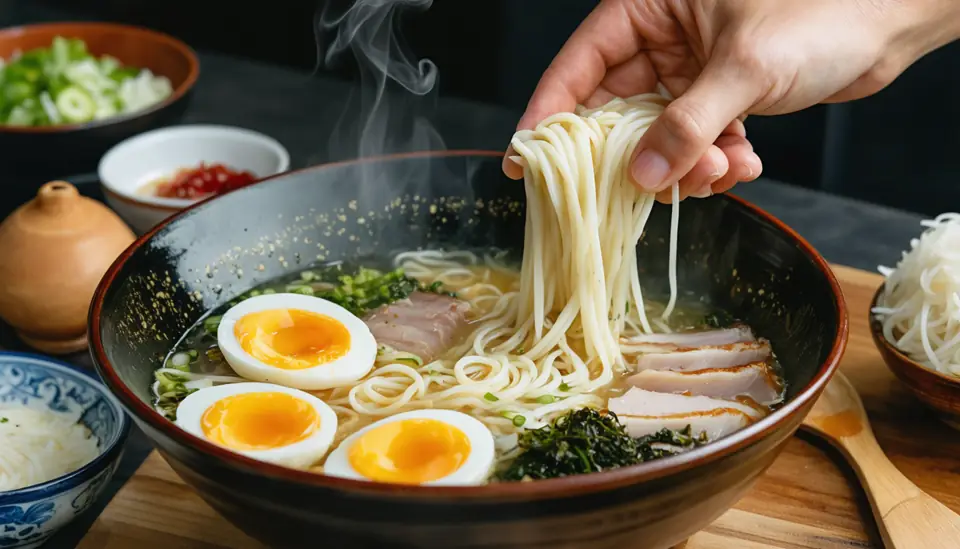
Assemble the bowls
Cook the noodles in plenty of boiling water for 60-90 seconds if fresh and thin, then drain well. Into each warmed bowl put the soy sauce, mayu and sesame oil, ladle in the very hot broth and stir to dissolve, then add the noodles, chashu slices, half an egg, scallions, nori and menma if using. Serve immediately while the broth is still steaming.
- 4 portions ramen noodles
- 60 ml tare (soy sauce), from step 5
- 60 ml mayu (black garlic oil), from step 5
- 4 tsp sesame oil
- about 1.5 litres hot broth, from step 2
- a few slices per bowl chashu slices, from step 3
- 4, halved marinated eggs, from step 4
- 4 scallions
- 4 sheets nori
- 80 g menma, optional
Clean the bones
Soak the bones in cold water for 1-2 hours, then put them in a pot with fresh cold water and bring to a rolling boil; boil hard for 10 minutes. Drain and scrub every bone clean under running water, including inside the joints, to remove all blood and grey scum.
- 1.5 kg pork bones
- 2 litres cold water, for soaking and blanching
✅ C'est prêt quand : bones look clean and white, with no blood or scum left
Boil the broth hard
Put the clean bones in a large, heavy pot with the garlic, ginger and leek greens, and cover with the cold water. Bring to a full rolling boil and keep it boiling hard, uncovered, for 10-12 hours, topping up with water whenever it drops below the bones; skim off dark scum only in the first hour, then leave it to cook unattended.
- 1.5 kg the cleaned bones
- 3 litres cold water
- 1 head garlic, halved
- 50 g ginger, sliced
- 2 leek greens
✅ C'est prêt quand : broth has turned thick and milky white
Braise the chashu
Sear the rolled pork belly in a dry pan over medium-high heat on all sides until deep golden, about 8-10 minutes total. Add the soy sauce, mirin, sake, sugar, water, garlic and ginger, bring to a boil, cover and simmer gently for 2 hours, turning once. Let the pork cool completely in its liquid before slicing thinly; strain and keep the liquid.
- 600 g pork belly
- 100 ml soy sauce
- 100 ml mirin
- 50 ml sake
- 30 g sugar
- 300 ml water
- 2 cloves garlic
- 2 slices ginger
✅ C'est prêt quand : a skewer slides into the pork with no resistance
Marinate the eggs
Lower the eggs into boiling water and cook for exactly 6.5-7 minutes for a soft, jammy yolk, then plunge into the ice water and peel gently once cool. Mix 100 ml of the strained chashu liquid with the extra 100 ml water and marinate the eggs in it for at least 4 hours, or overnight in the fridge, turning once.
- 4 eggs
- 1 litre water, for boiling
- 500 g ice cubes
- 100 ml strained chashu braising liquid, from step 3
- 100 ml water, for marinade
✅ C'est prêt quand : eggs are evenly light brown on the outside
Make the tare and mayu
For the mayu, cook the minced garlic in the neutral oil over low-medium heat, stirring often, until deep brown and toasty-smelling, 5-6 minutes; set aside. Keep the plain soy sauce aside separately as the base for the tare.
- 4 cloves garlic, minced
- 60 ml neutral oil
- 60 ml soy sauce, for tare
✅ C'est prêt quand : oil is dark brown and smells toasted, not burnt
Assemble the bowls
Cook the noodles in plenty of boiling water for 60-90 seconds if fresh and thin, then drain well. Into each warmed bowl put the soy sauce, mayu and sesame oil, ladle in the very hot broth and stir to dissolve, then add the noodles, chashu slices, half an egg, scallions, nori and menma if using. Serve immediately while the broth is still steaming.
- 4 portions ramen noodles
- 60 ml tare (soy sauce), from step 5
- 60 ml mayu (black garlic oil), from step 5
- 4 tsp sesame oil
- about 1.5 litres hot broth, from step 2
- a few slices per bowl chashu slices, from step 3
- 4, halved marinated eggs, from step 4
- 4 scallions
- 4 sheets nori
- 80 g menma, optional
The Story Behind the Dish
Tonkotsu ramen was born in the port city of Fukuoka, where Chinese-style noodle soups met local pork-farming traditions. Cooks at open-air yatai food stalls began boiling pork bones hard for hours, longer than any gentle stock, and discovered that the collagen and marrow broke down and emulsified into a thick, milky-white broth unlike anything else in Japan's noodle soups.
The style spread from Hakata's stalls across the country after the war, each shop guarding its own balance of bones, boiling time and tare, and it remains the dish Kyushu is proudest of.
⭐ Why It's Famous
Its broth, boiled rather than simmered until it turns creamy white, gives tonkotsu a richness and body that no other ramen style matches.
💡 Fun Fact
Many Hakata shops still practice 'kaedama,' selling an extra portion of noodles alone so customers can refill their bowl without losing a drop of the precious broth.
Hakata district, Fukuoka, Kyushu
33.59°N, 130.40°E
Recettes similaires
Comments (0)
No comments yet. Be the first to share your thoughts!