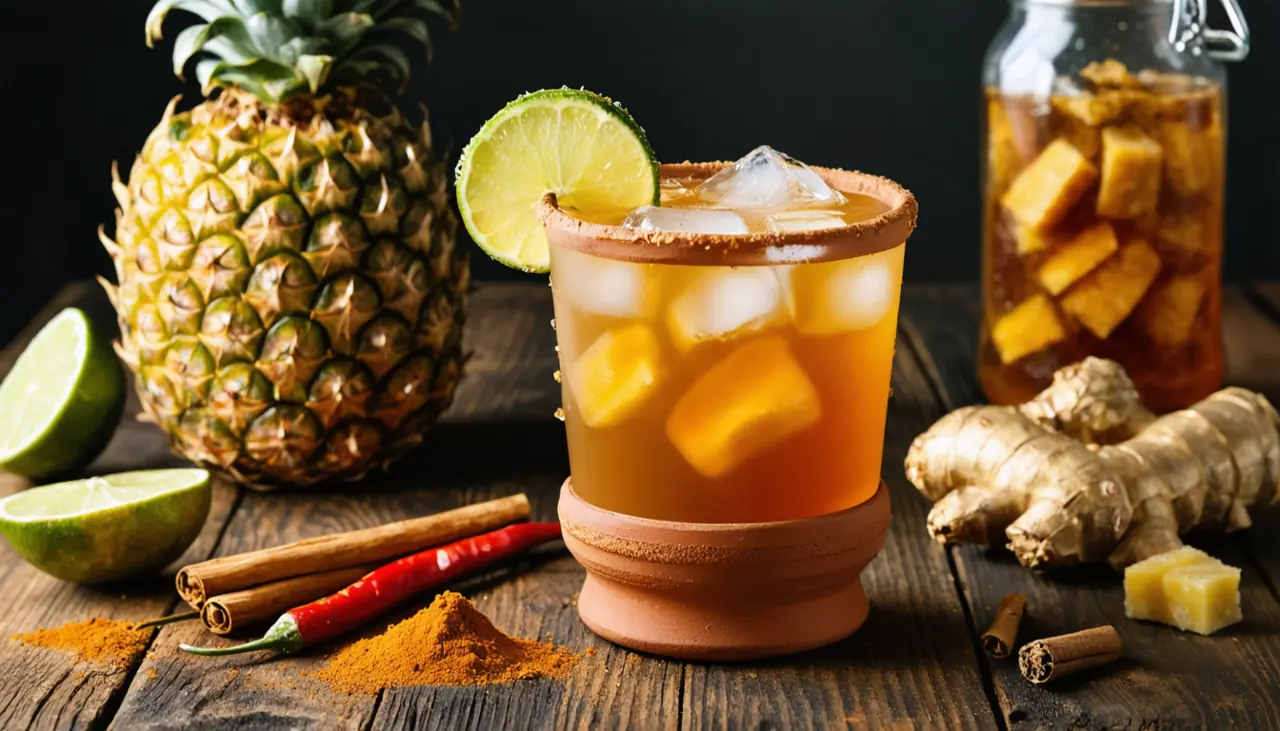
Tepache (boisson d'ananas fermenté)
Une boisson rafraîchissante et pétillante à base d'ananas fermenté, de piloncillo et d'épices, servie glacée.
Portions
Ingrédients
Nutrition
Par portion
Étapes
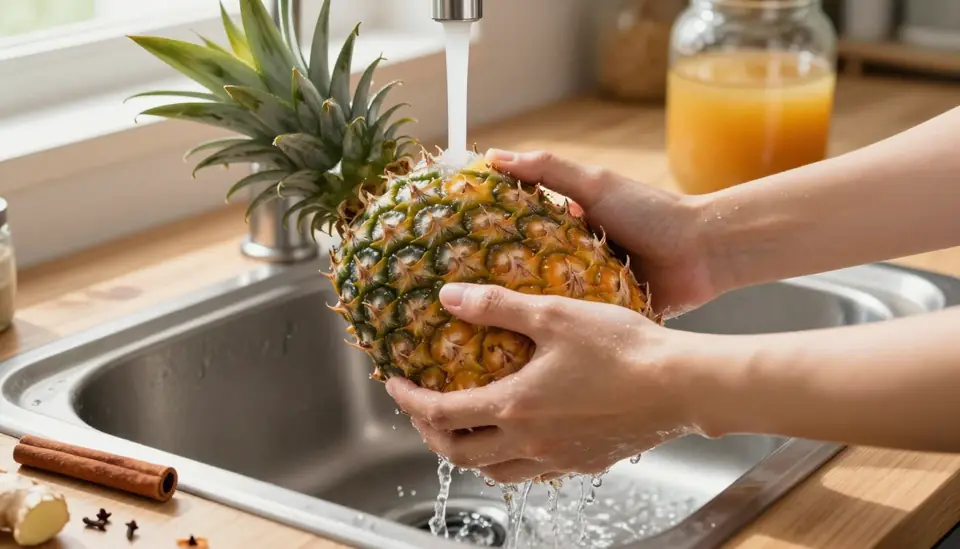
Wash the pineapple well
Scrub the whole pineapple under running water to remove any dirt or wax, since the skin goes into the ferment and gives tepache its deep flavour and natural wild yeasts. Do not peel it.
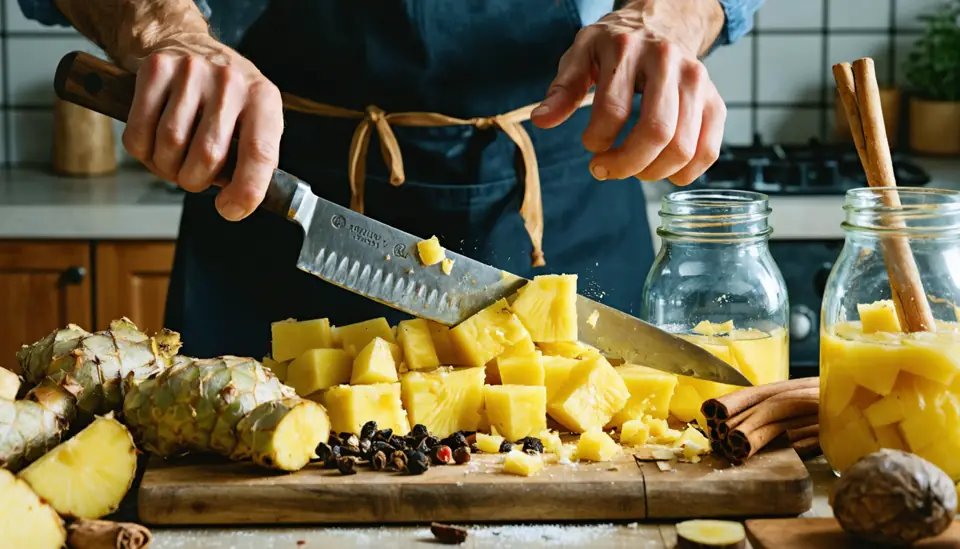
Chop and layer
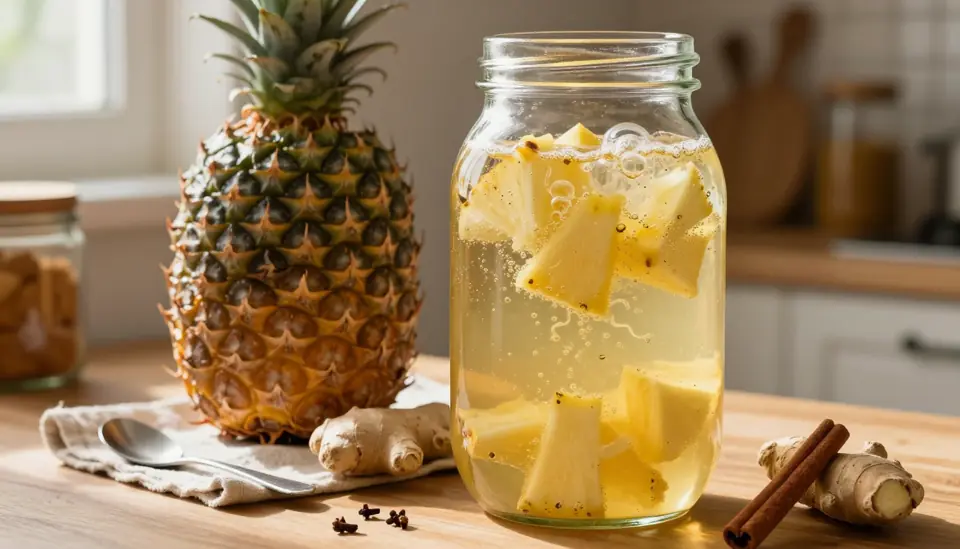
Cut the pineapple into rough chunks, skin, core and all, and drop them into a large clean glass or plastic jar (avoid metal containers, which react with the ferment). Add the piloncillo, cinnamon stick, cloves and ginger.
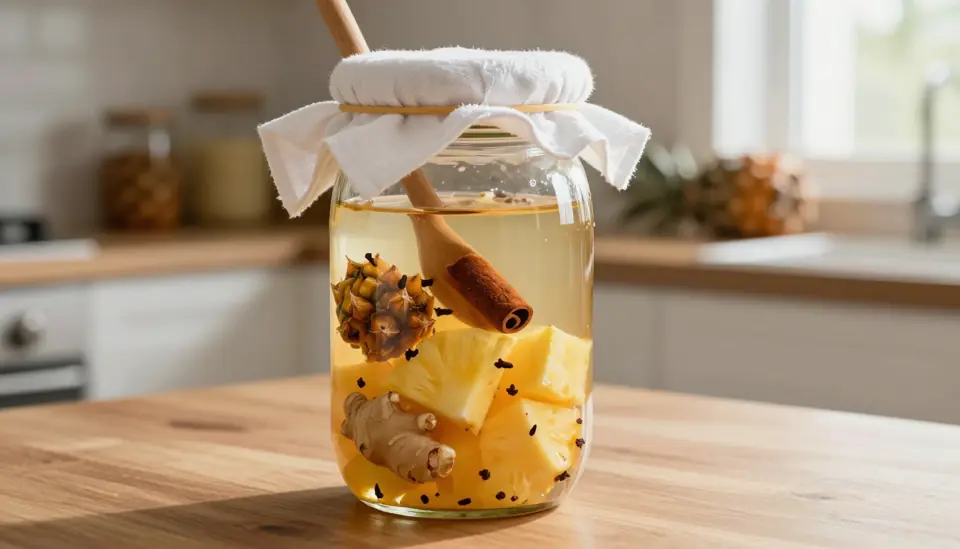
Add water and cover loosely
Pour in the water and stir once to help the piloncillo start dissolving. Cover the jar's mouth with a clean cloth or paper towel secured with a rubber band, not a tight lid: the ferment needs to breathe and release gas.
Ferment at room temperature
Leave the jar somewhere warm and out of direct sun for 24–48 hours, stirring once a day with a clean spoon. In a hot kitchen it will be ready closer to 24 hours; in a cooler one it may take the full 48. You'll see small bubbles and smell a tangy, slightly beery sweetness when it's ready.
Taste and judge readiness
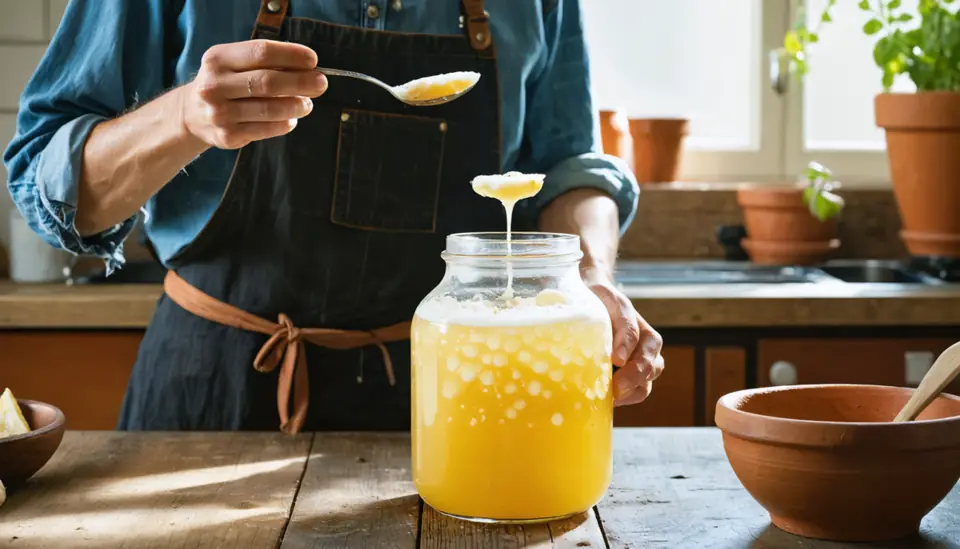
Tepache is ready when it tastes pleasantly tangy and lightly fizzy, somewhere between fresh juice and cider, but not sharp or vinegary. If it tastes flat and only sweet, give it a few more hours; if it tastes sour like vinegar, it has gone too far, so strain and chill it right away to stop the fermentation.
Strain and chill
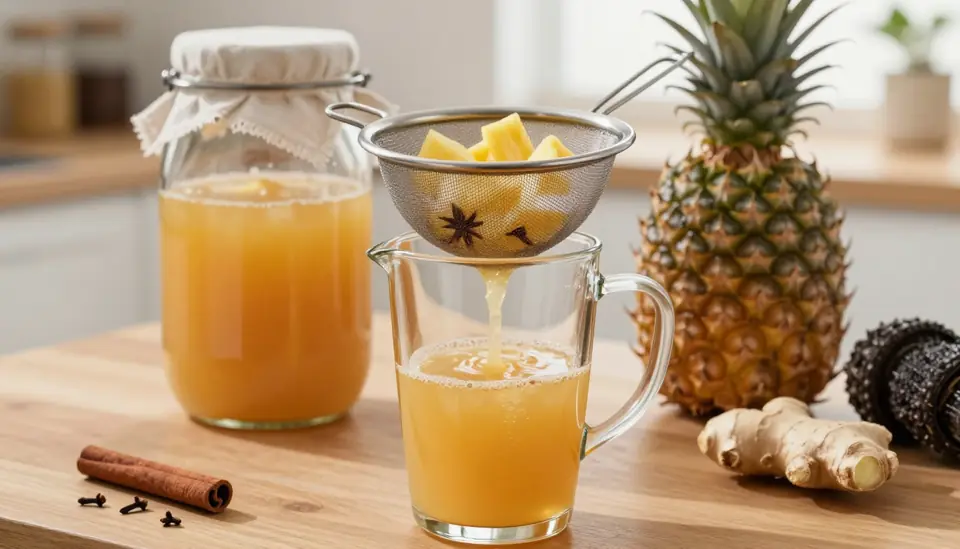
Strain the liquid through a fine sieve or muslin into a clean pitcher or bottles, pressing the pineapple lightly to release the last juice, then discard the solids. Refrigerate at least 2 hours before serving; it keeps well chilled for up to 5 days and will keep fermenting slowly, so taste it as the days go by.

Serve ice-cold
Pour over plenty of ice, with a squeeze of lime and a pinch of chile piquín powder on top if you like it with a kick. Some vendors stir in a splash of beer just before serving; it's optional but very traditional.
Wash the pineapple well
Scrub the whole pineapple under running water to remove any dirt or wax, since the skin goes into the ferment and gives tepache its deep flavour and natural wild yeasts. Do not peel it.
Chop and layer
Cut the pineapple into rough chunks, skin, core and all, and drop them into a large clean glass or plastic jar (avoid metal containers, which react with the ferment). Add the piloncillo, cinnamon stick, cloves and ginger.
Add water and cover loosely
Pour in the water and stir once to help the piloncillo start dissolving. Cover the jar's mouth with a clean cloth or paper towel secured with a rubber band, not a tight lid: the ferment needs to breathe and release gas.
Ferment at room temperature
Leave the jar somewhere warm and out of direct sun for 24–48 hours, stirring once a day with a clean spoon. In a hot kitchen it will be ready closer to 24 hours; in a cooler one it may take the full 48. You'll see small bubbles and smell a tangy, slightly beery sweetness when it's ready.
Taste and judge readiness
Tepache is ready when it tastes pleasantly tangy and lightly fizzy, somewhere between fresh juice and cider, but not sharp or vinegary. If it tastes flat and only sweet, give it a few more hours; if it tastes sour like vinegar, it has gone too far, so strain and chill it right away to stop the fermentation.
Strain and chill
Strain the liquid through a fine sieve or muslin into a clean pitcher or bottles, pressing the pineapple lightly to release the last juice, then discard the solids. Refrigerate at least 2 hours before serving; it keeps well chilled for up to 5 days and will keep fermenting slowly, so taste it as the days go by.
Serve ice-cold
Pour over plenty of ice, with a squeeze of lime and a pinch of chile piquín powder on top if you like it with a kick. Some vendors stir in a splash of beer just before serving; it's optional but very traditional.
The Story Behind the Dish
Tepache's name comes from the Nahuatl word tepiātl, a fermented corn drink made long before the Spanish arrived. After colonization brought sugarcane and piloncillo to Mexico, cooks began fermenting fruit, and pineapple eventually became the most popular base, prized for its natural sugars and quick, lively fermentation.
Today it's sold from big clay jars or barrels by street vendors, scooped into plastic cups over ice, often finished with a splash of beer, chile and lime.
⭐ Why It's Famous
It's the classic sidewalk refresher of Mexico: tangy, barely alcoholic, and perfectly suited to hot weather.
💡 Fun Fact
Because real tepache relies on wild fermentation, no two batches taste exactly the same, which is part of its charm for street vendors and home cooks alike.
Central and western Mexico
19.43°N, -99.13°W
Recettes similaires
Comments (0)
No comments yet. Be the first to share your thoughts!