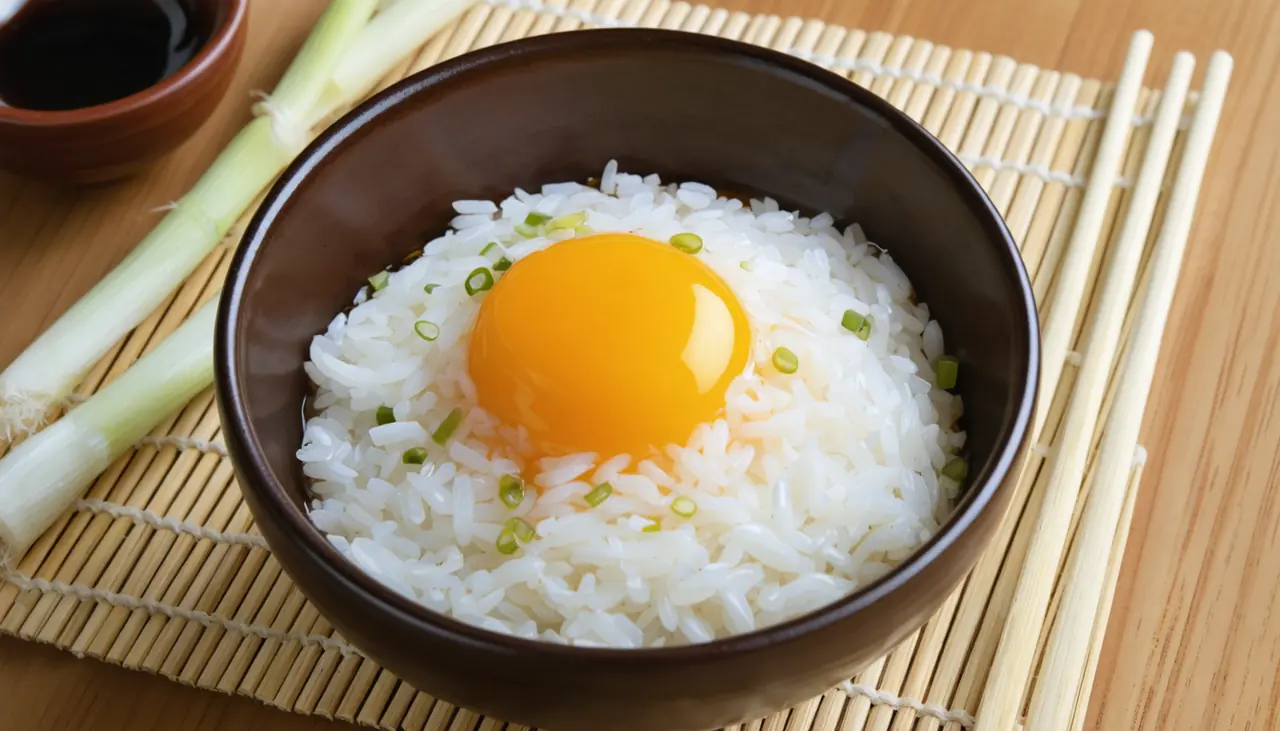
Riz à l'œuf cru (Tamagokake Gohan)
Riz chaud mélangé à un œuf très frais et à la sauce soja, pour un petit-déjeuner japonais soyeux et réconfortant.
Portions
Ingrédients
Nutrition
Par portion
Étapes

Get the rice very hot
The rice must be steaming hot, straight from the cooker or reheated covered until it's piping again. The heat of the rice is what very lightly cooks the edges of the raw egg white and turns the whole dish silky instead of just wet.
- 2 bowls (about 400 g) hot rice
✅ C'est prêt quand : the rice is visibly steaming and hot to the touch through the chopsticks

Crack and check the egg
Crack the egg into a small bowl on its own and give it a quick smell and look before using it, since it will stay raw. Use only eggs that are very fresh or specifically sold for eating raw.
- 2 eggs
✅ C'est prêt quand : the egg looks and smells perfectly fresh, with no off odor

Season the egg first
Whisk the egg with chopsticks for about 20 seconds until frothy and pale, then stir in the soy sauce and mirin right into the egg, not onto the rice. Seasoning the egg first spreads the flavor evenly and softens the raw-egg smell.
- 2–4 tsp soy sauce
- 1 tsp mirin
✅ C'est prêt quand : the egg is frothy, pale yellow and smells only of soy sauce, not of raw egg

Mix into the rice
Pour the seasoned egg over the hot rice and mix quickly with chopsticks in wide circular, cutting strokes, lifting the rice from the bottom of the bowl. Keep mixing for about 20 seconds, until the rice turns glossy and every grain is coated in a thin, creamy film.
- 2 bowls (about 400 g) hot rice (from step 1)
✅ C'est prêt quand : the rice looks glossy and lightly thickened, with no pools of loose egg left

Garnish and eat right away
Scatter over spring onion, bonito flakes and nori if using, and eat immediately with a spoon or chopsticks. Tamagokake gohan loses its silky texture if it sits, so serve it the moment it's mixed.
- 2 spring onions
- a small handful bonito flakes
- 1 sheet nori
Get the rice very hot
The rice must be steaming hot, straight from the cooker or reheated covered until it's piping again. The heat of the rice is what very lightly cooks the edges of the raw egg white and turns the whole dish silky instead of just wet.
- 2 bowls (about 400 g) hot rice
✅ C'est prêt quand : the rice is visibly steaming and hot to the touch through the chopsticks
Crack and check the egg
Crack the egg into a small bowl on its own and give it a quick smell and look before using it, since it will stay raw. Use only eggs that are very fresh or specifically sold for eating raw.
- 2 eggs
✅ C'est prêt quand : the egg looks and smells perfectly fresh, with no off odor
Season the egg first
Whisk the egg with chopsticks for about 20 seconds until frothy and pale, then stir in the soy sauce and mirin right into the egg, not onto the rice. Seasoning the egg first spreads the flavor evenly and softens the raw-egg smell.
- 2–4 tsp soy sauce
- 1 tsp mirin
✅ C'est prêt quand : the egg is frothy, pale yellow and smells only of soy sauce, not of raw egg
Mix into the rice
Pour the seasoned egg over the hot rice and mix quickly with chopsticks in wide circular, cutting strokes, lifting the rice from the bottom of the bowl. Keep mixing for about 20 seconds, until the rice turns glossy and every grain is coated in a thin, creamy film.
- 2 bowls (about 400 g) hot rice (from step 1)
✅ C'est prêt quand : the rice looks glossy and lightly thickened, with no pools of loose egg left
Garnish and eat right away
Scatter over spring onion, bonito flakes and nori if using, and eat immediately with a spoon or chopsticks. Tamagokake gohan loses its silky texture if it sits, so serve it the moment it's mixed.
- 2 spring onions
- a small handful bonito flakes
- 1 sheet nori
The Story Behind the Dish
Mixing raw egg into hot rice is an old, humble idea, but it only became a true everyday dish once eggs turned from a rare treat into an affordable food for ordinary households, during the Meiji era's rapid changes in diet. From there it settled into Japanese homes as the breakfast everyone's parents or grandparents made in a hurry.
Every family has its own small ritual: some whisk the egg white and yolk separately, some season the egg before mixing, some stir in dashi, nori or bonito flakes. The constant is speed, warmth and the glossy, silky result.
⭐ Why It's Famous
It turns the two most basic things in a Japanese kitchen, rice and an egg, into something rich and comforting in under two minutes, which is exactly why generations keep coming back to it.
💡 Fun Fact
Japan has unusually strict farm-to-table standards for egg freshness and safety, which is a big reason eating raw egg over rice is such a normal, trusted everyday habit there.
All over Japan, home kitchens
35.68°N, 139.65°E
Recettes similaires
Comments (0)
No comments yet. Be the first to share your thoughts!