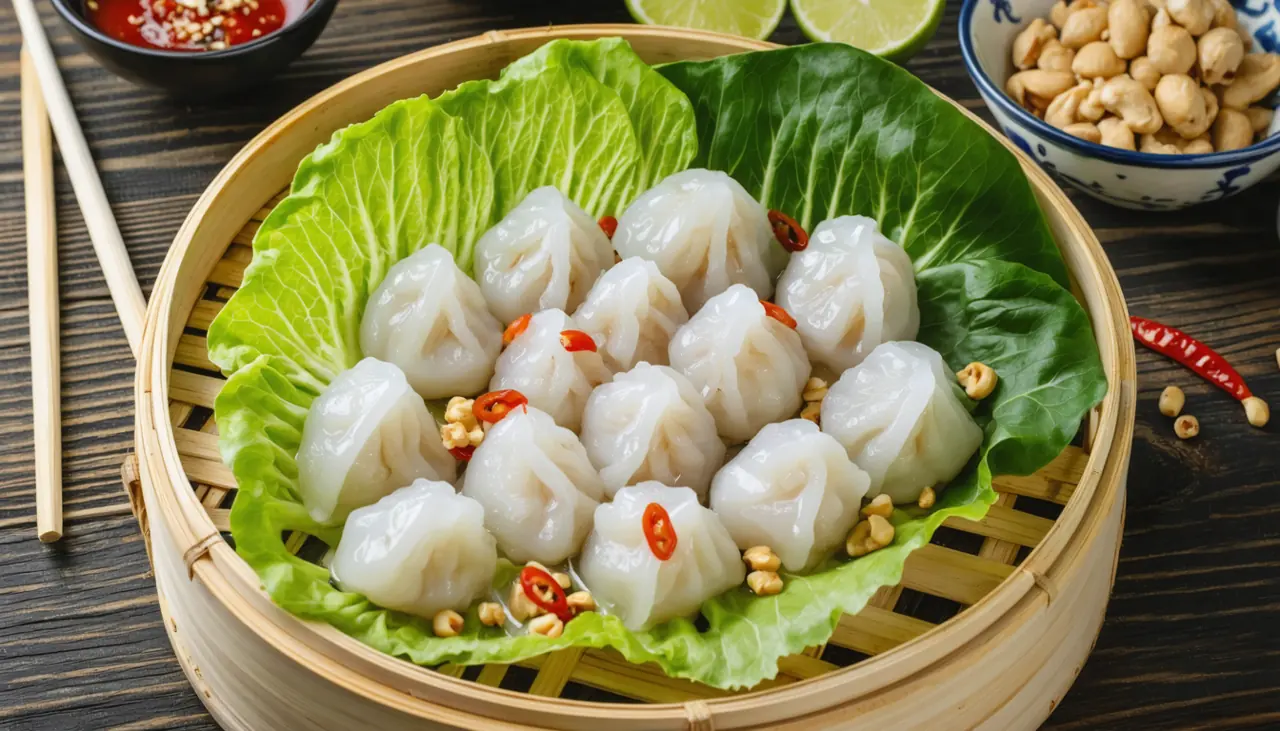
Perles de tapioca au porc (Sakhu Sai Moo)
Boulettes de porc et cacahuètes enrobées de perles de tapioca moelleuses, cuites à la vapeur et servies sur de la laitue avec du piment frais.
Portions
Ingrédients
Nutrition
Par portion
Étapes
Soak the tapioca pearls
Put the tapioca pearls in a bowl, cover with the water and leave to soak for 20 minutes. This softens the outside while the centre stays slightly firm, so the pearls don't cook up chalky or mushy later. Drain well in a sieve, shaking off the extra water.
- 200 g tapioca pearls
- 500 ml water
✅ C'est prêt quand : the pearls look slightly swollen and feel soft outside, with just a touch of firmness in the middle
Pound the seasoning paste
Pound the garlic, cilantro root and white pepper together in a mortar (or mince very finely and mash with the flat of a knife). Pounding breaks the fibres open and releases far more flavour than simply chopping.
- 3 cloves garlic
- 1 tbsp cilantro root
- 1/2 tsp white pepper
✅ C'est prêt quand : the mixture is fragrant and almost smooth, with no large garlic chunks left
Cook the pork filling
This step is part of Foodie Premium. Subscribe to unlock the full method, cooking mode and every recipe in the library.
Shape into balls
This step is part of Foodie Premium. Subscribe to unlock the full method, cooking mode and every recipe in the library.
Coat and steam
This step is part of Foodie Premium. Subscribe to unlock the full method, cooking mode and every recipe in the library.
Serve
This step is part of Foodie Premium. Subscribe to unlock the full method, cooking mode and every recipe in the library.
The Story Behind the Dish
Sakhu sai moo grew out of the long exchange between Thai cooks and Chinese immigrant communities who settled around Bangkok, bringing with them minced pork fillings and a love of steamed dumplings. Thai cooks wrapped that filling in tapioca, a starch that had travelled from South America and taken root in Thai cooking, turning it into something distinctly local.
It became a favourite street-side and market snack, often sold from steaming baskets alongside other little bites, and is still made at home for special occasions and festivals.
⭐ Why It's Famous
The pearly, slightly chewy tapioca shell against the savoury, peanut-studded pork inside is an irresistible contrast, brightened by crisp lettuce, fresh chili and lime.
💡 Fun Fact
Tapioca pearls are made from cassava, a root crop native to South America that reached Southeast Asia through trade centuries ago and is now central to many beloved Thai sweets and snacks.
Central Thailand, with roots in Thai-Chinese communities
13.76°N, 100.50°E
Recettes similaires
Comments (0)
No comments yet. Be the first to share your thoughts!