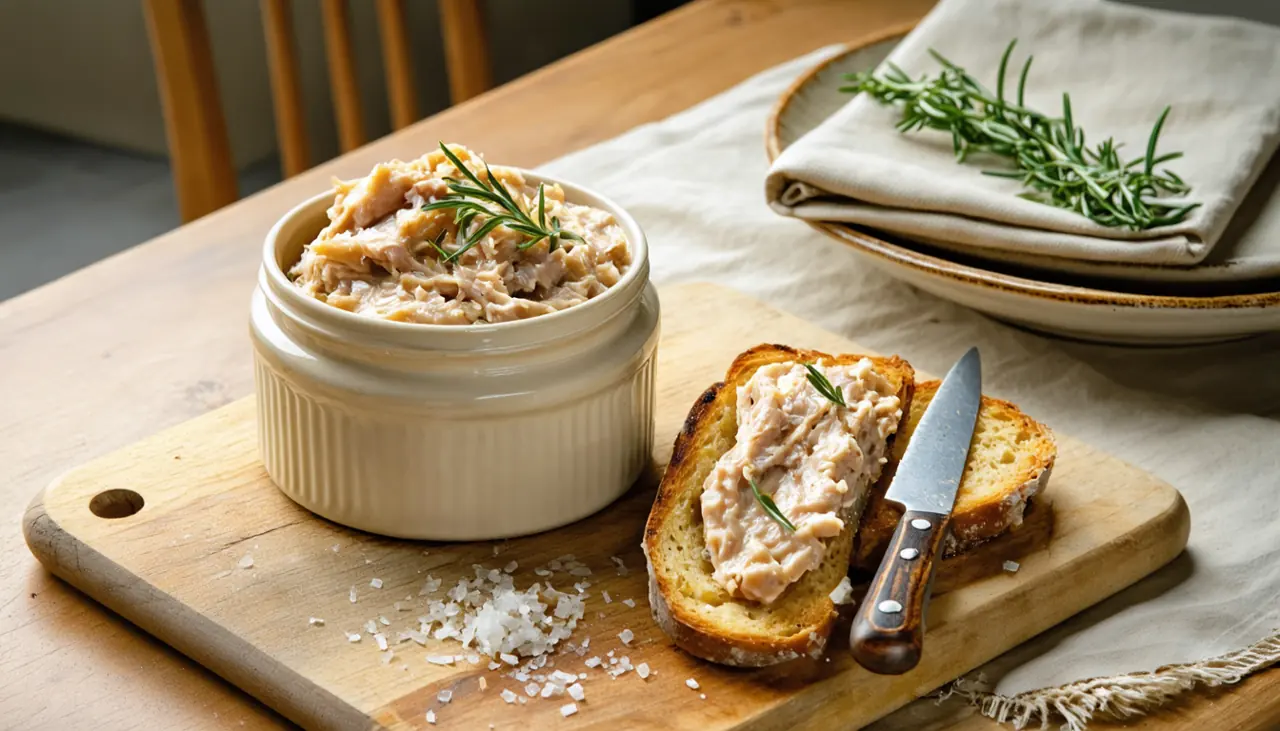
Rillettes de Tours
Porc confit longuement dans sa graisse, effiloché à la fourchette et mis en pot sous une couche de gras. À tartiner généreusement sur du pain de campagne.
Portions
Ingrédients
Nutrition
Par portion
Étapes
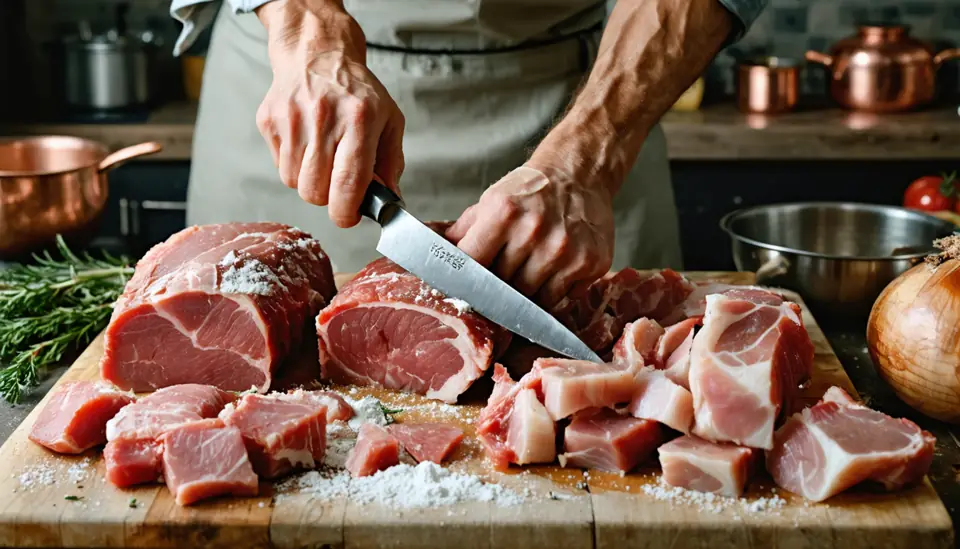
Cut the pork and fat
Cut the pork shoulder, pork belly and back fat into roughly 4 cm chunks. Keeping the pieces this size (not smaller) helps the meat cook gently and stay moist rather than drying out.
- 1 kg pork shoulder
- 500 g pork belly
- 300 g pork back fat
✅ C'est prêt quand : all the meat and fat are cut into even chunks

Build the pot
Put the meat and fat into a heavy, oven-safe pot (a Dutch oven works well). Add the water, wine, garlic, bay leaves, thyme, ground cloves, salt and pepper. Stir once so everything is coated.
- 250 ml water
- 100 ml dry white wine
- 2 cloves garlic
- 2 bay leaves
- 4 sprigs thyme
- 1 pinch ground cloves
- 15 g salt
- 1/2 tsp black pepper
✅ C'est prêt quand : everything is combined in the pot and lightly coated in the liquid
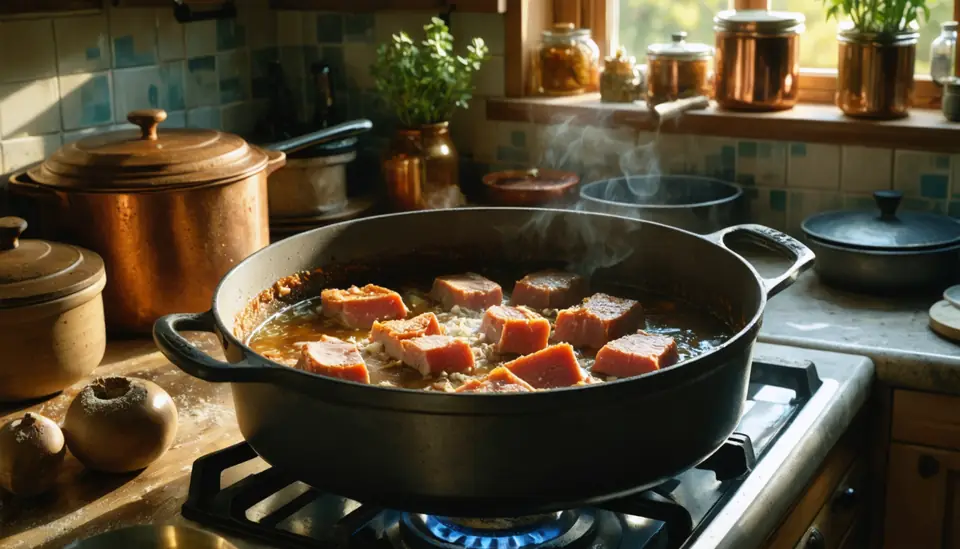
Cook low and slow
Cover loosely and cook in the oven at 140°C (284°F) for about 4 hours, stirring every hour, until the pork is so tender it falls apart at a touch of a spoon. The pot should barely bubble; if it ever boils hard, turn the heat down — a gentle simmer is what makes rillettes silky instead of tough.
✅ C'est prêt quand : the meat shreds easily with a spoon and the fat has fully melted around it
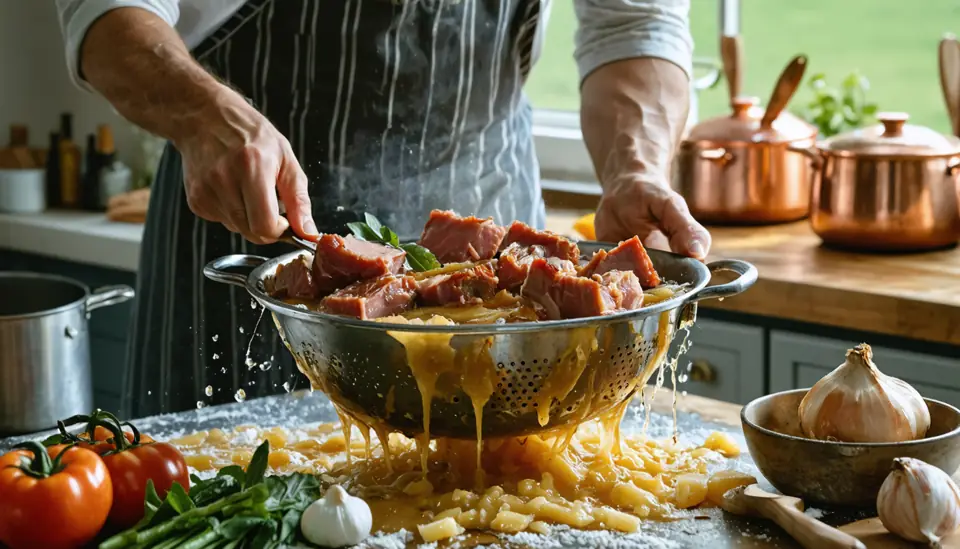
Strain and separate
Pour the whole pot through a colander set over a bowl, keeping all the melted fat and jellied cooking juices. Pick out and discard the bay leaves and thyme stems. Let the meat cool for 10 minutes, just until it is safe to handle but still warm.
✅ C'est prêt quand : the meat is separated from the liquid fat and juices, and cool enough to touch
Shred the meat
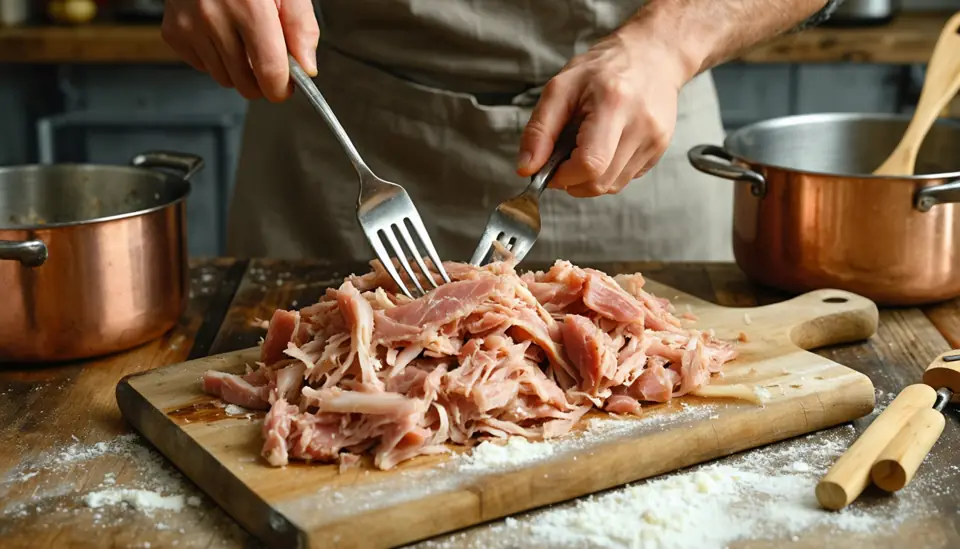
While still warm, pull the meat apart with two forks or your fingers into coarse, uneven shreds. Rillettes should look rustic, not smooth like a pâté — avoid chopping or blending it.
✅ C'est prêt quand : the meat is pulled into coarse, loose shreds with no large chunks left
Mix and season
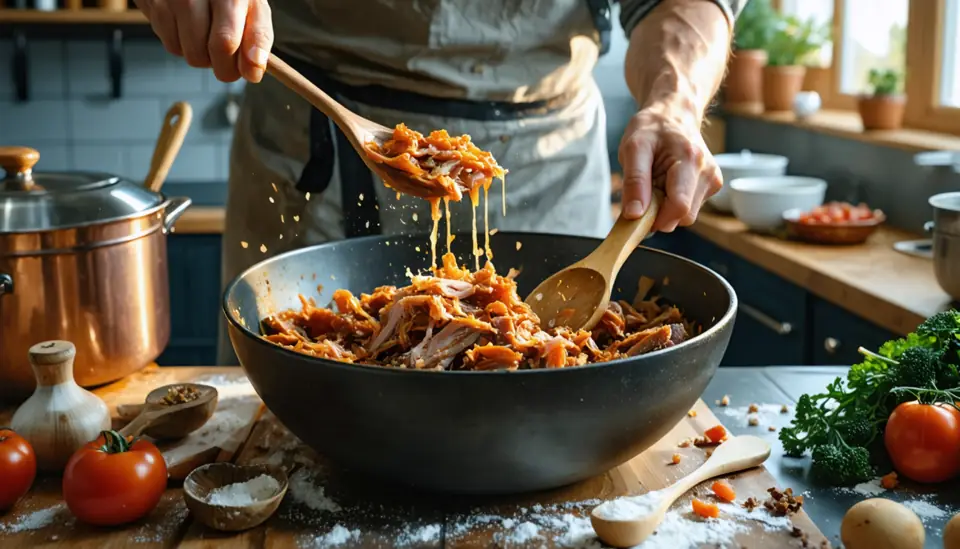
Return the shredded meat to a bowl and mix in enough of the reserved fat and juices, a little at a time, until the mixture is moist and holds together but is not swimming in liquid. Taste and adjust the salt and pepper; it should taste quite well seasoned, since the flavor mellows once chilled.
✅ C'est prêt quand : the mixture is moist, well seasoned and holds its shape on a spoon
Pack and seal
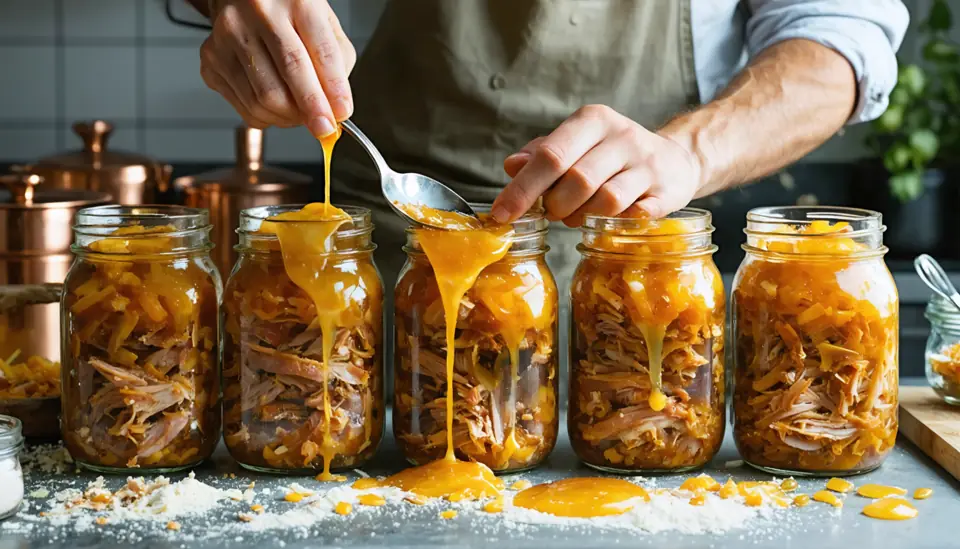
Pack the rillettes tightly into clean jars or ramekins, pressing down with the back of a spoon to remove air pockets. Pour the remaining reserved fat (melting the extra lard first if you need more) over the top in a layer at least 5 mm thick, completely sealing the surface. Cool to room temperature, then refrigerate for at least 24 hours before serving, so the flavors settle and the fat sets firm.
- 50 g extra lard
✅ C'est prêt quand : the rillettes are fully sealed under a layer of set fat and have chilled at least a day
Cut the pork and fat
Cut the pork shoulder, pork belly and back fat into roughly 4 cm chunks. Keeping the pieces this size (not smaller) helps the meat cook gently and stay moist rather than drying out.
- 1 kg pork shoulder
- 500 g pork belly
- 300 g pork back fat
✅ C'est prêt quand : all the meat and fat are cut into even chunks
Build the pot
Put the meat and fat into a heavy, oven-safe pot (a Dutch oven works well). Add the water, wine, garlic, bay leaves, thyme, ground cloves, salt and pepper. Stir once so everything is coated.
- 250 ml water
- 100 ml dry white wine
- 2 cloves garlic
- 2 bay leaves
- 4 sprigs thyme
- 1 pinch ground cloves
- 15 g salt
- 1/2 tsp black pepper
✅ C'est prêt quand : everything is combined in the pot and lightly coated in the liquid
Cook low and slow
Cover loosely and cook in the oven at 140°C (284°F) for about 4 hours, stirring every hour, until the pork is so tender it falls apart at a touch of a spoon. The pot should barely bubble; if it ever boils hard, turn the heat down — a gentle simmer is what makes rillettes silky instead of tough.
✅ C'est prêt quand : the meat shreds easily with a spoon and the fat has fully melted around it
Strain and separate
Pour the whole pot through a colander set over a bowl, keeping all the melted fat and jellied cooking juices. Pick out and discard the bay leaves and thyme stems. Let the meat cool for 10 minutes, just until it is safe to handle but still warm.
✅ C'est prêt quand : the meat is separated from the liquid fat and juices, and cool enough to touch
Shred the meat
While still warm, pull the meat apart with two forks or your fingers into coarse, uneven shreds. Rillettes should look rustic, not smooth like a pâté — avoid chopping or blending it.
✅ C'est prêt quand : the meat is pulled into coarse, loose shreds with no large chunks left
Mix and season
Return the shredded meat to a bowl and mix in enough of the reserved fat and juices, a little at a time, until the mixture is moist and holds together but is not swimming in liquid. Taste and adjust the salt and pepper; it should taste quite well seasoned, since the flavor mellows once chilled.
✅ C'est prêt quand : the mixture is moist, well seasoned and holds its shape on a spoon
Pack and seal
Pack the rillettes tightly into clean jars or ramekins, pressing down with the back of a spoon to remove air pockets. Pour the remaining reserved fat (melting the extra lard first if you need more) over the top in a layer at least 5 mm thick, completely sealing the surface. Cool to room temperature, then refrigerate for at least 24 hours before serving, so the flavors settle and the fat sets firm.
- 50 g extra lard
✅ C'est prêt quand : the rillettes are fully sealed under a layer of set fat and have chilled at least a day
The Story Behind the Dish
Rillettes grew out of an old farmhouse way of keeping pork through the year, long before refrigeration: cooking it slowly in its own fat until tender, then storing it under that same fat, which sealed out air and kept it safe for weeks. Tours, in the Loire Valley, became the town most associated with the dish, and 'rillettes de Tours' is still the benchmark version, prized for its coarse, hand-pulled texture.
Every Touraine household and charcuterie had its own small variations in spicing, but the method stayed the same: patience over a low fire, nothing rushed.
⭐ Why It's Famous
It turns humble cuts of pork into something rich and savory enough to need nothing but good bread, and it keeps beautifully, which made it a staple of French pantries and picnic baskets alike.
💡 Fun Fact
Rillettes de Tours and rillettes du Mans (made further north) are the two best-known regional styles, and Loire Valley cooks have long argued over whose version is the true original.
Tours, Loire Valley, France
47.39°N, 0.68°E
Recettes similaires

Comments (0)
No comments yet. Be the first to share your thoughts!