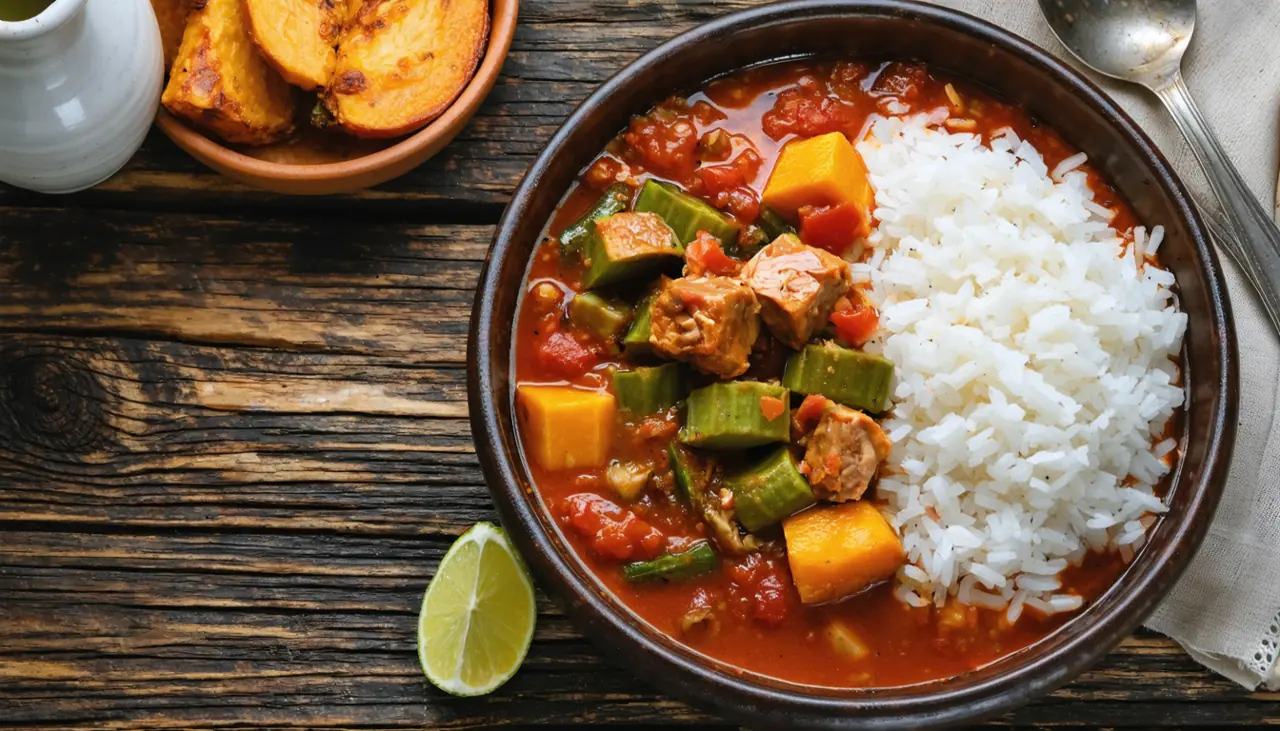
Ragoût de gombo cubain
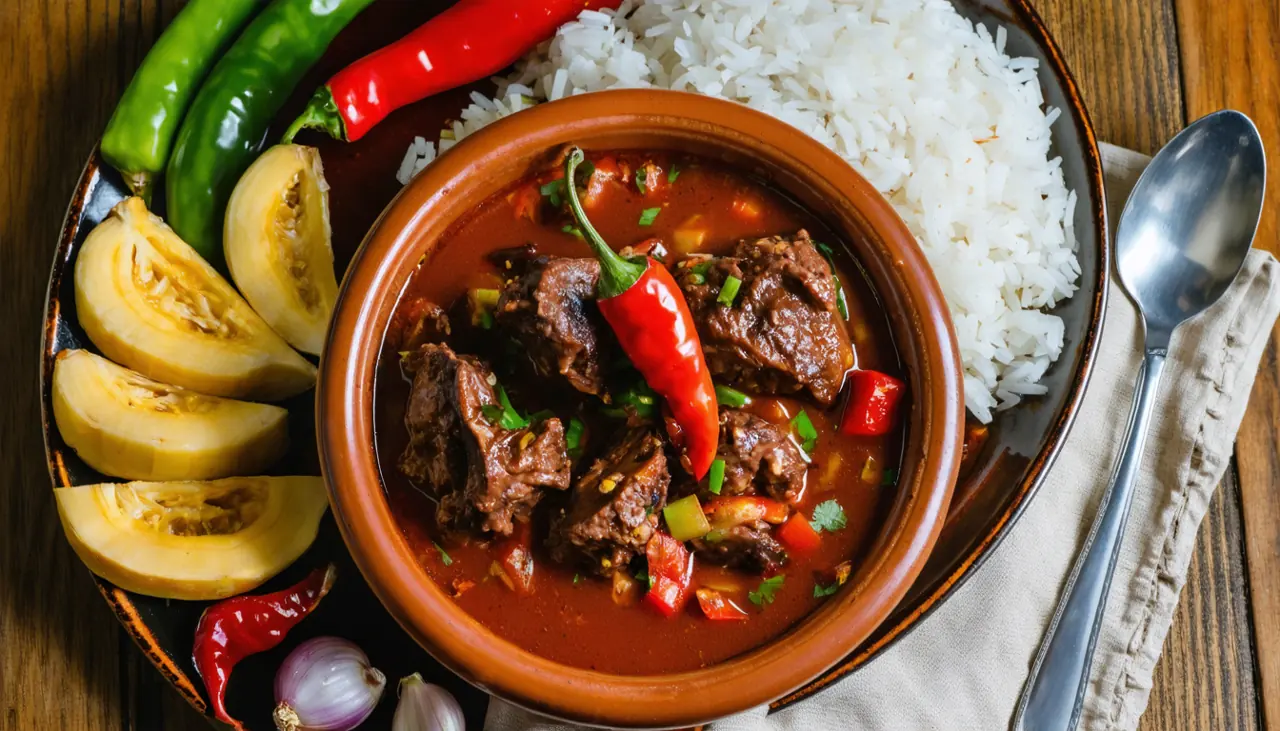
Porc et courge mijotés avec du gombo dans un sofrito de tomate épais et savoureux, servi sur du riz blanc.
Portions
Ingrédients
Nutrition
Par portion
Étapes
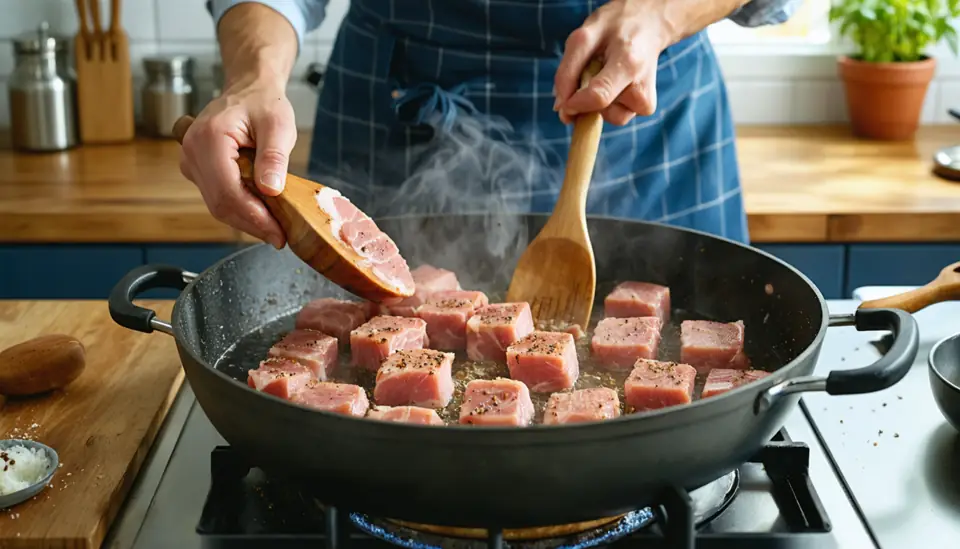
Brown the pork
Season the pork cubes with half the salt and the black pepper. Heat the oil or lard in a large heavy pot over medium-high heat and brown the pork in batches, about 3 minutes per side, until deeply colored. Transfer to a plate; the browned bits left in the pot build the stew's flavor.
- 600 g pork
- 2 tbsp oil or lard
- 1/2 tsp salt
- 1/2 tsp black pepper
✅ C'est prêt quand : pork is browned on all sides and no longer pink inside
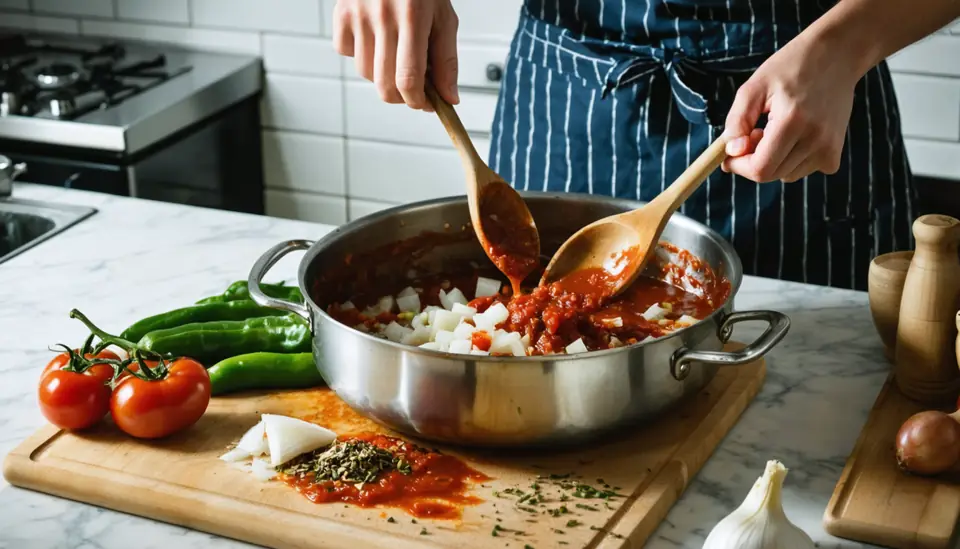
Build the sofrito
Lower the heat to medium, add the onion and green pepper to the same pot, and cook, stirring, until soft and translucent, about 5 minutes. Add the garlic and cook 1 minute more until fragrant. Stir in the tomatoes, tomato paste, cumin, oregano and bay leaves, and cook for about 5 minutes, until the tomato darkens and smells sweet rather than sharp — this is the sofrito that gives the stew its deep flavor.
- 1 onion
- 1 green bell pepper
- 4 cloves garlic
- 2 tomatoes
- 2 tbsp tomato paste
- 1 tsp cumin
- 1 tsp oregano
- 2 bay leaves
✅ C'est prêt quand : the tomato mixture turns a deep brick-red and smells sweet, not sharp
Simmer the pork
This step is part of Foodie Premium. Subscribe to unlock the full method, cooking mode and every recipe in the library.
Add the squash
This step is part of Foodie Premium. Subscribe to unlock the full method, cooking mode and every recipe in the library.
Add the okra
This step is part of Foodie Premium. Subscribe to unlock the full method, cooking mode and every recipe in the library.
Season and rest
This step is part of Foodie Premium. Subscribe to unlock the full method, cooking mode and every recipe in the library.
Serve
This step is part of Foodie Premium. Subscribe to unlock the full method, cooking mode and every recipe in the library.
Brown the pork
Season the pork cubes with half the salt and the black pepper. Heat the oil or lard in a large heavy pot over medium-high heat and brown the pork in batches, about 3 minutes per side, until deeply colored. Transfer to a plate; the browned bits left in the pot build the stew's flavor.
- 600 g pork
- 2 tbsp oil or lard
- 1/2 tsp salt
- 1/2 tsp black pepper
✅ C'est prêt quand : pork is browned on all sides and no longer pink inside
Build the sofrito
Lower the heat to medium, add the onion and green pepper to the same pot, and cook, stirring, until soft and translucent, about 5 minutes. Add the garlic and cook 1 minute more until fragrant. Stir in the tomatoes, tomato paste, cumin, oregano and bay leaves, and cook for about 5 minutes, until the tomato darkens and smells sweet rather than sharp — this is the sofrito that gives the stew its deep flavor.
- 1 onion
- 1 green bell pepper
- 4 cloves garlic
- 2 tomatoes
- 2 tbsp tomato paste
- 1 tsp cumin
- 1 tsp oregano
- 2 bay leaves
✅ C'est prêt quand : the tomato mixture turns a deep brick-red and smells sweet, not sharp
Simmer the pork
This step is part of Foodie Premium. Subscribe to unlock the full method, cooking mode and every recipe in the library.
Add the squash
This step is part of Foodie Premium. Subscribe to unlock the full method, cooking mode and every recipe in the library.
Add the okra
This step is part of Foodie Premium. Subscribe to unlock the full method, cooking mode and every recipe in the library.
Season and rest
This step is part of Foodie Premium. Subscribe to unlock the full method, cooking mode and every recipe in the library.
Serve
This step is part of Foodie Premium. Subscribe to unlock the full method, cooking mode and every recipe in the library.
The Story Behind the Dish
Okra traveled to Cuba from West Africa, brought by enslaved people along with the culinary knowledge of how to cook it. On the island it found a home in the Spanish-style stewing pot, simmered with pork, squash and a tomato sofrito the way other Cuban guisos are built.
Quimbombó guisado became a staple of home cooking across Cuba, especially where African traditions remained strongest, and it is still made the same slow, patient way today, served ladled over rice.
⭐ Why It's Famous
It is one of the clearest living links between Cuban and West African cooking, prized for its deep, savory flavor and its thick, satisfying texture.
💡 Fun Fact
Many food historians trace the word quimbombó, like the English word gumbo, back to a West African word for okra, a small clue to how far the vegetable and its cooking traditions traveled.
Cuba, especially eastern provinces with strong Afro-Cuban heritage
20.02°N, -75.82°W
Recettes similaires
Comments (0)
No comments yet. Be the first to share your thoughts!