Lebneh (yaourt égoutté libanais)
Yaourt épais et acidulé, égoutté puis arrosé d'huile d'olive et de za'atar, à savourer avec du pain pita chaud.
Portions
Ingrédients
Nutrition
Par portion
Étapes

Salt the yogurt
In a large bowl, stir the salt thoroughly into the yogurt. The salt helps draw out the whey and also seasons the lebneh from the inside, not just on top.
- 1 kg yogurt
- 1 tsp salt
✅ C'est prêt quand : the salt is fully dissolved and the yogurt looks smooth

Set up the straining cloth
Line a large sieve with a double layer of clean cheesecloth or a thin, lint-free cotton tea towel, and set the sieve over a deep bowl so the dripping whey doesn't touch the yogurt. Spoon the salted yogurt into the cloth and fold the edges loosely over the top.
✅ C'est prêt quand : the yogurt is enclosed in the cloth and sitting above the bowl, not touching the liquid

Strain in the fridge
Place the whole setup in the fridge and let it drain for at least 24 hours, pouring off the collected whey once or twice if the bowl fills up. The longer it strains, the thicker and tangier the lebneh becomes; 24 hours gives a soft, spoonable texture, 48 hours gives a firm, spreadable one.
✅ C'est prêt quand : the yogurt has lost about half its volume and feels thick and dense, like soft cream cheese

Unwrap and smooth
Unfold the cloth and tip the strained yogurt into a clean bowl, scraping the cloth well so none is wasted. Beat it briefly with a spoon until smooth and even.
✅ C'est prêt quand : the lebneh is thick, creamy and holds its shape on a spoon

Plate and dress
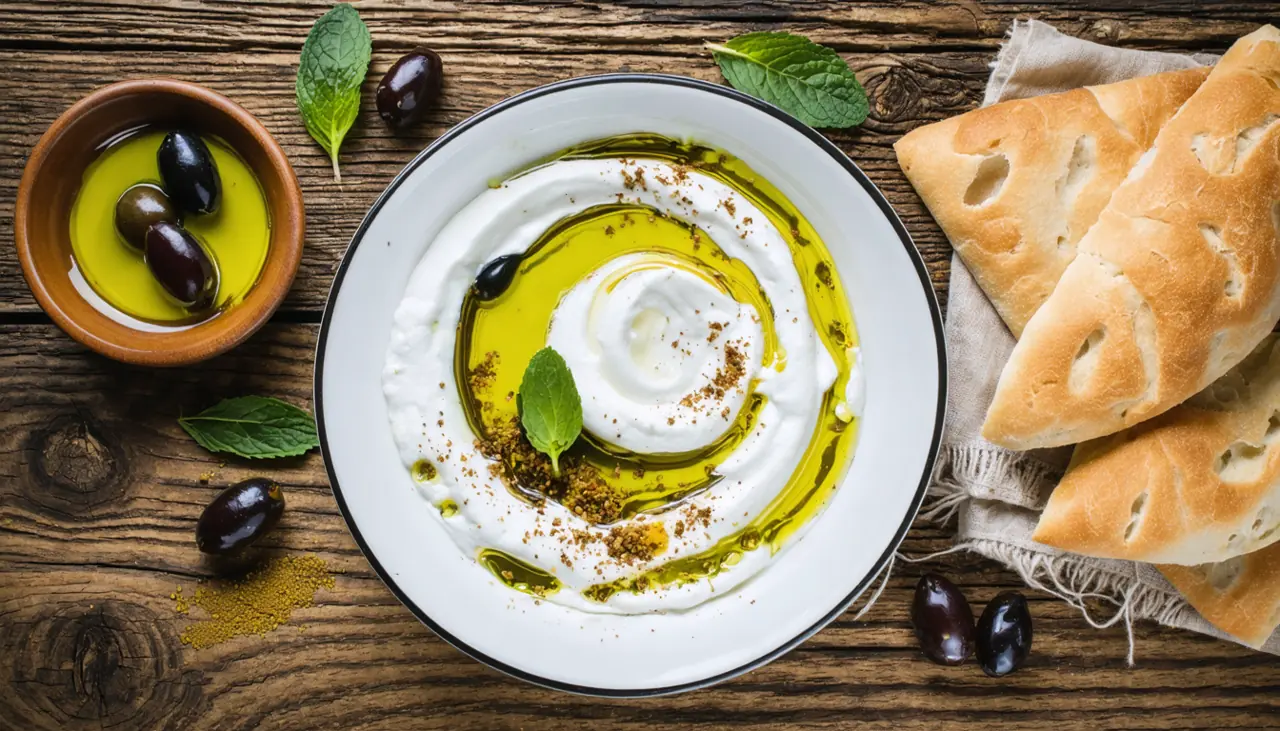
Spread the lebneh onto a shallow plate, swirling it slightly with the back of a spoon to make small hollows. Drizzle generously with olive oil so it pools in the hollows, then scatter the za'atar evenly over the top.
- 3 tbsp olive oil
- 1–2 tbsp za'atar
✅ C'est prêt quand : the lebneh is coated in a visible layer of oil with the za'atar sitting on top, not sunk in

Garnish and serve
Scatter olives and mint leaves over the plate if using. Serve right away with warm pita for scooping, torn into pieces.
- to taste olives
- a few leaves mint
- 4 pita breads
Salt the yogurt
In a large bowl, stir the salt thoroughly into the yogurt. The salt helps draw out the whey and also seasons the lebneh from the inside, not just on top.
- 1 kg yogurt
- 1 tsp salt
✅ C'est prêt quand : the salt is fully dissolved and the yogurt looks smooth
Set up the straining cloth
Line a large sieve with a double layer of clean cheesecloth or a thin, lint-free cotton tea towel, and set the sieve over a deep bowl so the dripping whey doesn't touch the yogurt. Spoon the salted yogurt into the cloth and fold the edges loosely over the top.
✅ C'est prêt quand : the yogurt is enclosed in the cloth and sitting above the bowl, not touching the liquid
Strain in the fridge
Place the whole setup in the fridge and let it drain for at least 24 hours, pouring off the collected whey once or twice if the bowl fills up. The longer it strains, the thicker and tangier the lebneh becomes; 24 hours gives a soft, spoonable texture, 48 hours gives a firm, spreadable one.
✅ C'est prêt quand : the yogurt has lost about half its volume and feels thick and dense, like soft cream cheese
Unwrap and smooth
Unfold the cloth and tip the strained yogurt into a clean bowl, scraping the cloth well so none is wasted. Beat it briefly with a spoon until smooth and even.
✅ C'est prêt quand : the lebneh is thick, creamy and holds its shape on a spoon
Plate and dress
Spread the lebneh onto a shallow plate, swirling it slightly with the back of a spoon to make small hollows. Drizzle generously with olive oil so it pools in the hollows, then scatter the za'atar evenly over the top.
- 3 tbsp olive oil
- 1–2 tbsp za'atar
✅ C'est prêt quand : the lebneh is coated in a visible layer of oil with the za'atar sitting on top, not sunk in
Garnish and serve
Scatter olives and mint leaves over the plate if using. Serve right away with warm pita for scooping, torn into pieces.
- to taste olives
- a few leaves mint
- 4 pita breads
The Story Behind the Dish
Long before refrigerators, families across the Levant and the wider Arab world needed ways to keep milk from spoiling in the heat. Straining yogurt through cloth to remove its whey was one answer: the result lasted longer, travelled well and could even be rolled into little balls and preserved under olive oil for the winter months.
In Lebanon, lebneh became a fixture of the breakfast table, served simply with good olive oil, a scattering of za'atar, and warm bread for scooping. It remains one of the first things offered to guests, alongside olives, tomatoes and mint.
⭐ Why It's Famous
Its tangy, dense texture sits halfway between yogurt and soft cheese, and the ritual of swirling it with olive oil and za'atar makes a humble dish feel generous and festive.
💡 Fun Fact
Lebneh is sometimes rolled into small balls, left to dry further, and stored submerged in olive oil in jars — a method that can keep it for months without refrigeration.
Levant region, Lebanon and Syria
33.89°N, 35.50°E
Recettes similaires

Comments (0)
No comments yet. Be the first to share your thoughts!