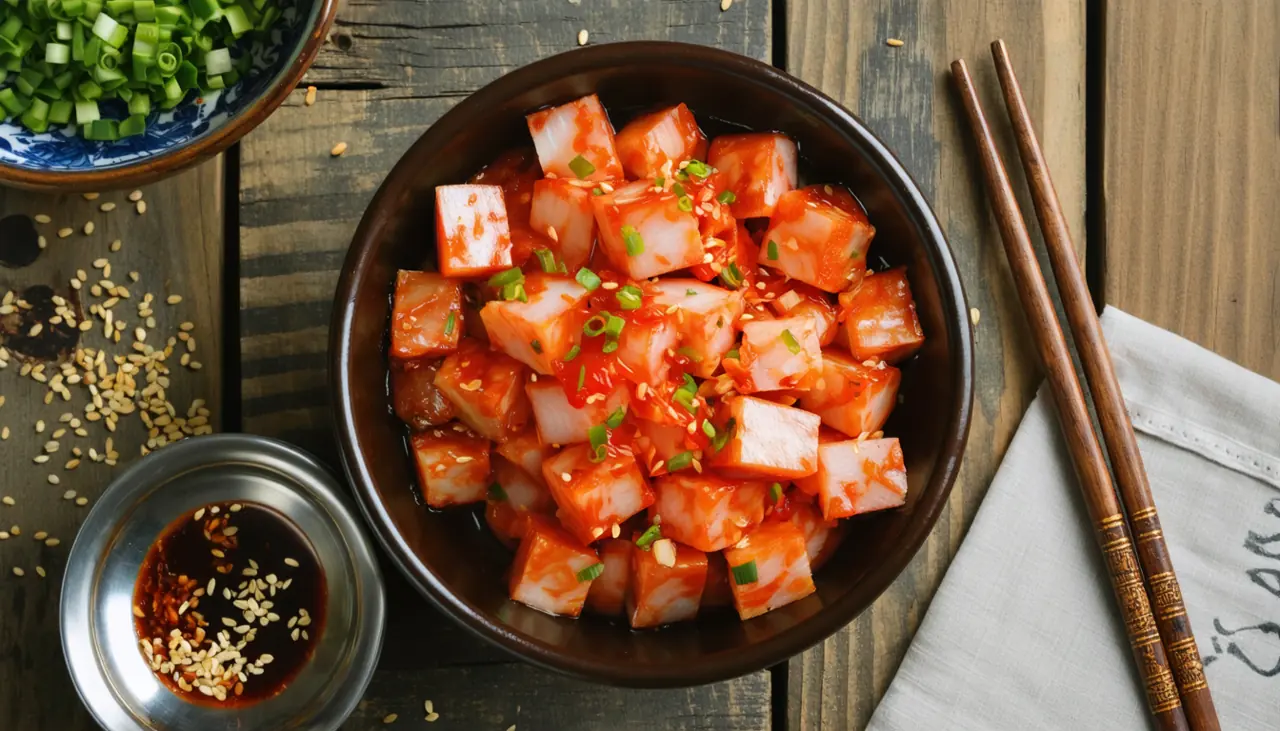
Kkakdugi (kimchi de radis en cubes)
Des cubes de radis coréen croquants, fermentés avec du gochugaru, de l'ail et du gingembre.
Portions
Ingrédients
Nutrition
Par portion
Étapes

Salt the radish
Put the radish cubes in a large bowl and toss with the coarse salt and half the sugar. Spread them out and let sit at room temperature so the salt pulls out some of the radish's water, which keeps the cubes crunchy instead of mushy later.
- 1.2 kg Korean radish
- 3 tbsp coarse sea salt
- 1 tbsp sugar (half)
✅ C'est prêt quand : the radish has gone slightly translucent at the edges and a pool of liquid has collected in the bowl

Drain and reserve liquid
Tip the radish into a colander and drain well, without rinsing, as this salty liquid is full of flavour and will go into the paste. Reserve 3 tablespoons of it and discard the rest.
- 1.2 kg salted radish (from step 1)
✅ C'est prêt quand : the radish cubes feel firm but flexible, with no pooling liquid left in the bowl
Make the chili paste
This step is part of Foodie Premium. Subscribe to unlock the full method, cooking mode and every recipe in the library.
Coat the radish
This step is part of Foodie Premium. Subscribe to unlock the full method, cooking mode and every recipe in the library.
Pack and ferment
This step is part of Foodie Premium. Subscribe to unlock the full method, cooking mode and every recipe in the library.
Serve the kimchi
This step is part of Foodie Premium. Subscribe to unlock the full method, cooking mode and every recipe in the library.
Salt the radish
Put the radish cubes in a large bowl and toss with the coarse salt and half the sugar. Spread them out and let sit at room temperature so the salt pulls out some of the radish's water, which keeps the cubes crunchy instead of mushy later.
- 1.2 kg Korean radish
- 3 tbsp coarse sea salt
- 1 tbsp sugar (half)
✅ C'est prêt quand : the radish has gone slightly translucent at the edges and a pool of liquid has collected in the bowl
Drain and reserve liquid
Tip the radish into a colander and drain well, without rinsing, as this salty liquid is full of flavour and will go into the paste. Reserve 3 tablespoons of it and discard the rest.
- 1.2 kg salted radish (from step 1)
✅ C'est prêt quand : the radish cubes feel firm but flexible, with no pooling liquid left in the bowl
Make the chili paste
This step is part of Foodie Premium. Subscribe to unlock the full method, cooking mode and every recipe in the library.
Coat the radish
This step is part of Foodie Premium. Subscribe to unlock the full method, cooking mode and every recipe in the library.
Pack and ferment
This step is part of Foodie Premium. Subscribe to unlock the full method, cooking mode and every recipe in the library.
Serve the kimchi
This step is part of Foodie Premium. Subscribe to unlock the full method, cooking mode and every recipe in the library.
The Story Behind the Dish
Kkakdugi belongs to the vast family of Korean kimchi, fermented vegetables preserved in salt and chili that let households eat vegetables year-round even through harsh winters. Korean radish, firmer and sweeter than daikon, was prized for keeping its crunch through months of fermentation, making it a natural choice for a diced, cube-cut kimchi.
While cabbage kimchi gets most of the international attention, kkakdugi is just as essential at the Korean table, especially alongside rich, warming dishes where its sharp crunch cuts through heaviness.
⭐ Why It's Famous
Its unmistakable crunch and tangy, chili-garlic punch make it the classic companion to seolleongtang (ox bone soup) and jjajangmyeon (black bean noodles), where its acidity and bite balance rich, mild broths and sauces.
💡 Fun Fact
Kkakdugi gets its name from the Korean verb for cutting into chunks, a nod to its signature cube shape, unlike most other kimchi, which is sliced, torn or left whole.
Korea, nationwide
37.57°N, 126.98°E
Recettes similaires
Comments (0)
No comments yet. Be the first to share your thoughts!