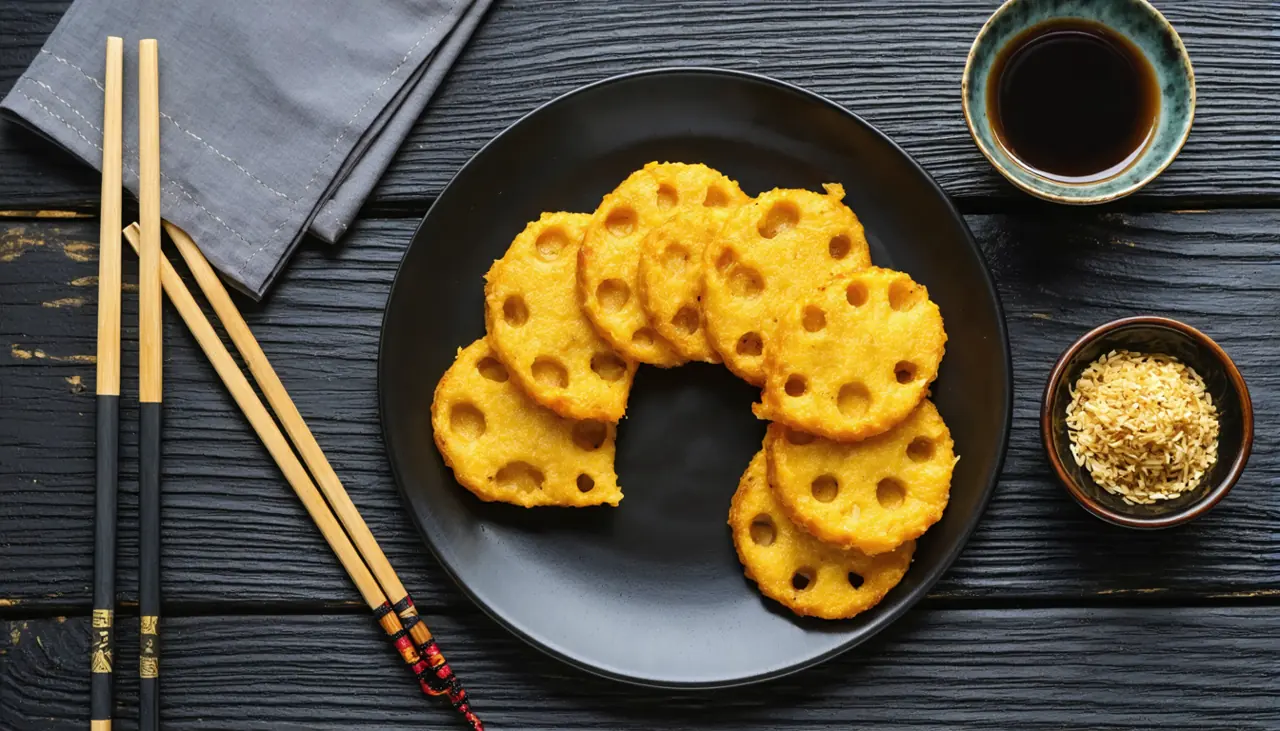
Racine de lotus farcie à la moutarde
Racine de lotus farcie de pâte de miso et moutarde, enrobée de pâte au curcuma et frite, puis coupée en rondelles croustillantes.
Portions
Ingrédients
Nutrition
Par portion
Étapes

Soak and parboil
Peel the lotus root and drop it straight into a bowl of water with the rice vinegar so it doesn't turn brown. Then boil it whole in fresh water for about 7 minutes.
- 1 piece lotus root
- 1 tbsp rice vinegar
- 1.5 litres water
✅ C'est prêt quand : a skewer slides in with a little resistance; it should still feel firm and crunchy, not soft, since it will cook a bit more in the fryer

Make the mustard paste
Mix the karashi powder with just enough warm water to make a thick paste, cover it and let it sit for 10 minutes; this short rest is what wakes up the mustard's real heat. Then stir in the miso, sake and sugar until smooth and thick enough to hold its shape on a spoon.
- 20 g karashi powder
- 1 tbsp warm water
- 100 g miso
- 1 tbsp sake
- 1 tsp sugar
✅ C'est prêt quand : the paste is glossy, thick and stiff, with a sharp smell when you lean in close
Stuff the holes
This step is part of Foodie Premium. Subscribe to unlock the full method, cooking mode and every recipe in the library.
Batter and coat
This step is part of Foodie Premium. Subscribe to unlock the full method, cooking mode and every recipe in the library.
Deep-fry
This step is part of Foodie Premium. Subscribe to unlock the full method, cooking mode and every recipe in the library.
Rest and slice
This step is part of Foodie Premium. Subscribe to unlock the full method, cooking mode and every recipe in the library.
Soak and parboil
Peel the lotus root and drop it straight into a bowl of water with the rice vinegar so it doesn't turn brown. Then boil it whole in fresh water for about 7 minutes.
- 1 piece lotus root
- 1 tbsp rice vinegar
- 1.5 litres water
✅ C'est prêt quand : a skewer slides in with a little resistance; it should still feel firm and crunchy, not soft, since it will cook a bit more in the fryer
Make the mustard paste
Mix the karashi powder with just enough warm water to make a thick paste, cover it and let it sit for 10 minutes; this short rest is what wakes up the mustard's real heat. Then stir in the miso, sake and sugar until smooth and thick enough to hold its shape on a spoon.
- 20 g karashi powder
- 1 tbsp warm water
- 100 g miso
- 1 tbsp sake
- 1 tsp sugar
✅ C'est prêt quand : the paste is glossy, thick and stiff, with a sharp smell when you lean in close
Stuff the holes
This step is part of Foodie Premium. Subscribe to unlock the full method, cooking mode and every recipe in the library.
Batter and coat
This step is part of Foodie Premium. Subscribe to unlock the full method, cooking mode and every recipe in the library.
Deep-fry
This step is part of Foodie Premium. Subscribe to unlock the full method, cooking mode and every recipe in the library.
Rest and slice
This step is part of Foodie Premium. Subscribe to unlock the full method, cooking mode and every recipe in the library.
The Story Behind the Dish
Karashi renkon is said to have been created in Kumamoto during the Edo period, when lotus root was grown in the moats of Kumamoto Castle. One story credits a local doctor who prepared a nourishing, mustard-spiked lotus root dish for a feudal lord recovering from illness, since lotus root was believed to be good for health.
Over time the dish became a specialty of the region, prized by samurai households and later adopted as an everyday izakaya snack. It remains strongly associated with Kumamoto to this day, and is often given as a local gift or souvenir.
⭐ Why It's Famous
It's famous for its clever use of the lotus root's natural holes, its striking yellow colour from turmeric and mustard, and the distinctive sharp heat that builds with every bite.
💡 Fun Fact
When sliced, each round shows a pattern of yellow-filled holes that looks almost like a flower, which is part of why the dish is so visually recognisable.
Kumamoto, Japan
32.80°N, 130.71°E
Recettes similaires


Comments (0)
No comments yet. Be the first to share your thoughts!