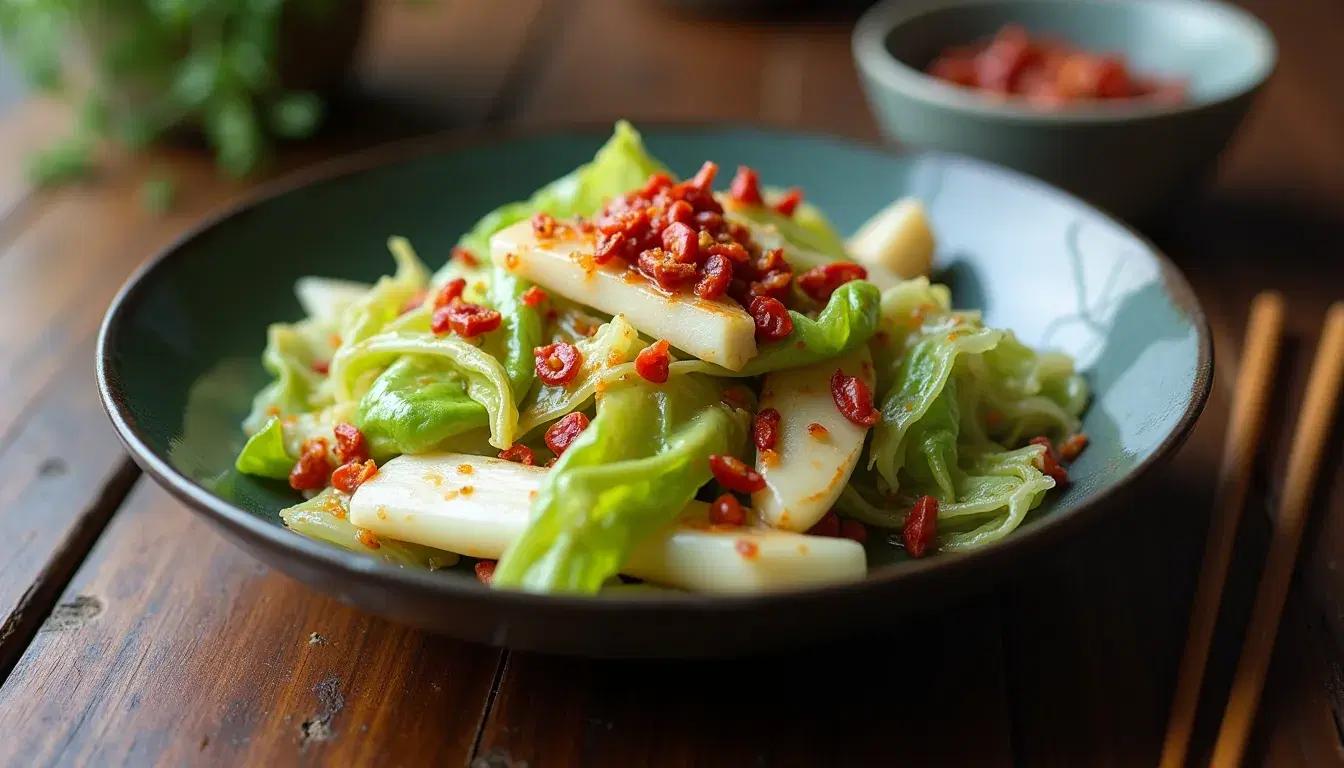
Chou Aigre-Piquant
Chou chinois saisi au wok avec piments séchés et poivre du Sichuan, relevé au vinaigre noir — fumé et croquant.
Portions
Ingrédients
Nutrition
Par portion
Étapes
Cuisinez sans limites
Toutes les recettes débloquées, méthode complète incluse · Mode cuisine mains libres avec minuteurs
Commencer ma semaine gratuiteContinuer avec l'accès gratuitCut the cabbage
Separate the leaves. Cut the thick white stems on a slant into thin pieces and tear the green leafy tops into large pieces, keeping stems and leaves apart — the stems need longer.
Mix the sauce
Stir together the soy sauce, black vinegar, sugar, salt and cornstarch mixture.
Infuse the oil
This step is part of Foodie Premium. Subscribe to unlock the full method, cooking mode and every recipe in the library.
Stir-fry
This step is part of Foodie Premium. Subscribe to unlock the full method, cooking mode and every recipe in the library.
Finish
This step is part of Foodie Premium. Subscribe to unlock the full method, cooking mode and every recipe in the library.
Cut the cabbage
Separate the leaves. Cut the thick white stems on a slant into thin pieces and tear the green leafy tops into large pieces, keeping stems and leaves apart — the stems need longer.
Mix the sauce
Stir together the soy sauce, black vinegar, sugar, salt and cornstarch mixture.
Infuse the oil
This step is part of Foodie Premium. Subscribe to unlock the full method, cooking mode and every recipe in the library.
Stir-fry
This step is part of Foodie Premium. Subscribe to unlock the full method, cooking mode and every recipe in the library.
Finish
This step is part of Foodie Premium. Subscribe to unlock the full method, cooking mode and every recipe in the library.
The Story Behind the Dish
Suan la bai cai is one of the most common home-style vegetable dishes in western and central China — cheap, quick and full of flavour. Napa cabbage was historically stored through the northern winter, making it one of China's most important vegetables.
The technique of splashing vinegar into a very hot wok gives the dish its signature smoky tang.
⭐ Why It's Famous
It proves a humble cabbage can be thrilling: smoky, sour, spicy and crunchy all at once.
💡 Fun Fact
In Beijing, residents once stockpiled napa cabbage by the cartload every autumn — it was called the 'patriotic cabbage' because everyone relied on it through winter.
Sichuan & Hunan
30.57°N, 104.07°E
Recettes similaires


Comments (0)
No comments yet. Be the first to share your thoughts!