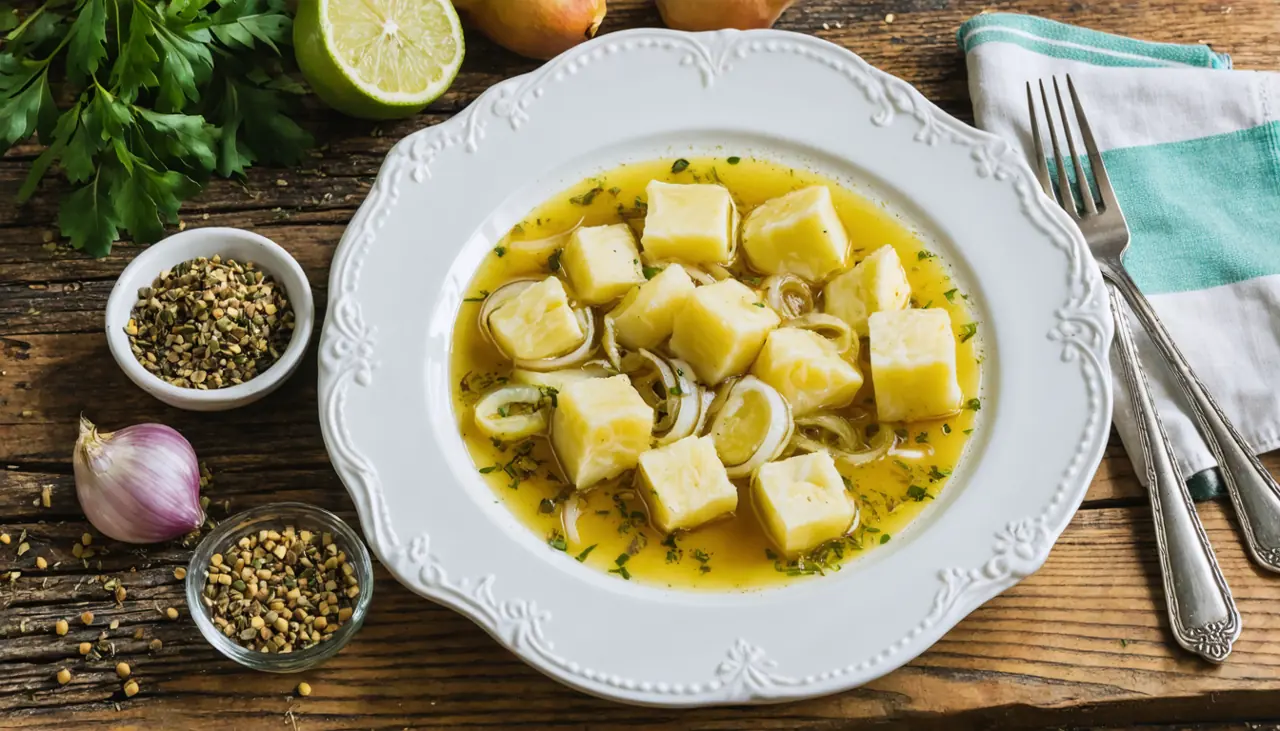
Boniato cubain au mojo
Patate douce blanche cubaine, bouillie puis nappée d'un mojo chaud à l'ail et aux agrumes.
Portions
Ingrédients
Nutrition
Par portion
Étapes
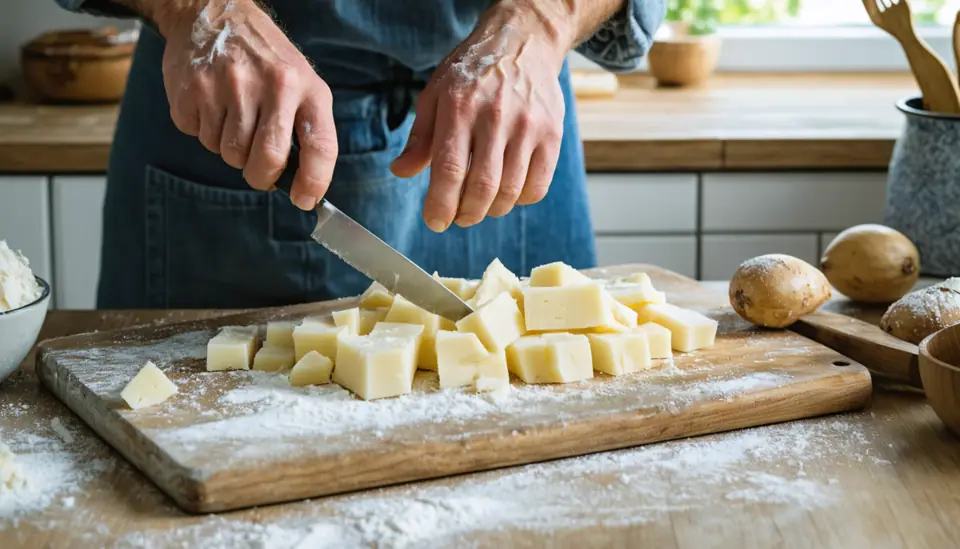
Cut the boniato evenly
Peel the boniato and cut it into chunks of similar size, about 5 cm. Cutting them evenly means every piece finishes cooking at the same time, so none turn to mush while others stay hard.
- 1.2 kg boniato
✅ C'est prêt quand : all the pieces are roughly the same size
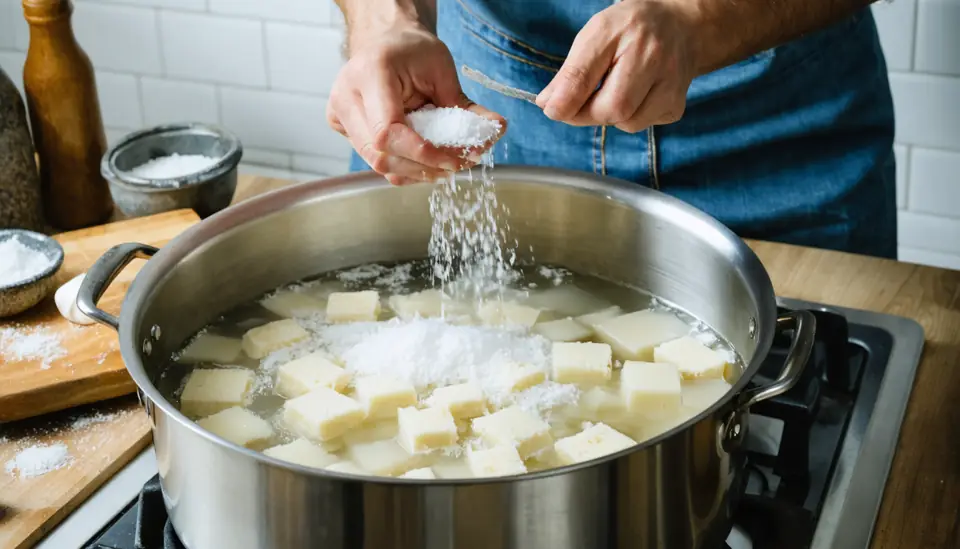
Boil until tender
Put the boniato in a pot, cover with cold water by about 5 cm, and add the salt. Starting in cold water helps it cook through evenly instead of hardening on the outside. Bring to a boil, then lower the heat and simmer uncovered for 20–25 minutes.
- 1.2 kg boniato (from step 1)
- to cover water
- 1 tbsp salt
✅ C'est prêt quand : a knife slides into the thickest piece with no resistance
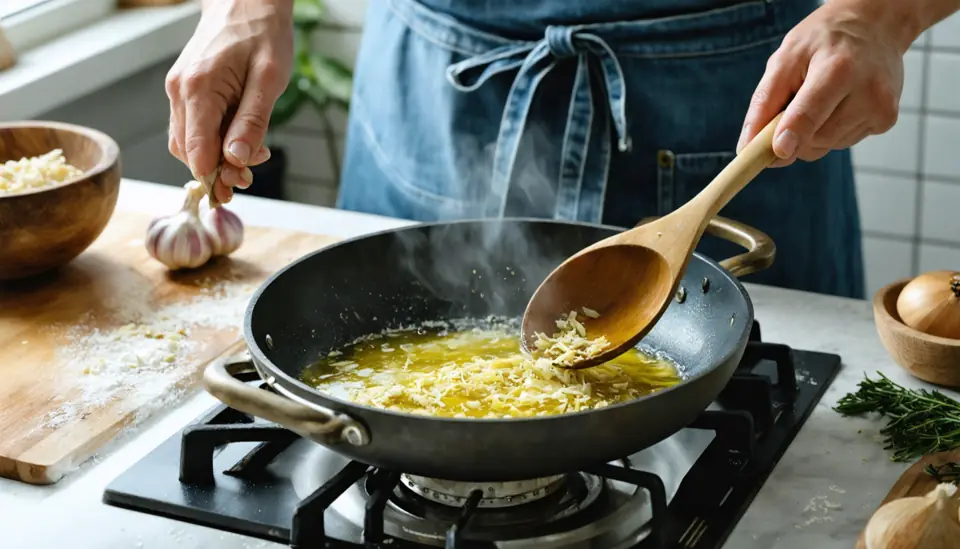
Warm the garlic in oil
While the boniato cooks, warm the olive oil in a small pan over low heat and add the garlic. Stir gently just until it turns fragrant and pale gold; pull it off the heat before it browns, since burnt garlic turns bitter and will ruin the sauce.
- 60 ml olive oil
- 8 cloves garlic
✅ C'est prêt quand : the garlic is soft, pale gold and smells toasty, not browned
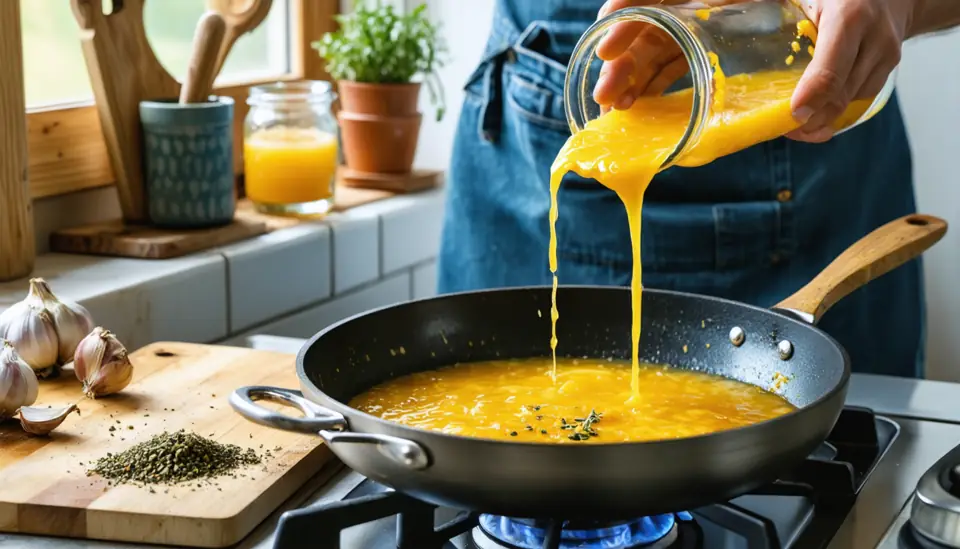
Finish the mojo
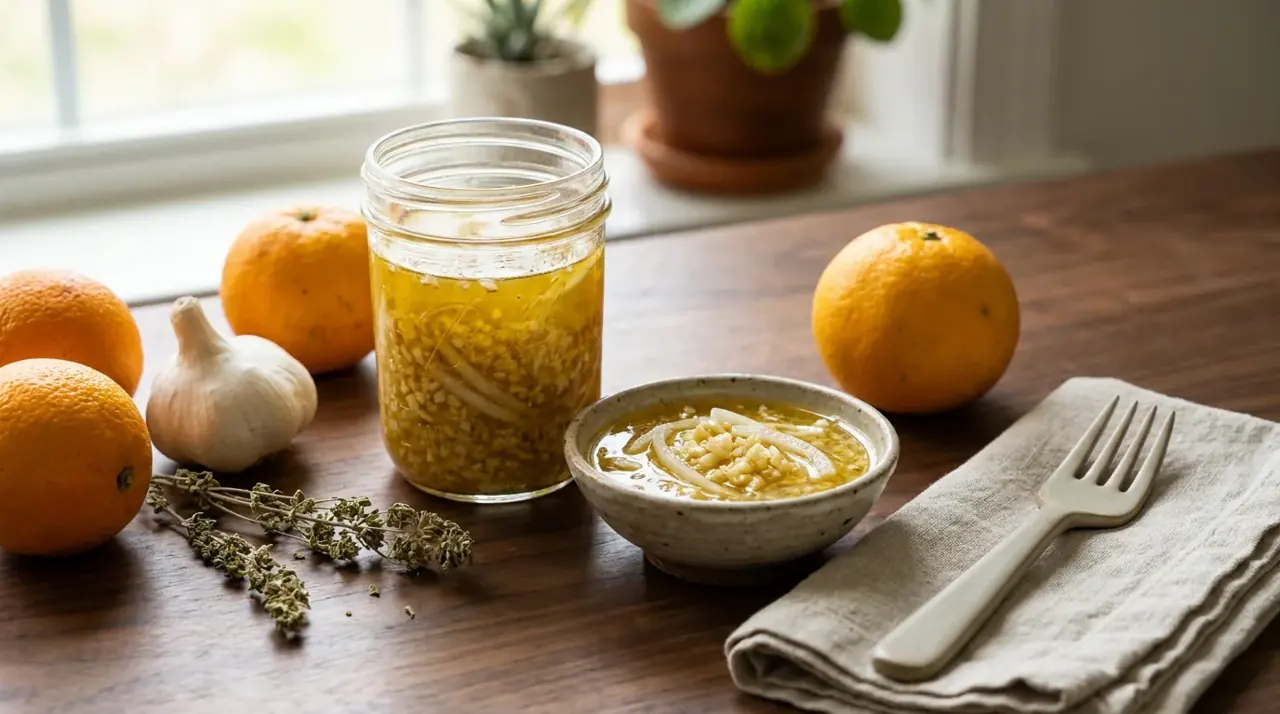
Off the heat, carefully pour in the sour orange juice (it will sizzle), then add the oregano, cumin, bay leaf and the salt for the mojo. Return briefly to low heat for about a minute, just to warm the juice through, then taste and adjust the salt.
- 120 ml sour orange juice
- 1/2 tsp dried oregano
- 1/4 tsp ground cumin
- 1 bay leaf
- 1/2 tsp salt
✅ C'est prêt quand : the sauce is warm, fragrant with citrus and garlic, and well seasoned
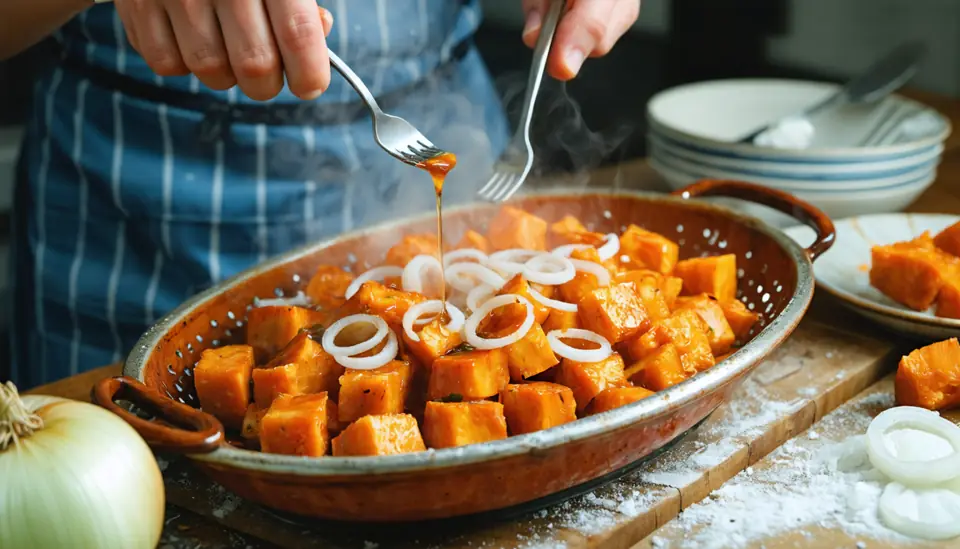
Dress and rest
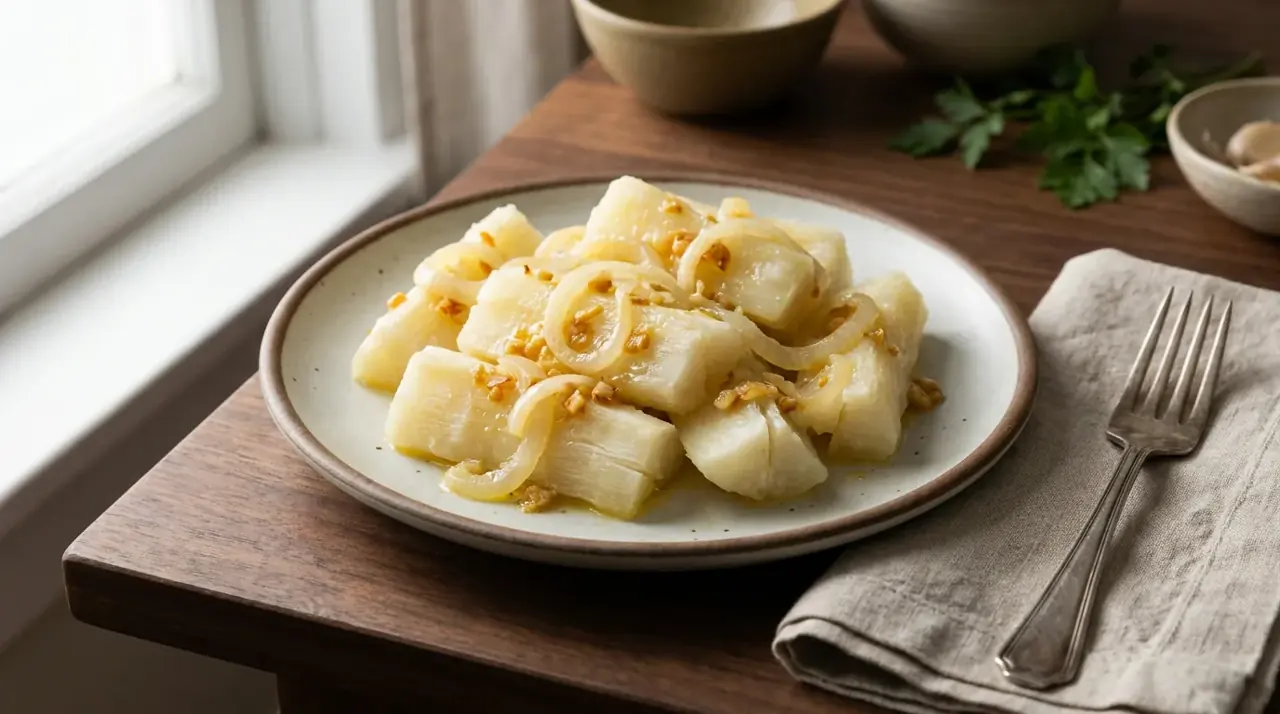
Drain the boniato well (any extra water will dilute the mojo) and arrange it in a serving dish with the raw onion rings on top. Pour the hot mojo straight over everything; the heat will soften the onion and release its sharpness. Let it sit for 5 minutes so the boniato soaks up the sauce.
- 1.2 kg boiled boniato
- 1 small onion rings
✅ C'est prêt quand : the boniato has absorbed some mojo and the onion looks slightly wilted
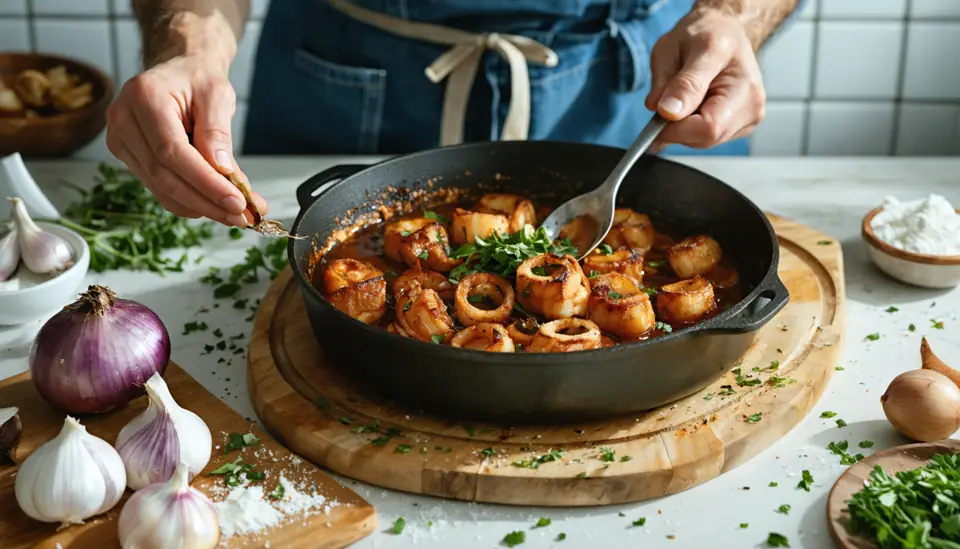
Serve Warm
Discard the bay leaf if you like, spoon any mojo pooled at the bottom back over the top, and serve warm as a side dish.
- 1 bay leaf (to remove)
Cut the boniato evenly
Peel the boniato and cut it into chunks of similar size, about 5 cm. Cutting them evenly means every piece finishes cooking at the same time, so none turn to mush while others stay hard.
- 1.2 kg boniato
✅ C'est prêt quand : all the pieces are roughly the same size
Boil until tender
Put the boniato in a pot, cover with cold water by about 5 cm, and add the salt. Starting in cold water helps it cook through evenly instead of hardening on the outside. Bring to a boil, then lower the heat and simmer uncovered for 20–25 minutes.
- 1.2 kg boniato (from step 1)
- to cover water
- 1 tbsp salt
✅ C'est prêt quand : a knife slides into the thickest piece with no resistance
Warm the garlic in oil
While the boniato cooks, warm the olive oil in a small pan over low heat and add the garlic. Stir gently just until it turns fragrant and pale gold; pull it off the heat before it browns, since burnt garlic turns bitter and will ruin the sauce.
- 60 ml olive oil
- 8 cloves garlic
✅ C'est prêt quand : the garlic is soft, pale gold and smells toasty, not browned
Finish the mojo
Off the heat, carefully pour in the sour orange juice (it will sizzle), then add the oregano, cumin, bay leaf and the salt for the mojo. Return briefly to low heat for about a minute, just to warm the juice through, then taste and adjust the salt.
- 120 ml sour orange juice
- 1/2 tsp dried oregano
- 1/4 tsp ground cumin
- 1 bay leaf
- 1/2 tsp salt
✅ C'est prêt quand : the sauce is warm, fragrant with citrus and garlic, and well seasoned
Dress and rest
Drain the boniato well (any extra water will dilute the mojo) and arrange it in a serving dish with the raw onion rings on top. Pour the hot mojo straight over everything; the heat will soften the onion and release its sharpness. Let it sit for 5 minutes so the boniato soaks up the sauce.
- 1.2 kg boiled boniato
- 1 small onion rings
✅ C'est prêt quand : the boniato has absorbed some mojo and the onion looks slightly wilted
Serve Warm
Discard the bay leaf if you like, spoon any mojo pooled at the bottom back over the top, and serve warm as a side dish.
- 1 bay leaf (to remove)
The Story Behind the Dish
Boniato was already grown and eaten by the Taíno long before Spanish arrival, making it one of the oldest staples on the island. When Spanish and later Canary Island settlers brought garlic, olive oil and sour orange trees to Cuba, cooks combined these with the native root to create mojo, a sauce now used to dress everything from boiled viandas to roast pork.
Boniato con mojo became a fixture of the Cuban table, especially in the countryside, where simple boiled roots dressed in a hot garlicky sauce could turn a humble meal into something deeply satisfying.
⭐ Why It's Famous
It shows how Cuban cooking layers Indigenous staples with Spanish and Canary Island technique, turning a plain boiled root into something richly flavourful with just garlic, oil and citrus.
💡 Fun Fact
Sour orange trees, brought over during colonial times, now grow wild across much of Cuba, and their tart fruit is prized almost exclusively for making mojo.
Rural Cuba, island-wide
21.52°N, -77.78°W
Recettes similaires
Comments (0)
No comments yet. Be the first to share your thoughts!