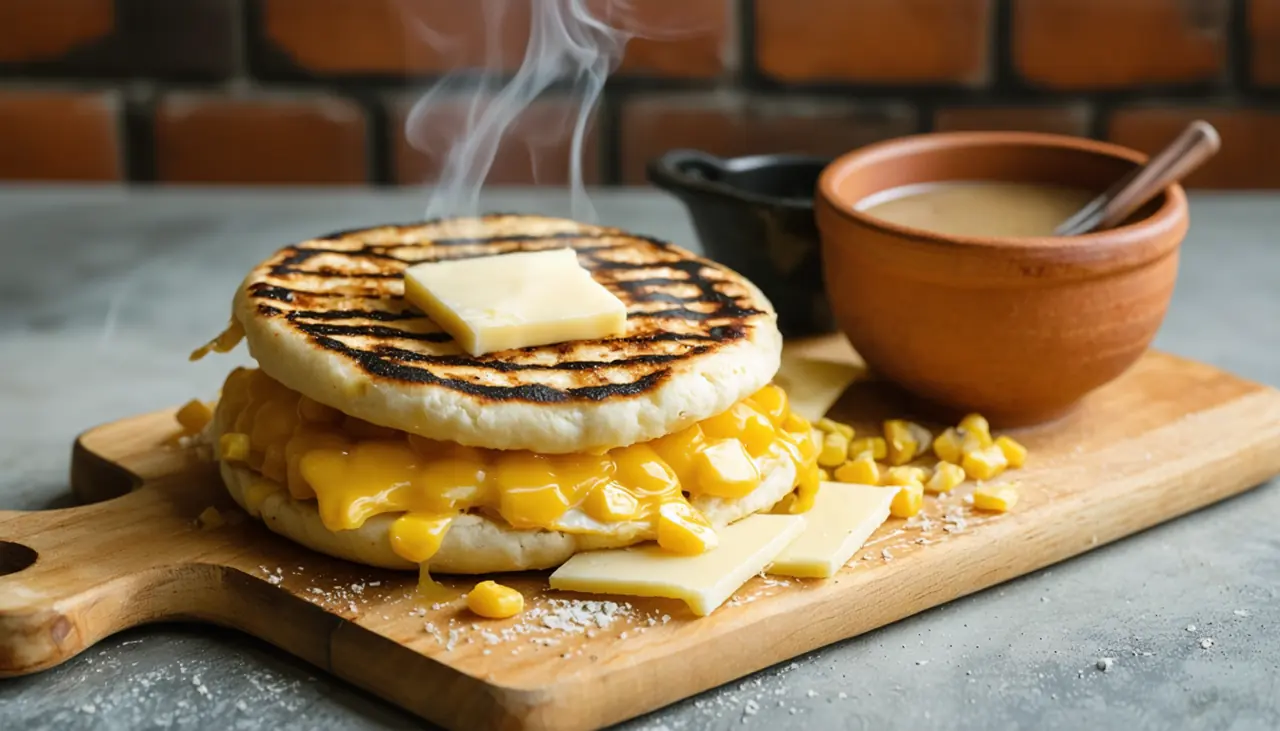
Arepa de maïs sucré
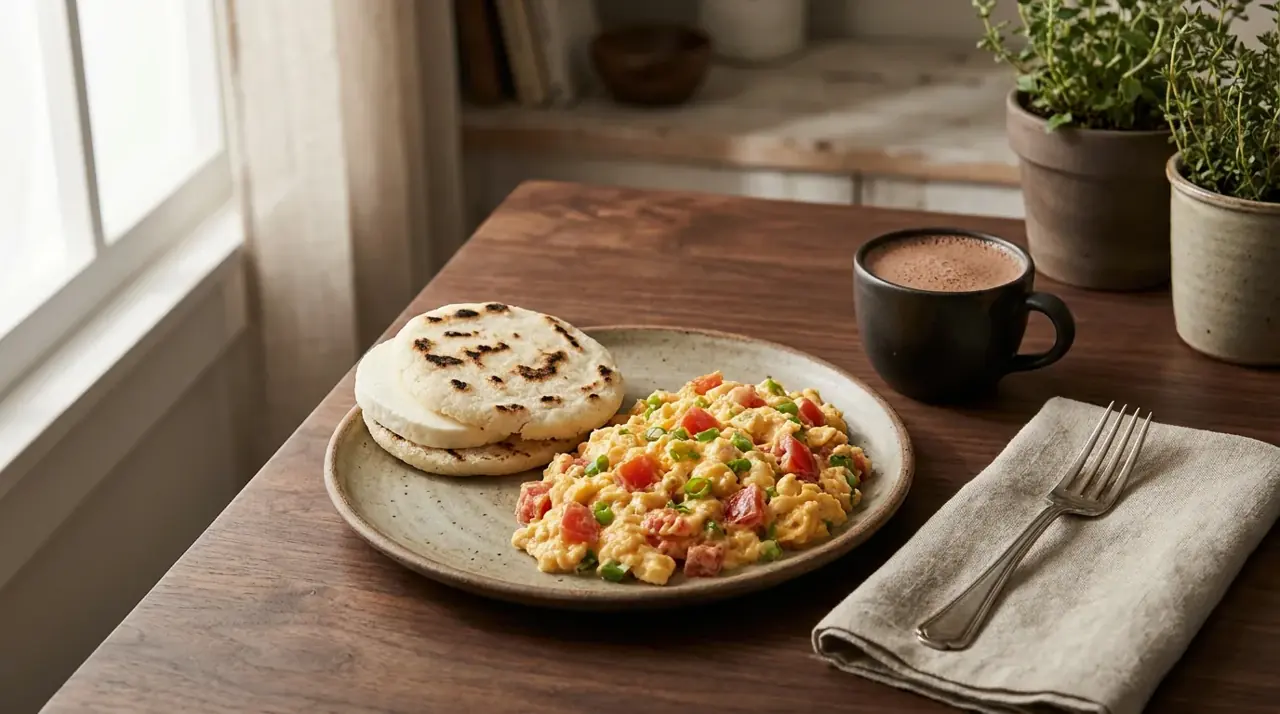
Une arepa de maïs frais, légèrement sucrée et dorée à la poêle, servie avec du beurre et du fromage fondant.
Portions
Ingrédients
Nutrition
Par portion
Étapes
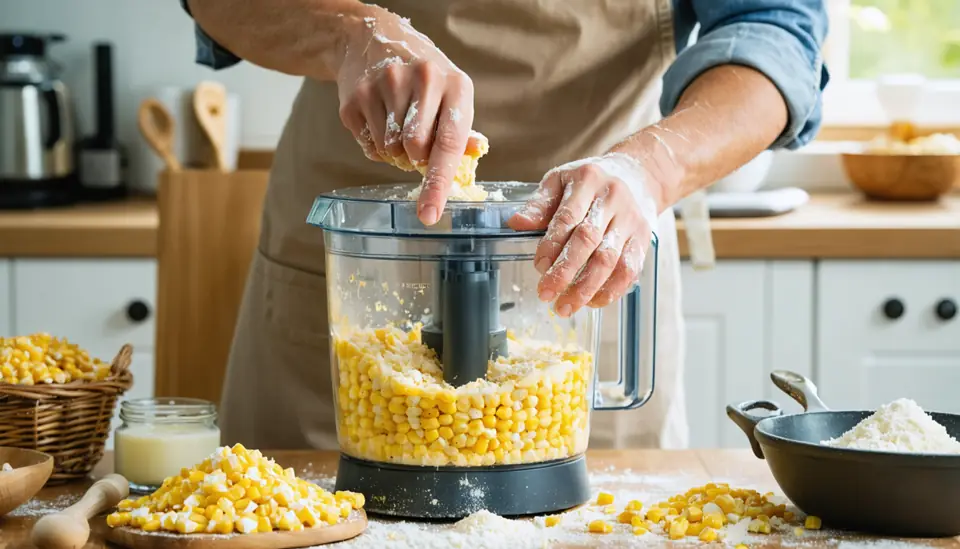
Blend the corn
Put the drained corn kernels, melted butter, panela and salt in a food processor or blender. Pulse in short bursts, not a long continuous blend, until you get a thick, coarse paste that still has some bits of corn in it.
- 800 g corn kernels
- 40 g melted butter
- 60 g panela
- 1 tsp salt
✅ C'est prêt quand : the mixture looks like a chunky, bright-yellow paste, not a smooth puree
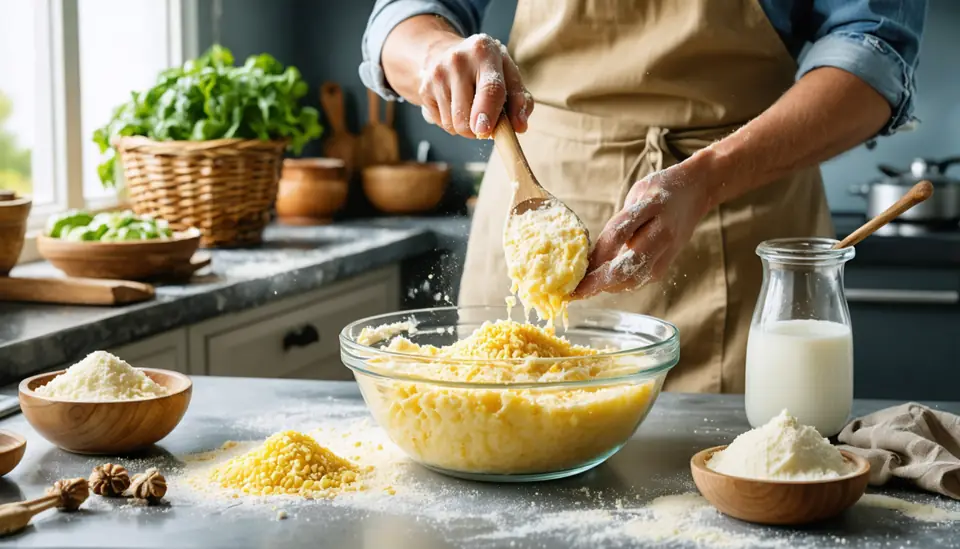
Add the cornmeal
Tip the corn paste into a bowl and stir in the masarepa with a spoon, a little at a time, until the dough is thick enough to hold its shape, like a stiff mashed potato. If it looks very wet, add a touch more masarepa; if it looks dry and crumbly, add a splash of milk. Cover and let it rest for about 10 minutes so the cornmeal can absorb the moisture.
- 70 g masarepa
- 2 tbsp milk (only if needed)
✅ C'est prêt quand : a spoonful holds its shape on a plate instead of spreading out
Shape and fill
This step is part of Foodie Premium. Subscribe to unlock the full method, cooking mode and every recipe in the library.
Griddle slowly
This step is part of Foodie Premium. Subscribe to unlock the full method, cooking mode and every recipe in the library.
Serve hot
This step is part of Foodie Premium. Subscribe to unlock the full method, cooking mode and every recipe in the library.
Blend the corn
Put the drained corn kernels, melted butter, panela and salt in a food processor or blender. Pulse in short bursts, not a long continuous blend, until you get a thick, coarse paste that still has some bits of corn in it.
- 800 g corn kernels
- 40 g melted butter
- 60 g panela
- 1 tsp salt
✅ C'est prêt quand : the mixture looks like a chunky, bright-yellow paste, not a smooth puree
Add the cornmeal
Tip the corn paste into a bowl and stir in the masarepa with a spoon, a little at a time, until the dough is thick enough to hold its shape, like a stiff mashed potato. If it looks very wet, add a touch more masarepa; if it looks dry and crumbly, add a splash of milk. Cover and let it rest for about 10 minutes so the cornmeal can absorb the moisture.
- 70 g masarepa
- 2 tbsp milk (only if needed)
✅ C'est prêt quand : a spoonful holds its shape on a plate instead of spreading out
Shape and fill
This step is part of Foodie Premium. Subscribe to unlock the full method, cooking mode and every recipe in the library.
Griddle slowly
This step is part of Foodie Premium. Subscribe to unlock the full method, cooking mode and every recipe in the library.
Serve hot
This step is part of Foodie Premium. Subscribe to unlock the full method, cooking mode and every recipe in the library.
The Story Behind the Dish
Corn-based arepas date back to Indigenous peoples of the Andes, who grew many varieties of maize long before colonization. The sweet corn version comes from the cooler highland regions where tender choclo corn grows well, and it became a breakfast staple alongside hot chocolate on cold mornings.
Today it travels well beyond Boyacá, sold by street vendors and bakeries across Colombia, sometimes filled with cheese, sometimes topped with a melting slice, always eaten hot off the griddle.
⭐ Why It's Famous
It stands out among Colombia's many arepas for its natural sweetness from fresh corn, balanced by salty cheese and a caramelized, slightly crisp crust from slow griddle cooking.
💡 Fun Fact
Colombians often say there are dozens of regional arepa styles across the country, and the sweet choclo version is one of the easiest to tell apart, thanks to its golden color and tender, almost custardy center.
Andean highlands of Colombia, especially Boyacá and Cundinamarca
5.54°N, -73.37°W
Recettes similaires
Comments (0)
No comments yet. Be the first to share your thoughts!