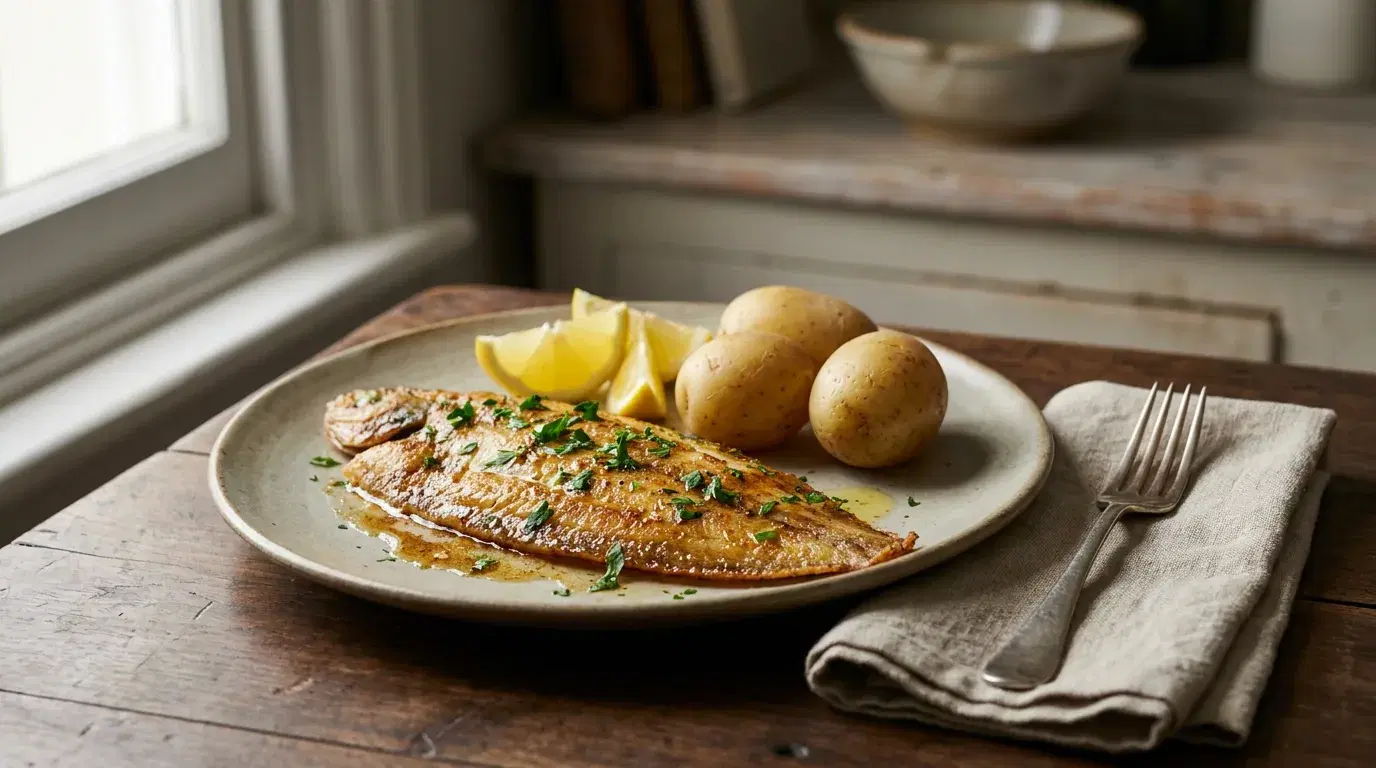
Sole meunière
Sole farinée et dorée à la poêle, nappée de beurre noisette, citron et persil.
Portions
Ingrédients
Nutrition
Par portion
Étapes
Flour the fish
Pat the fish dry with kitchen paper and season both sides with salt and pepper. Put the flour on a plate, dip the fish in it on both sides and shake off the extra. Flour the fish only just before cooking, or it gets gluey.
Fry the fish
Heat the oil and 15 g of the butter in a large frying pan over medium-high heat until foaming. Add the fish. Whole sole: cook for 3–4 minutes, until golden underneath, turn carefully and cook for 2–3 minutes more. Fillets: about 2 minutes on the first side and 1–2 minutes on the second. Move the fish to warm plates.
Make the brown butter
This step is part of Foodie Premium. Subscribe to unlock the full method, cooking mode and every recipe in the library.
Finish and serve
This step is part of Foodie Premium. Subscribe to unlock the full method, cooking mode and every recipe in the library.
Flour the fish
Pat the fish dry with kitchen paper and season both sides with salt and pepper. Put the flour on a plate, dip the fish in it on both sides and shake off the extra. Flour the fish only just before cooking, or it gets gluey.
Fry the fish
Heat the oil and 15 g of the butter in a large frying pan over medium-high heat until foaming. Add the fish. Whole sole: cook for 3–4 minutes, until golden underneath, turn carefully and cook for 2–3 minutes more. Fillets: about 2 minutes on the first side and 1–2 minutes on the second. Move the fish to warm plates.
Make the brown butter
This step is part of Foodie Premium. Subscribe to unlock the full method, cooking mode and every recipe in the library.
Finish and serve
This step is part of Foodie Premium. Subscribe to unlock the full method, cooking mode and every recipe in the library.
The Story Behind the Dish
'À la meunière' means 'in the miller's wife's style', a nod to the flour that coats the fish. Dover sole from the Channel was prized in Paris, and frying it in butter, the pride of Normandy, became one of the great simple classics of French cooking.
The dish is famous for the moment it changed a life: Julia Child ate sole meunière in Rouen in 1948, on her first day in France, and later said it opened up her soul to French food.
⭐ Why It's Famous
It proves that great cooking can be just three ingredients done perfectly: fresh fish, good butter and a squeeze of lemon.
💡 Fun Fact
Beurre noisette, the French name for brown butter, means 'hazelnut butter', because of its colour and nutty smell.
Normandy and Paris
49.44°N, 1.10°E
Recettes similaires

Comments (0)
No comments yet. Be the first to share your thoughts!