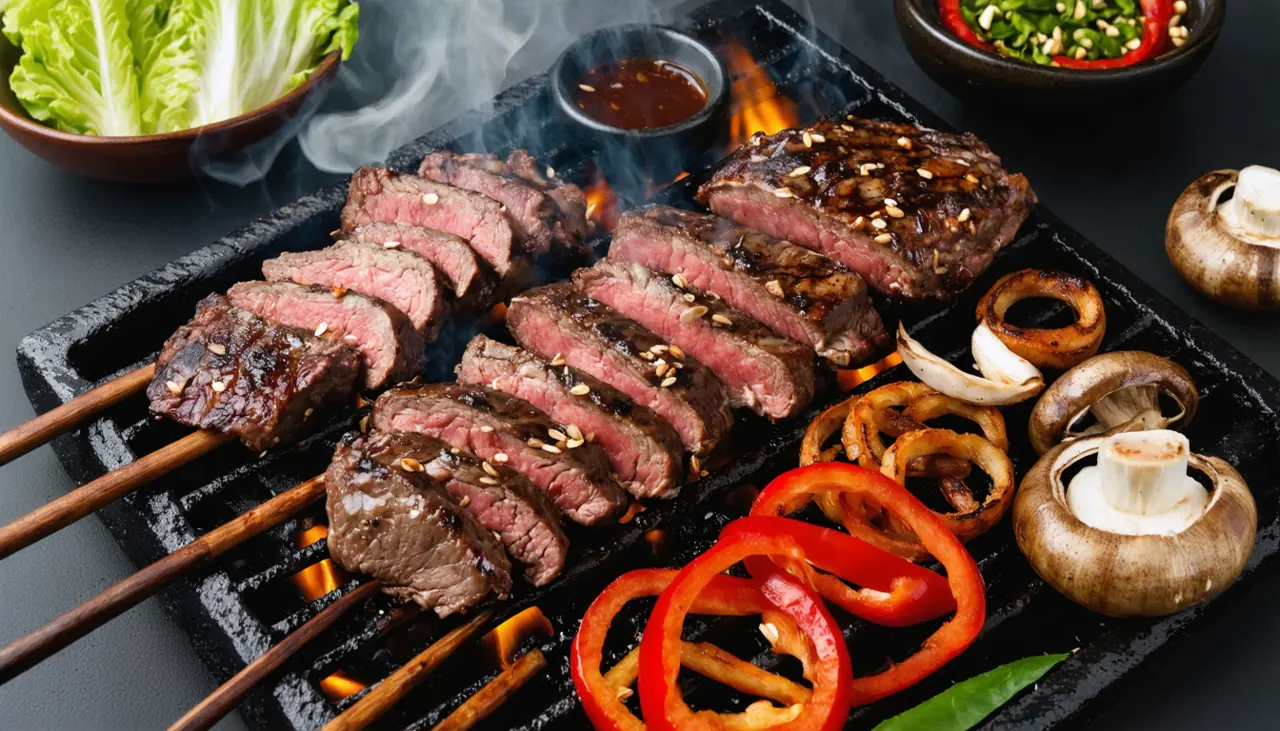
Yakiniku (Japanese Grilled Beef)
Thin slices of beef and vegetables marinated in a sweet-savoury soy, mirin and sesame sauce, grilled fast over very high heat so the edges caramelize while the centre stays juicy. Eaten hot off the grill, wrapped in lettuce or over rice.
Servings
Ingredients
Nutrition
Per serving
Steps
Slice the beef thin
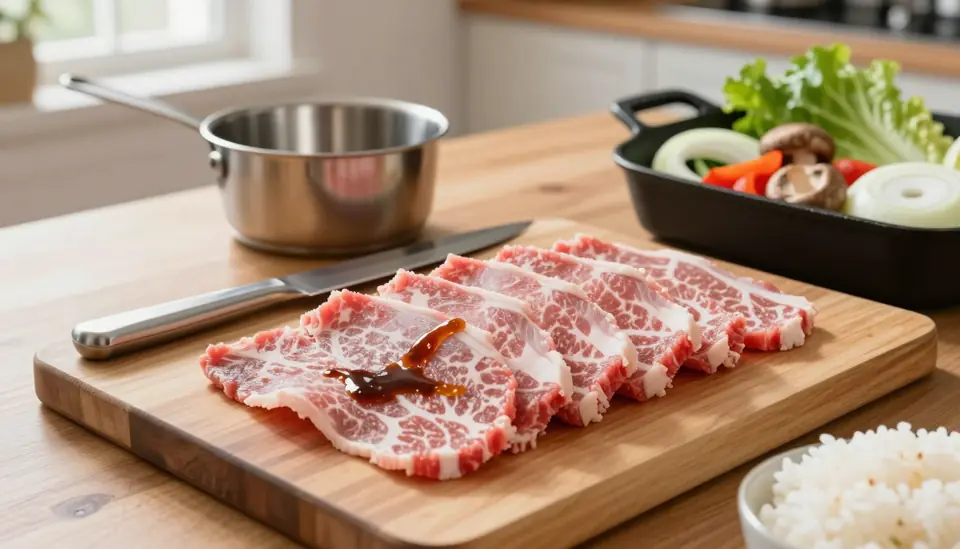
If the beef isn't already cut for , freeze it for 30 minutes until firm, then slice it as thin as you can against the grain. Thin, even slices cook in seconds and soak up the marinade fast.
- 600 g beef
✅ Done when: slices are thin, even and almost see-through

Make the sauce
In a small pot over low heat, warm the soy sauce, , , sugar, garlic, ginger and sesame oil just until the sugar dissolves, then let it cool. Pour about a third of it into a separate small bowl to use later as a dipping sauce.
- 60 ml soy sauce
- 30 ml
- 30 ml
- 1 tbsp sugar
- 2 cloves garlic
- 1 tsp ginger
- 1 tbsp sesame oil
✅ Done when: sugar is fully dissolved and sauce looks slightly glossy
Marinate the beef
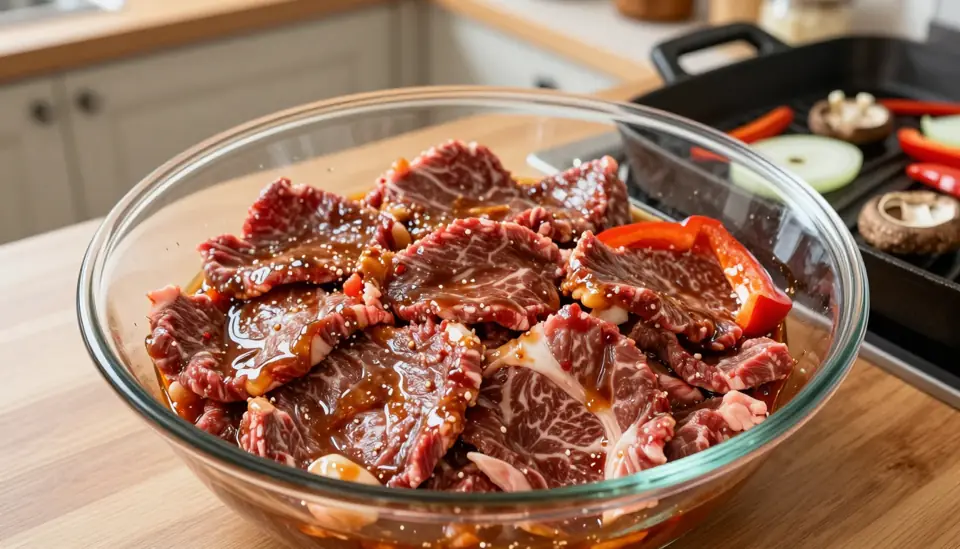
Toss the sliced beef with the remaining two-thirds of the sauce until every piece is coated. Let it sit at room temperature for 15–20 minutes while you prepare the vegetables; don't marinate much longer or the texture turns mushy.
- 600 g beef
- two-thirds sauce from step 2
Prep the vegetables
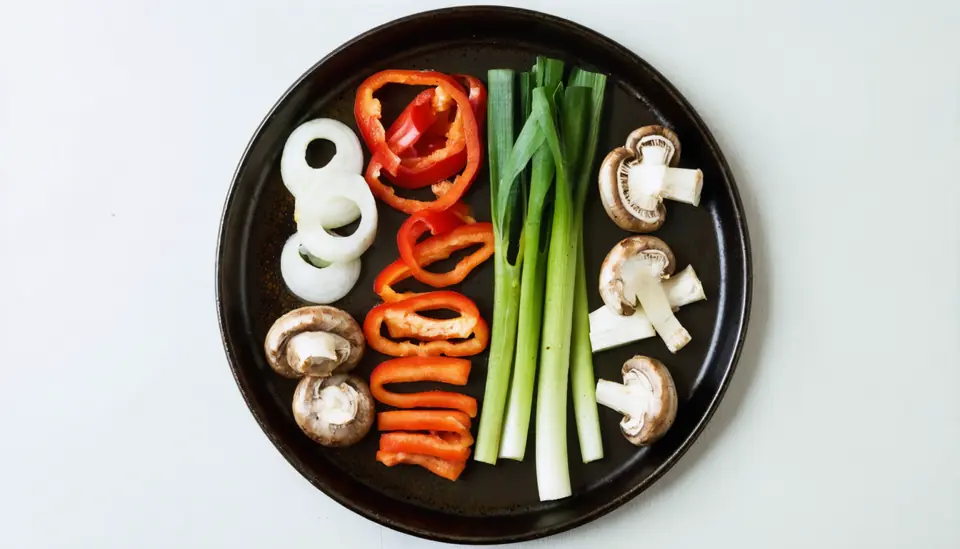
Arrange the onion rings, bell pepper, and scallions on a platter so everything is ready to grill in quick batches, just like it's done tableside.
- 1 onion
- 1 red bell pepper
- 150 g mushrooms
- 4 scallions
✅ Done when: vegetables are evenly sliced and neatly arranged on the platter, ready to grill
Grill the beef in batches
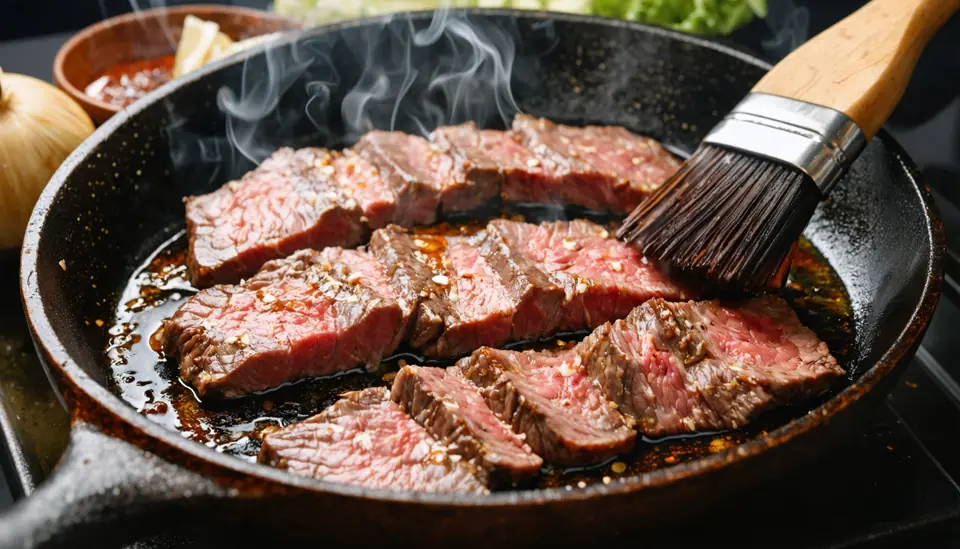
Heat a cast-iron pan, griddle or charcoal grill until it is smoking hot and brush with a little oil. Lay the beef in a single layer without crowding and cook 20–30 seconds per side, working in small batches so the surface stays very hot.
- 600 g marinated beef
- 1 tbsp vegetable oil
✅ Done when: edges are browned and caramelized, no pink remains, meat still feels tender
Grill the vegetables
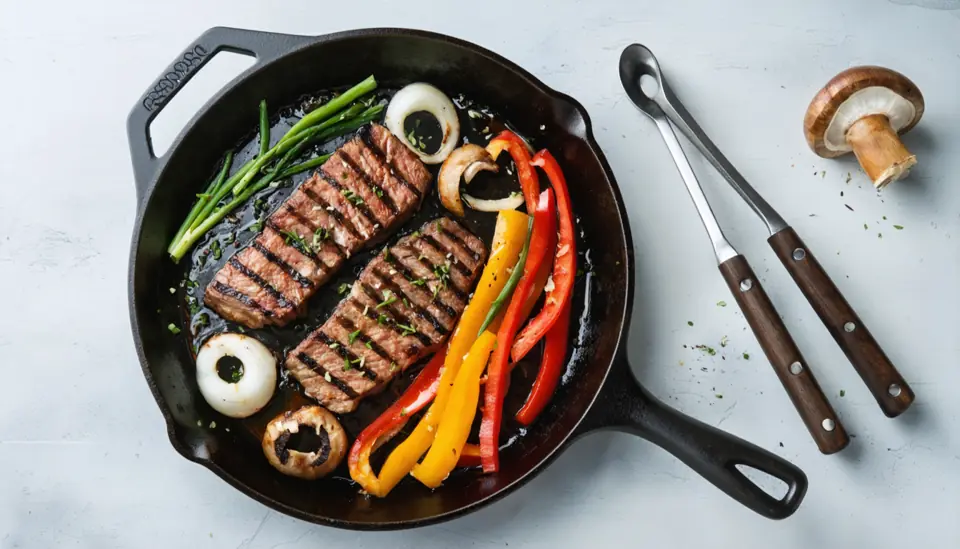
Grill the vegetables on the same hot surface for 3–4 minutes, turning once.
- 1 onion
- 1 red bell pepper
- 150 g mushrooms
- 4 scallions
✅ Done when: lightly charred at the edges and just tender
Serve hot
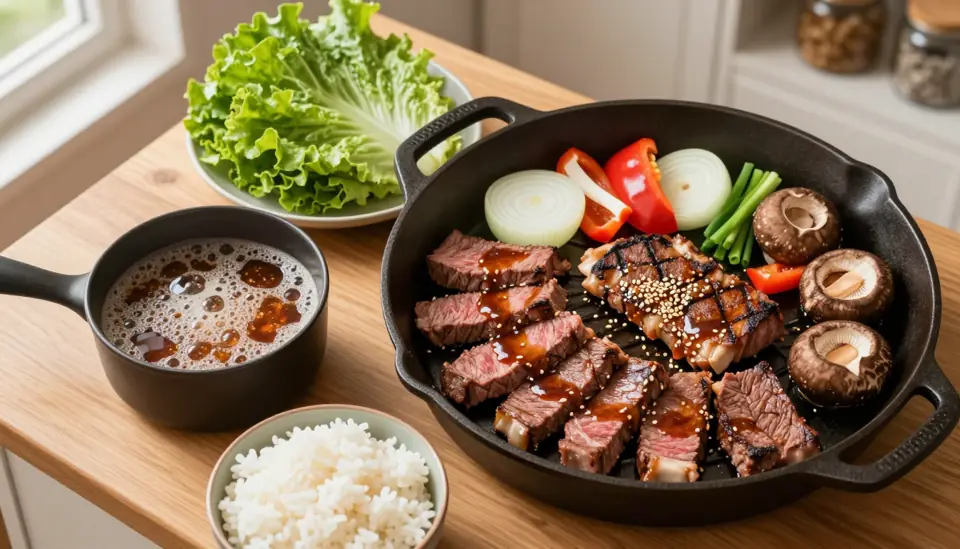
Bring the reserved dipping sauce to a boil for 1–2 minutes before serving, since it touched raw meat earlier. Serve the beef and vegetables straight off the grill with the sauce, lettuce leaves for wrapping and steamed rice, scattering the sesame seeds over the top.
- one-third reserved sauce from step 2
- 8 leaves lettuce
- to serve steamed rice
- 1 tbsp sesame seeds
✅ Done when: sauce is at a steady rolling boil with large bubbles throughout
Slice the beef thin
If the beef isn't already cut for , freeze it for 30 minutes until firm, then slice it as thin as you can against the grain. Thin, even slices cook in seconds and soak up the marinade fast.
- 600 g beef
✅ Done when: slices are thin, even and almost see-through
Make the sauce
In a small pot over low heat, warm the soy sauce, , , sugar, garlic, ginger and sesame oil just until the sugar dissolves, then let it cool. Pour about a third of it into a separate small bowl to use later as a dipping sauce.
- 60 ml soy sauce
- 30 ml
- 30 ml
- 1 tbsp sugar
- 2 cloves garlic
- 1 tsp ginger
- 1 tbsp sesame oil
✅ Done when: sugar is fully dissolved and sauce looks slightly glossy
Marinate the beef
Toss the sliced beef with the remaining two-thirds of the sauce until every piece is coated. Let it sit at room temperature for 15–20 minutes while you prepare the vegetables; don't marinate much longer or the texture turns mushy.
- 600 g beef
- two-thirds sauce from step 2
Prep the vegetables
Arrange the onion rings, bell pepper, and scallions on a platter so everything is ready to grill in quick batches, just like it's done tableside.
- 1 onion
- 1 red bell pepper
- 150 g mushrooms
- 4 scallions
✅ Done when: vegetables are evenly sliced and neatly arranged on the platter, ready to grill
Grill the beef in batches
Heat a cast-iron pan, griddle or charcoal grill until it is smoking hot and brush with a little oil. Lay the beef in a single layer without crowding and cook 20–30 seconds per side, working in small batches so the surface stays very hot.
- 600 g marinated beef
- 1 tbsp vegetable oil
✅ Done when: edges are browned and caramelized, no pink remains, meat still feels tender
Grill the vegetables
Grill the vegetables on the same hot surface for 3–4 minutes, turning once.
- 1 onion
- 1 red bell pepper
- 150 g mushrooms
- 4 scallions
✅ Done when: lightly charred at the edges and just tender
Serve hot
Bring the reserved dipping sauce to a boil for 1–2 minutes before serving, since it touched raw meat earlier. Serve the beef and vegetables straight off the grill with the sauce, lettuce leaves for wrapping and steamed rice, scattering the sesame seeds over the top.
- one-third reserved sauce from step 2
- 8 leaves lettuce
- to serve steamed rice
- 1 tbsp sesame seeds
✅ Done when: sauce is at a steady rolling boil with large bubbles throughout
The Story Behind the Dish
Yakiniku grew out of Korean-style grilled meat, brought to Japan by Korean residents, especially in Osaka's Tsuruhashi neighbourhood, in the years after the Second World War. Over time Japanese cooks developed it into its own style: paper-thin cuts of beef marinated in a soy-based tare and grilled over charcoal right at the table.
From small family-run grills it grew into a nationwide restaurant tradition, with tabletop grills becoming a familiar sight in cities across Japan. Beef was once a luxury in Japan, so a night of yakiniku was, and still often is, a treat for celebrations.
⭐ Why It's Famous
It's the fun, interactive side of Japanese cooking: everyone grills their own bites at the table, chasing that caramelized edge on the meat straight off the fire.
💡 Fun Fact
The word yakiniku simply means "grilled meat" in Japanese, and the dish is closely tied to the history of Korean communities living in Japan.
Osaka and Tokyo, Japan
34.69°N, 135.50°E
Related recipes
Comments (0)
No comments yet. Be the first to share your thoughts!