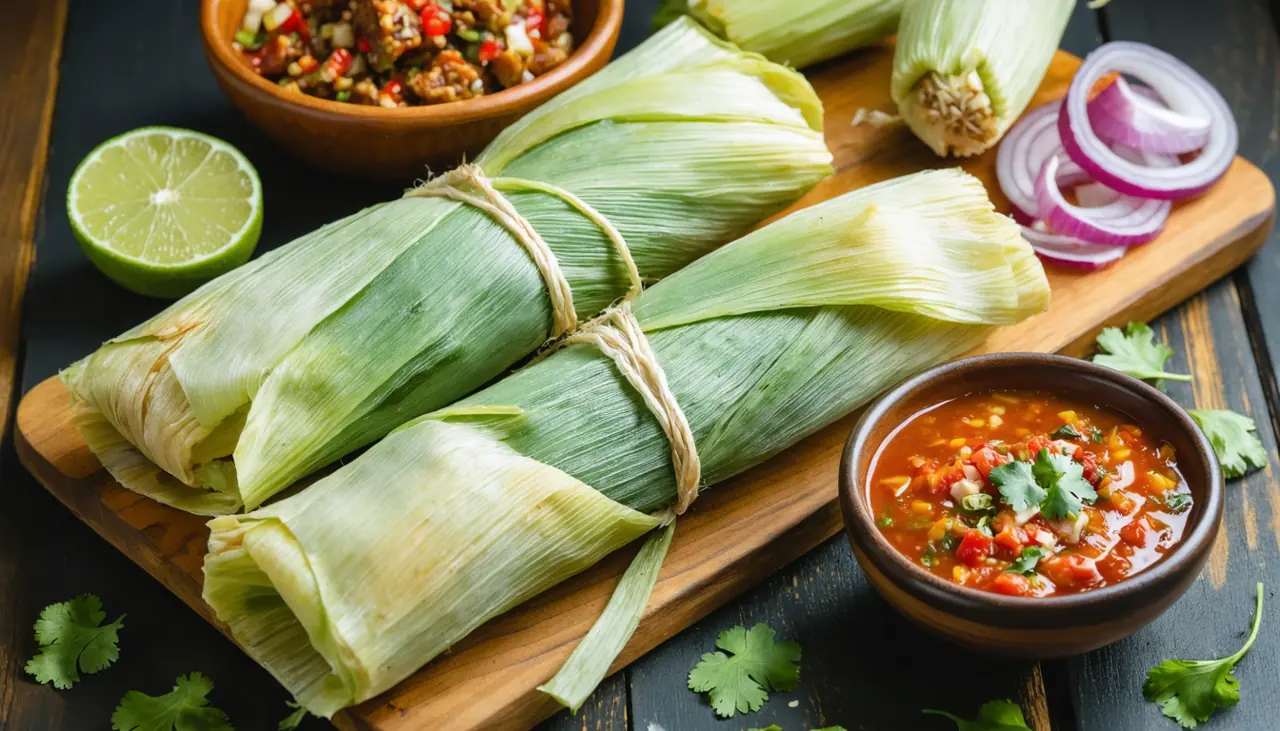
Green Corn Tamales (Tamalitos Verdes)
Fresh sweet corn ground with cilantro and a touch of ají amarillo, cooked into a soft green dough, wrapped around tender pork and steamed in corn husks. A beloved breakfast and snack from northern Peru.
Servings
Ingredients
Nutrition
Per serving
Steps
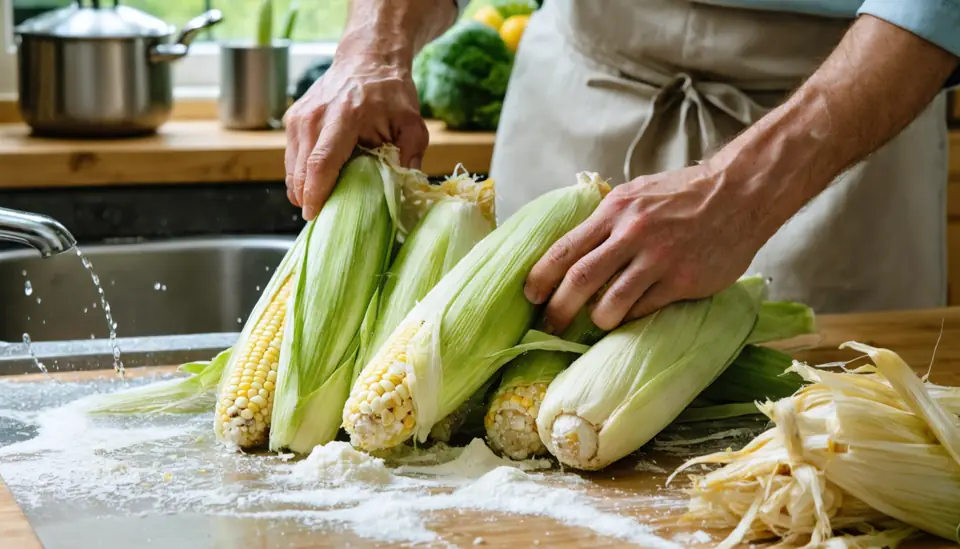
Prepare the husks
Carefully peel the husks off the corn, keeping the largest, widest ones whole for wrapping. Rinse under cold water to remove silk, then tear a few smaller husks into thin strips for tying later.
- 14–16 large husks, plus a few extra for tying corn husks
✅ Done when: husks are clean, pliable and free of silk
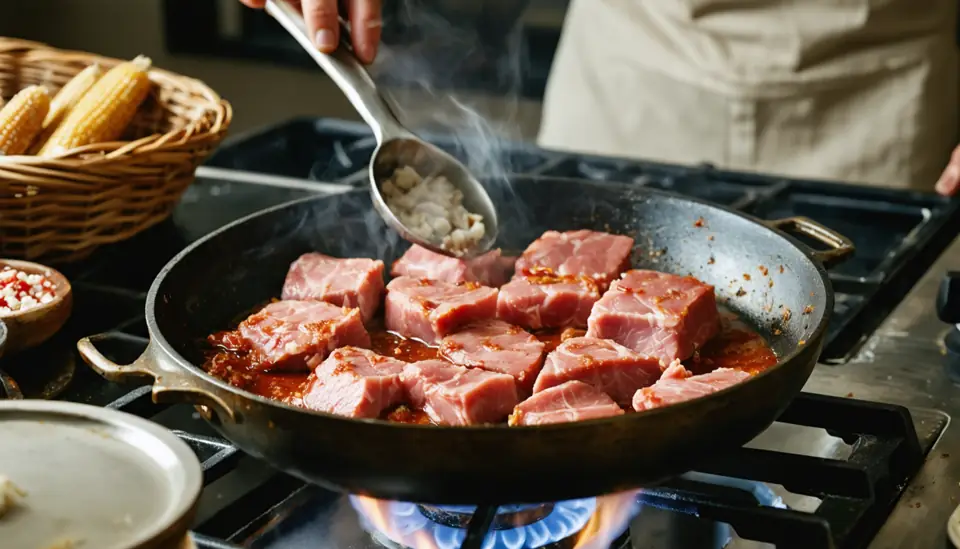
Cook the pork
Season the pork with salt, pepper and , then brown on all sides in a pan over medium heat. Add a splash of water, cover and cook gently for 15–25 minutes until fully cooked through.
- 500 g pork
- to taste salt and pepper
- 1 tbsp
- a splash water
✅ Done when: pork is tender with no pink inside
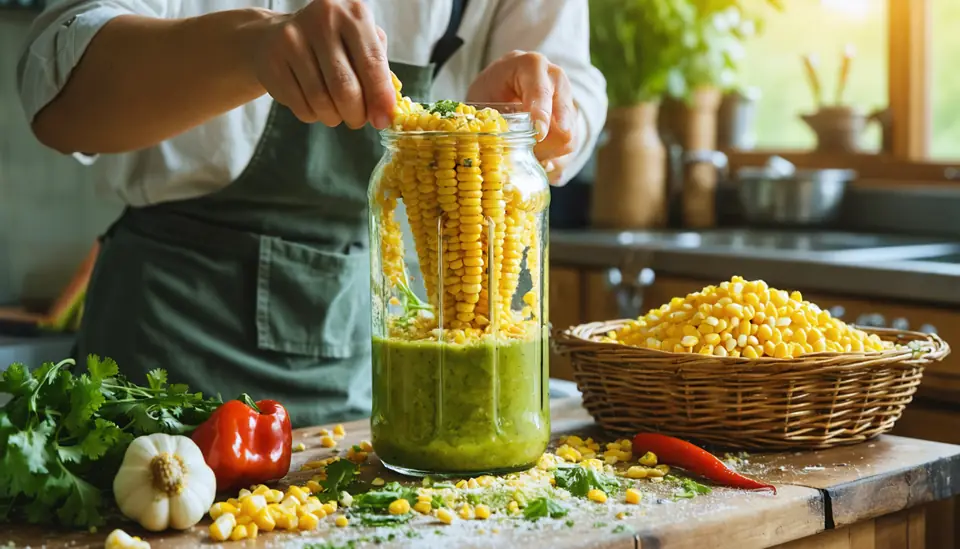
Grind the corn
In a food processor or blender, grind the corn kernels with the cilantro and in batches, pulsing to a thick, slightly grainy paste rather than a smooth purée.
- 1 kg corn kernels
- 30 g (1 cup) cilantro
- 1 (or 2 tbsp paste)
✅ Done when: mixture is a thick, slightly grainy paste
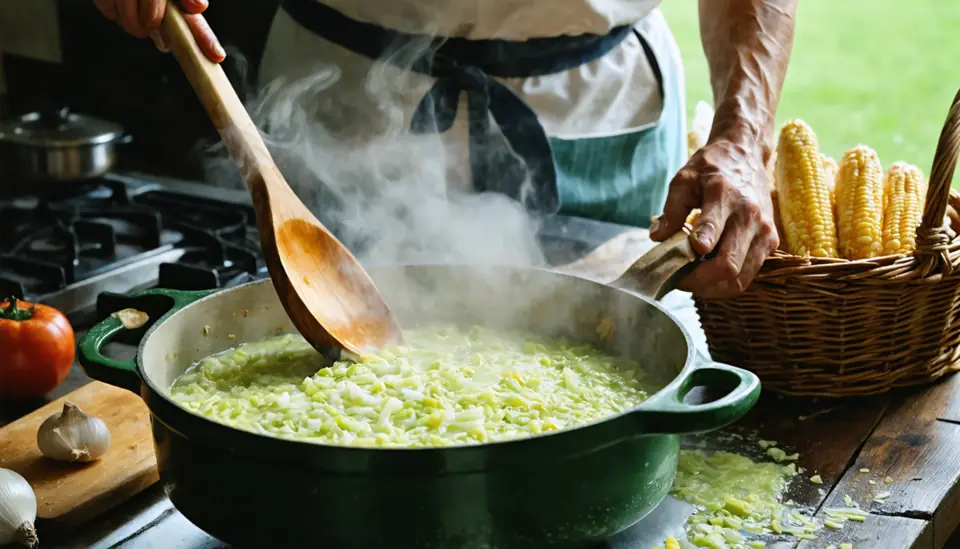
Cook the dough
Melt the lard in a wide pot and cook the onion and garlic over medium-low heat until soft, about 4 minutes. Add the ground corn mixture, cumin, salt and pepper, and cook, stirring constantly, for 8–12 minutes until slightly thickened and no longer raw-smelling; let cool a little.
- 100 g lard
- 1 small red onion
- 4 cloves garlic
- all of it corn mixture from step 3
- 1 tsp cumin
- to taste salt and pepper
✅ Done when: dough is slightly thickened and smells cooked, not raw
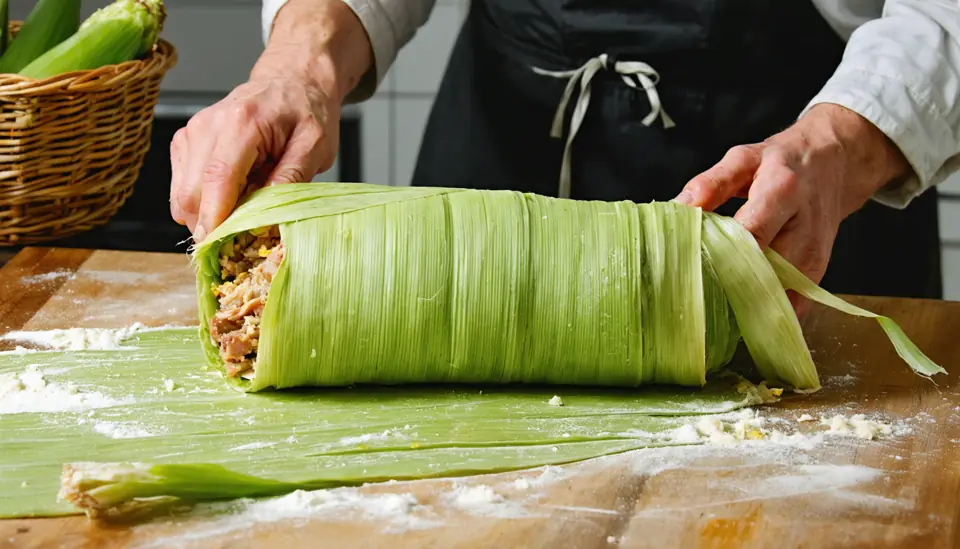
Fill and wrap
Lay a large husk flat, smooth side up, and spoon about 3 tablespoons of the corn dough into the centre. Press a piece of pork into the middle, fold the sides and ends of the husk over the filling, and tie closed with a husk strip.
- 1 large husk per tamale husks from step 1
- about 3 tbsp per tamale dough from step 4
- 1 piece per tamale pork from step 2
- 1 strip per tamale husk strips from step 1
✅ Done when: each tamale is a neat, closed parcel
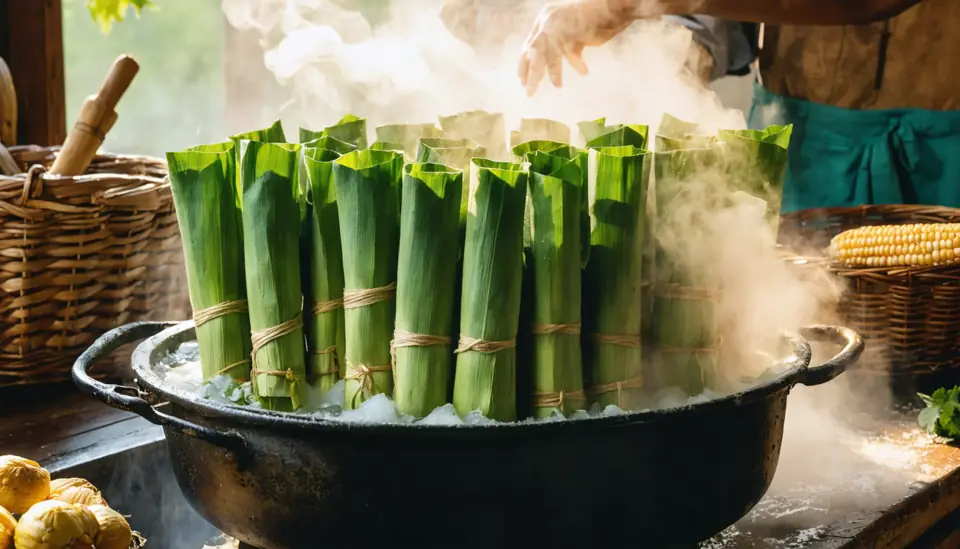
Steam the tamales
Stand or stack the tamales in a large pot fitted with a steamer rack or a layer of extra husks, above about 5 cm of boiling water. Cover tightly and steam at a steady simmer for 60–75 minutes, topping up water as needed.
- all tamales wrapped tamales from step 5
- about 2 L, for 5 cm in the pot water
✅ Done when: dough is firm and pulls cleanly away from the husk
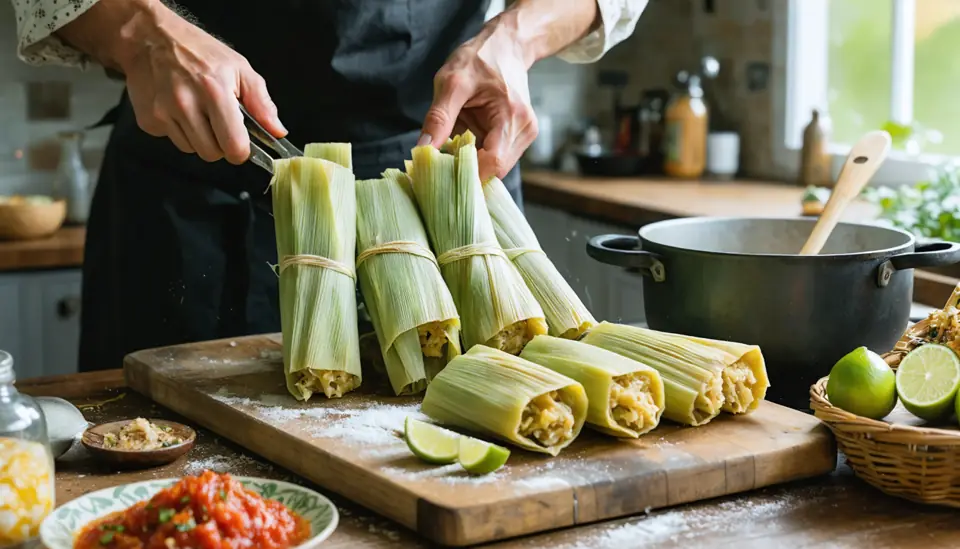
Rest and serve
Lift the tamales out and let them rest for 10 minutes before unwrapping; they firm up as they cool slightly. Serve warm with and lime wedges.
- all tamales steamed tamales from step 6
- to serve
- to serve lime wedges
✅ Done when: tamales are firm and easy to unwrap
Prepare the husks
Carefully peel the husks off the corn, keeping the largest, widest ones whole for wrapping. Rinse under cold water to remove silk, then tear a few smaller husks into thin strips for tying later.
- 14–16 large husks, plus a few extra for tying corn husks
✅ Done when: husks are clean, pliable and free of silk
Cook the pork
Season the pork with salt, pepper and , then brown on all sides in a pan over medium heat. Add a splash of water, cover and cook gently for 15–25 minutes until fully cooked through.
- 500 g pork
- to taste salt and pepper
- 1 tbsp
- a splash water
✅ Done when: pork is tender with no pink inside
Grind the corn
In a food processor or blender, grind the corn kernels with the cilantro and in batches, pulsing to a thick, slightly grainy paste rather than a smooth purée.
- 1 kg corn kernels
- 30 g (1 cup) cilantro
- 1 (or 2 tbsp paste)
✅ Done when: mixture is a thick, slightly grainy paste
Cook the dough
Melt the lard in a wide pot and cook the onion and garlic over medium-low heat until soft, about 4 minutes. Add the ground corn mixture, cumin, salt and pepper, and cook, stirring constantly, for 8–12 minutes until slightly thickened and no longer raw-smelling; let cool a little.
- 100 g lard
- 1 small red onion
- 4 cloves garlic
- all of it corn mixture from step 3
- 1 tsp cumin
- to taste salt and pepper
✅ Done when: dough is slightly thickened and smells cooked, not raw
Fill and wrap
Lay a large husk flat, smooth side up, and spoon about 3 tablespoons of the corn dough into the centre. Press a piece of pork into the middle, fold the sides and ends of the husk over the filling, and tie closed with a husk strip.
- 1 large husk per tamale husks from step 1
- about 3 tbsp per tamale dough from step 4
- 1 piece per tamale pork from step 2
- 1 strip per tamale husk strips from step 1
✅ Done when: each tamale is a neat, closed parcel
Steam the tamales
Stand or stack the tamales in a large pot fitted with a steamer rack or a layer of extra husks, above about 5 cm of boiling water. Cover tightly and steam at a steady simmer for 60–75 minutes, topping up water as needed.
- all tamales wrapped tamales from step 5
- about 2 L, for 5 cm in the pot water
✅ Done when: dough is firm and pulls cleanly away from the husk
Rest and serve
Lift the tamales out and let them rest for 10 minutes before unwrapping; they firm up as they cool slightly. Serve warm with and lime wedges.
- all tamales steamed tamales from step 6
- to serve
- to serve lime wedges
✅ Done when: tamales are firm and easy to unwrap
The Story Behind the Dish
Corn tamales have been made in the Andes and along the Peruvian coast since long before the Spanish arrived, when corn dough was wrapped in its own leaves and cooked over embers or in pits. In the north, around Lambayeque and Chiclayo, cooks developed their own version using fresh green corn rather than dried, ground with cilantro and ají for a bright, herby flavour quite different from the sweeter humitas eaten further south.
Tamalitos verdes became a signature of northern Peruvian breakfasts, sold still warm from baskets outside churches and markets, usually alongside a cup of coffee or a glass of chicha.
⭐ Why It's Famous
The fresh corn and cilantro give it a grassy, savoury flavour that sets it apart from other Latin American tamales, and the tender piece of pork hidden inside is always a welcome surprise.
💡 Fun Fact
In Lambayeque, tamalitos verdes are traditionally a breakfast food, often eaten with a wedge of lime and a strong cup of coffee before the morning's work begins.
Lambayeque region, northern Peru
-6.77°S, -79.84°W
Related recipes
Comments (0)
No comments yet. Be the first to share your thoughts!