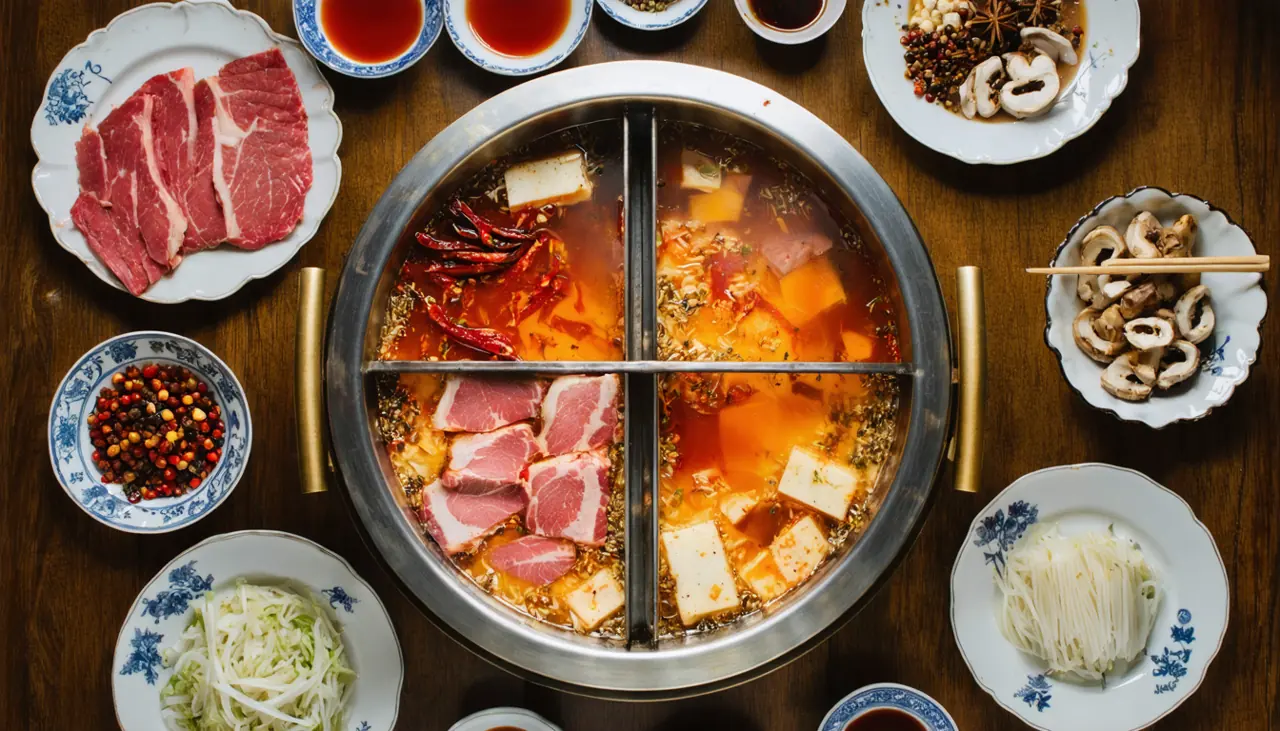
Sichuan Hot Pot (四川火锅)
A fiery, numbing mala broth bubbling at the centre of the table, built from beef tallow, chili bean paste and Sichuan peppercorns, for everyone to cook their own thin-sliced meats, tofu and vegetables in. The best kind of meal: slow, shared, and loud with chopsticks.
Servings
Ingredients
Nutrition
Per serving
Steps
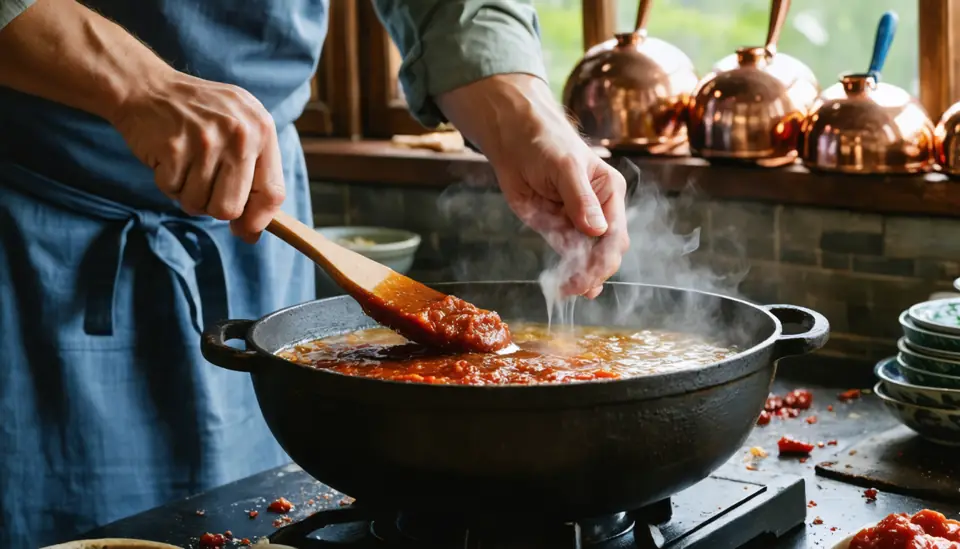
Render the tallow
In a large pot (at least 4 litres) over medium heat, melt the beef tallow with the vegetable oil. Add the and stir constantly for 3–4 minutes until the oil turns a deep red and smells rich rather than raw. Keep the heat moderate so the paste doesn't scorch and turn bitter.
- 100 g beef tallow
- 2 tbsp vegetable oil
- 80 g
✅ Done when: the oil is bright red and smells deeply savory, not sharp or burnt
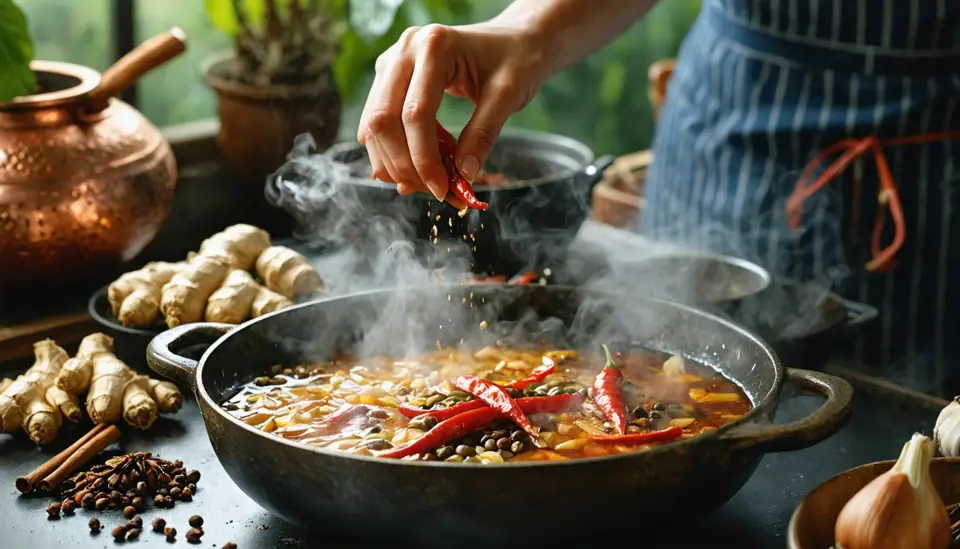
Toast the spices
Add the dried chilies, Sichuan peppercorns, ginger, garlic, star anise, cinnamon, bay leaves and fermented black beans. Stir-fry for about 2 minutes until the kitchen smells warm and toasty — this short dry stir wakes up the numbing oils in the peppercorns before any liquid goes in.
- 30 g dried Sichuan chilies
- 15 g Sichuan peppercorns
- 40 g ginger
- 1 head garlic
- 3 star anise
- 1 small piece cinnamon bark
- 2 bay leaves
- 1 tbsp fermented black beans
✅ Done when: the spices smell toasty and the chilies darken slightly without blackening
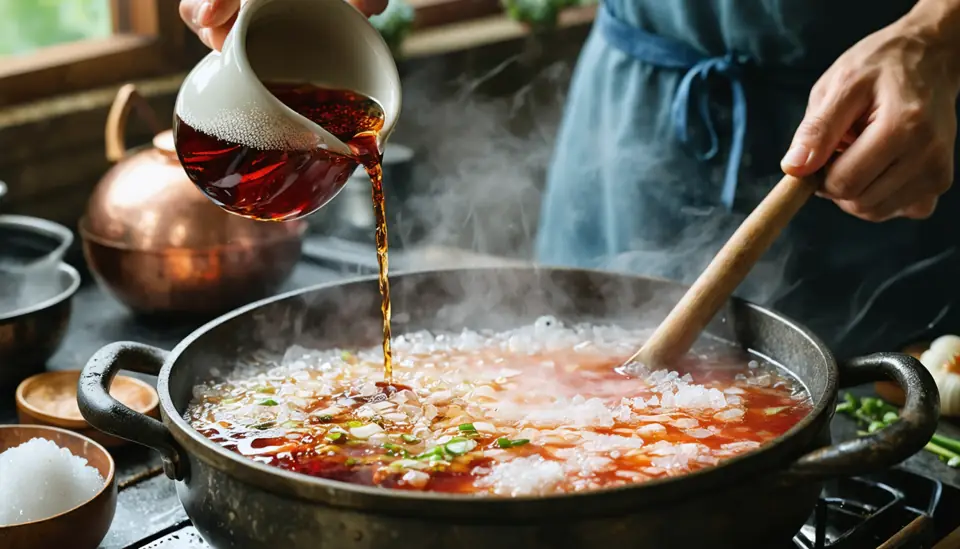
Build and simmer the broth
Pour in the stock and Shaoxing wine, add the rock sugar and scallion whites, and bring to a boil. Skim off any foam, then lower the heat and simmer gently for 30 minutes so the chilies and spices fully flavor the liquid. Taste near the end: add a little more rock sugar if it's too sharp, or a touch more if you want it bolder.
- 2 tbsp Shaoxing wine
- 20 g rock sugar
- 2 litres stock
- 3 scallion whites
✅ Done when: the broth is a deep red-brown with a glossy layer of chili oil on top, and tastes rounded rather than raw
Slice and arrange
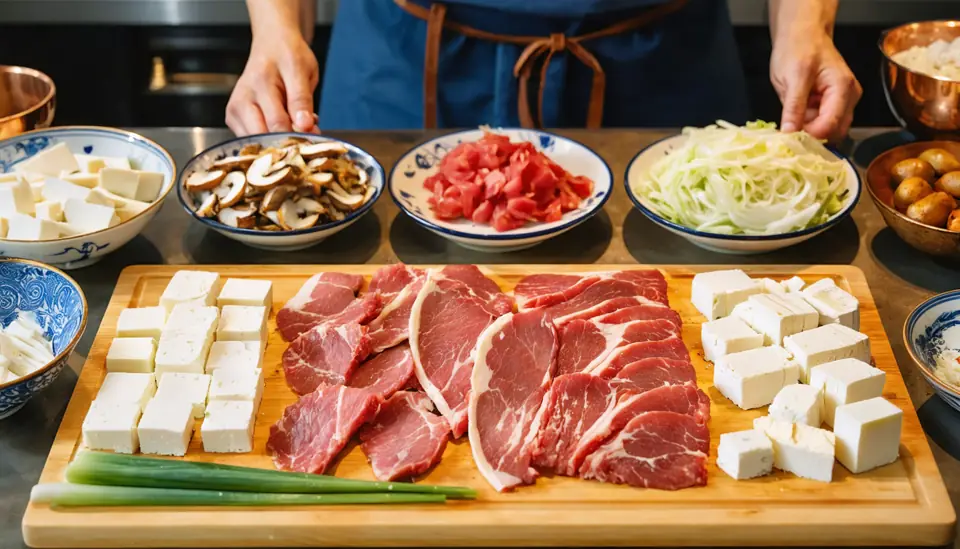
While the broth simmers, slice the beef, lamb and pork belly as thin as possible — a half-frozen piece of meat (30 minutes in the freezer) slices like paper and is easier to handle than fresh. Lay the sliced meats, tofu, enoki, napa cabbage, lotus root and potato out on platters so everyone at the table can reach them.
- 400 g beef
- 300 g lamb
- 200 g pork belly
- 300 g tofu
- 200 g enoki mushrooms
- 200 g napa cabbage
- 200 g lotus root
- 2 potatoes
✅ Done when: all the slices are thin enough to turn pale within seconds in hot broth
Mix the dipping sauce
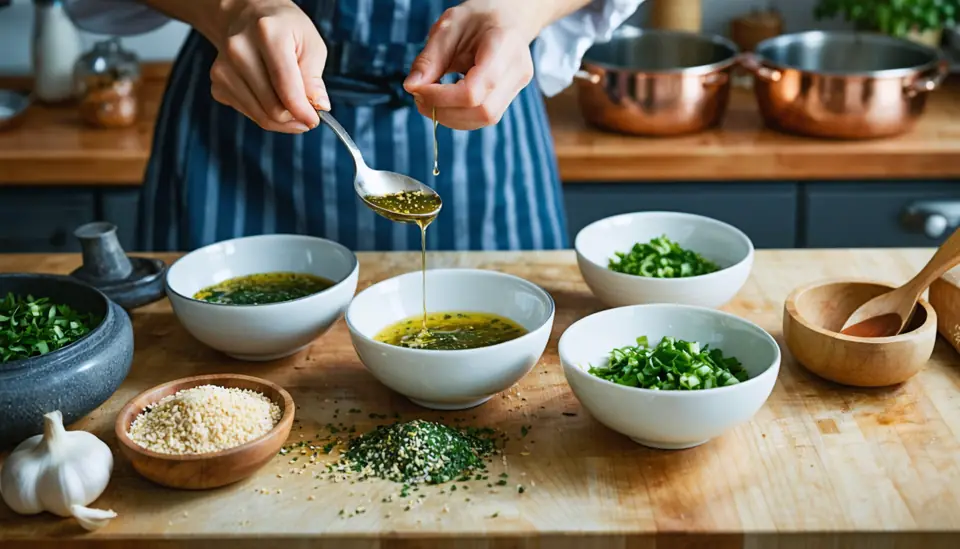
In small individual bowls, stir together the sesame oil, minced garlic, cilantro and chopped scallion. This cooling sesame-oil dip is not optional at a proper Sichuan table — it tempers the heat and carries every bite.
- 4 tbsp sesame oil
- 4 cloves garlic, minced
- 2 tbsp cilantro
- 2 scallions
Cook at the table
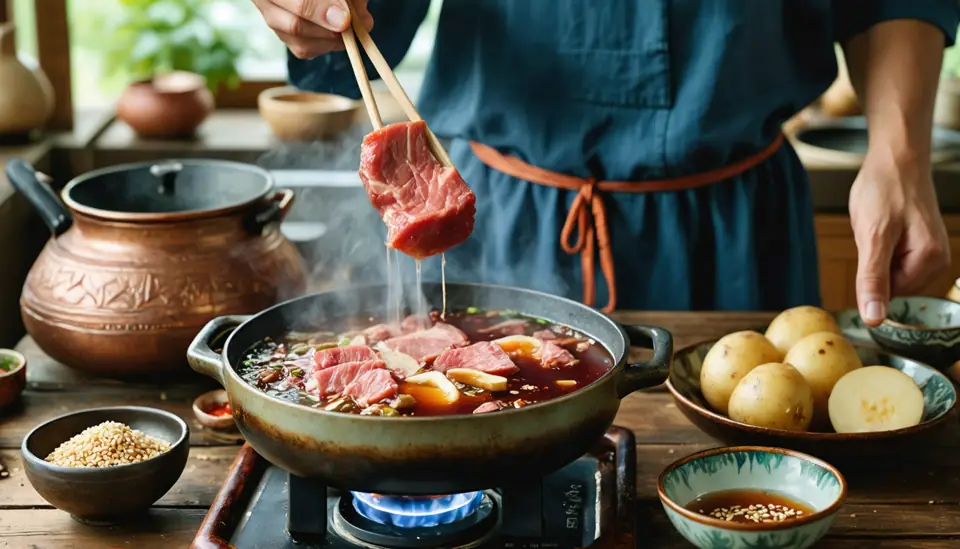
Set the pot over a portable burner in the centre of the table and keep the broth at a gentle, steady simmer, not a wild boil. Cook sturdier items like potato and lotus root first for 2–3 minutes, then a few slices of meat at a time, swirling with chopsticks until no longer pink — about 15–20 seconds for beef and lamb, a little longer for pork belly to be sure it's cooked through (internal temperature of 71°C/160°F). Cook tofu and leafy vegetables last for 1–2 minutes, and dip everything in the sesame sauce before eating.
- 400 g beef (to cook)
- 300 g lamb (to cook)
- 200 g pork belly (to cook)
- 300 g tofu (to cook)
- 200 g enoki (to cook)
- 200 g napa cabbage (to cook)
✅ Done when: meat shows no pink inside and vegetables are just tender
Finish with noodles
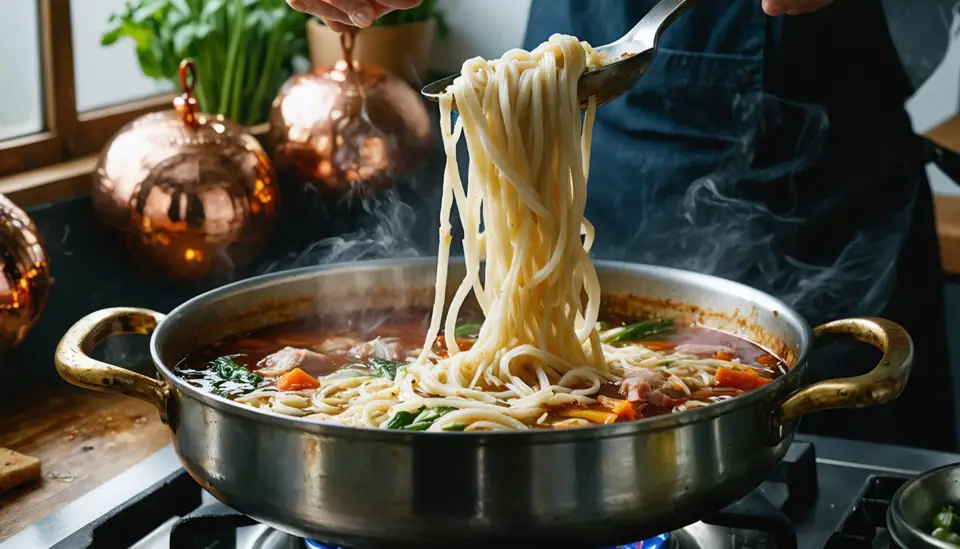
Once the meats and vegetables are mostly eaten, drop the noodles into the remaining broth and simmer for 2–3 minutes until tender. Ladle into bowls as the final course — the broth is richest at the very end, after everything that's cooked in it.
- 200 g rice or glass noodles
✅ Done when: the noodles are tender and have soaked up the broth's flavor
Render the tallow
In a large pot (at least 4 litres) over medium heat, melt the beef tallow with the vegetable oil. Add the and stir constantly for 3–4 minutes until the oil turns a deep red and smells rich rather than raw. Keep the heat moderate so the paste doesn't scorch and turn bitter.
- 100 g beef tallow
- 2 tbsp vegetable oil
- 80 g
✅ Done when: the oil is bright red and smells deeply savory, not sharp or burnt
Toast the spices
Add the dried chilies, Sichuan peppercorns, ginger, garlic, star anise, cinnamon, bay leaves and fermented black beans. Stir-fry for about 2 minutes until the kitchen smells warm and toasty — this short dry stir wakes up the numbing oils in the peppercorns before any liquid goes in.
- 30 g dried Sichuan chilies
- 15 g Sichuan peppercorns
- 40 g ginger
- 1 head garlic
- 3 star anise
- 1 small piece cinnamon bark
- 2 bay leaves
- 1 tbsp fermented black beans
✅ Done when: the spices smell toasty and the chilies darken slightly without blackening
Build and simmer the broth
Pour in the stock and Shaoxing wine, add the rock sugar and scallion whites, and bring to a boil. Skim off any foam, then lower the heat and simmer gently for 30 minutes so the chilies and spices fully flavor the liquid. Taste near the end: add a little more rock sugar if it's too sharp, or a touch more if you want it bolder.
- 2 tbsp Shaoxing wine
- 20 g rock sugar
- 2 litres stock
- 3 scallion whites
✅ Done when: the broth is a deep red-brown with a glossy layer of chili oil on top, and tastes rounded rather than raw
Slice and arrange
While the broth simmers, slice the beef, lamb and pork belly as thin as possible — a half-frozen piece of meat (30 minutes in the freezer) slices like paper and is easier to handle than fresh. Lay the sliced meats, tofu, enoki, napa cabbage, lotus root and potato out on platters so everyone at the table can reach them.
- 400 g beef
- 300 g lamb
- 200 g pork belly
- 300 g tofu
- 200 g enoki mushrooms
- 200 g napa cabbage
- 200 g lotus root
- 2 potatoes
✅ Done when: all the slices are thin enough to turn pale within seconds in hot broth
Mix the dipping sauce
In small individual bowls, stir together the sesame oil, minced garlic, cilantro and chopped scallion. This cooling sesame-oil dip is not optional at a proper Sichuan table — it tempers the heat and carries every bite.
- 4 tbsp sesame oil
- 4 cloves garlic, minced
- 2 tbsp cilantro
- 2 scallions
Cook at the table
Set the pot over a portable burner in the centre of the table and keep the broth at a gentle, steady simmer, not a wild boil. Cook sturdier items like potato and lotus root first for 2–3 minutes, then a few slices of meat at a time, swirling with chopsticks until no longer pink — about 15–20 seconds for beef and lamb, a little longer for pork belly to be sure it's cooked through (internal temperature of 71°C/160°F). Cook tofu and leafy vegetables last for 1–2 minutes, and dip everything in the sesame sauce before eating.
- 400 g beef (to cook)
- 300 g lamb (to cook)
- 200 g pork belly (to cook)
- 300 g tofu (to cook)
- 200 g enoki (to cook)
- 200 g napa cabbage (to cook)
✅ Done when: meat shows no pink inside and vegetables are just tender
Finish with noodles
Once the meats and vegetables are mostly eaten, drop the noodles into the remaining broth and simmer for 2–3 minutes until tender. Ladle into bowls as the final course — the broth is richest at the very end, after everything that's cooked in it.
- 200 g rice or glass noodles
✅ Done when: the noodles are tender and have soaked up the broth's flavor
The Story Behind the Dish
Sichuan hot pot is said to have begun with dock workers and boatmen along the Yangtze and Jialing rivers near Chongqing, who cooked cheap cuts of offal in a shared pot of chili-laden broth to warm themselves and stretch their food. The fiery, numbing mala broth made tough, inexpensive ingredients taste rich and exciting, and the communal pot suited the rhythm of working life on the docks.
Over time the dish spread from riverside stalls into restaurants across Sichuan and then the rest of China, with cooks refining the broth and adding finer cuts of meat, seafood and vegetables. Today it remains one of China's most beloved social meals, equally at home in a simple neighborhood joint or an elaborate restaurant with a divided pot for mild and spicy broths side by side.
⭐ Why It's Famous
It's famous for the mala sensation, the mouth-numbing tingle of Sichuan peppercorn paired with deep chili heat, and for turning dinner into a long, shared, DIY event rather than a plated meal.
💡 Fun Fact
Many hot pot restaurants offer a split pot so diners can cook in a mild broth on one side and the full mala broth on the other, all from the same table.
Chongqing and Chengdu, in China's Sichuan region
29.56°N, 106.55°E
Related recipes
Comments (0)
No comments yet. Be the first to share your thoughts!