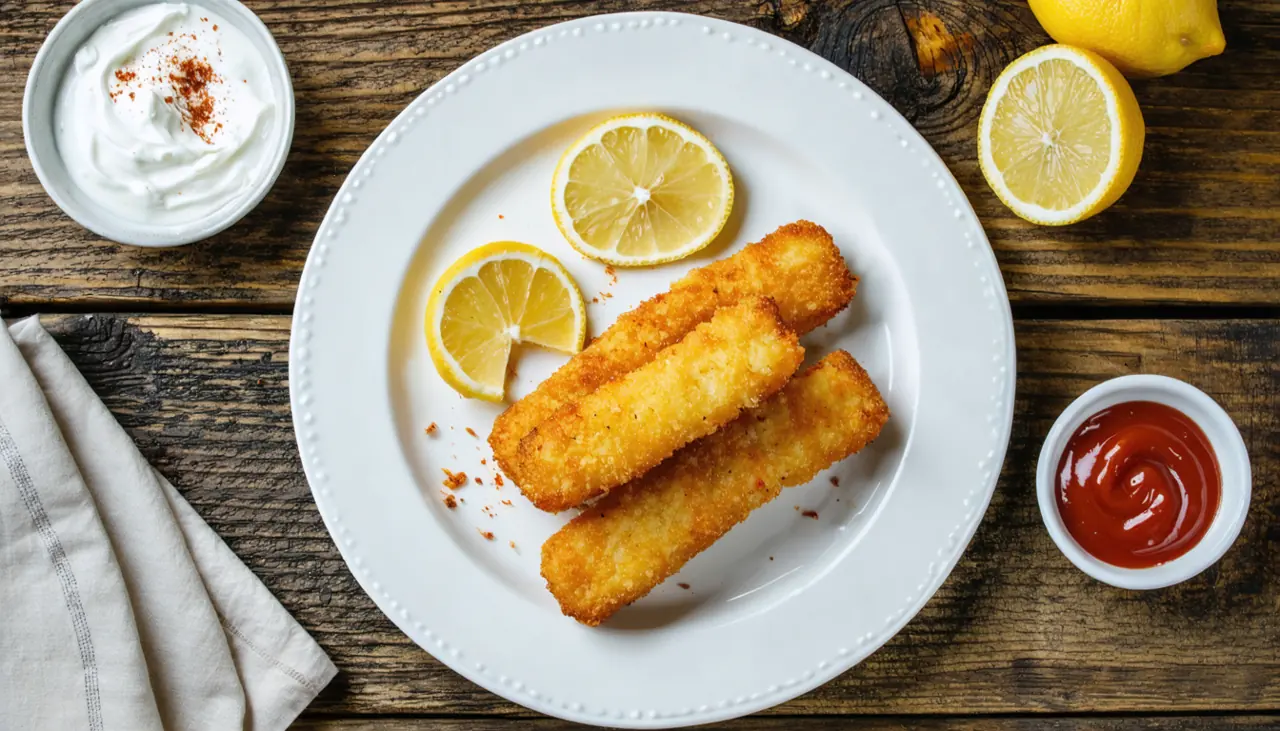
Quick Fish Fingers
Soft, flaky white fish cut into little strips, coated lightly and baked until golden — crisp outside, tender inside, and easy for small hands and little jaws.
Servings
Ingredients
Nutrition
Per serving
Steps
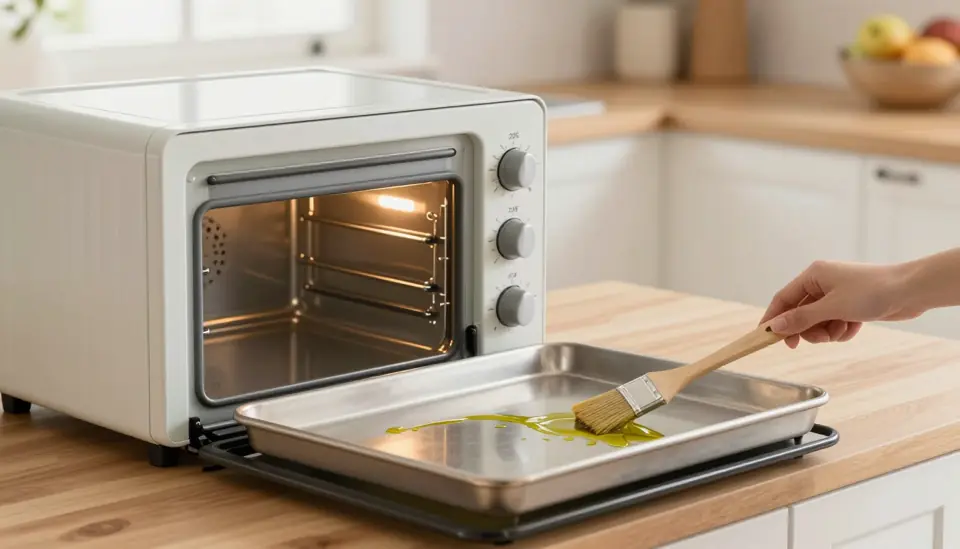
Heat the oven
Heat the oven to 220°C (425°F) and brush a baking tray with a little olive oil. Starting with a hot oven is what makes the coating crisp instead of soggy.
- a little, for the tray olive oil
✅ Done when: oven reaches 220°C (425°F) and tray is lightly oiled
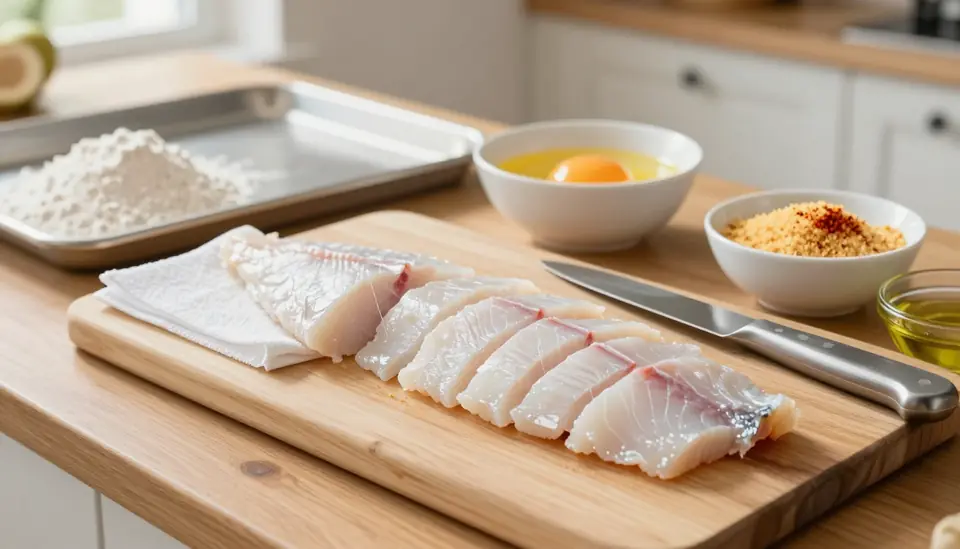
Cut the fish
Pat the fish fillets dry with paper towel, then cut into finger-sized strips about 2 cm wide. Drying the fish well helps the coating stick properly.
- 400 g white fish fillets
✅ Done when: fish is dry and cut into even 2 cm strips
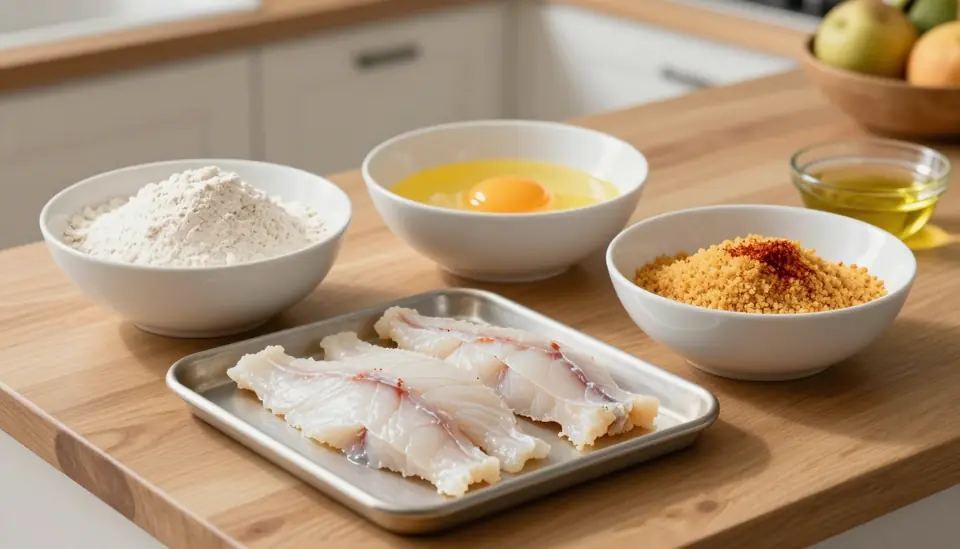
Set up three bowls
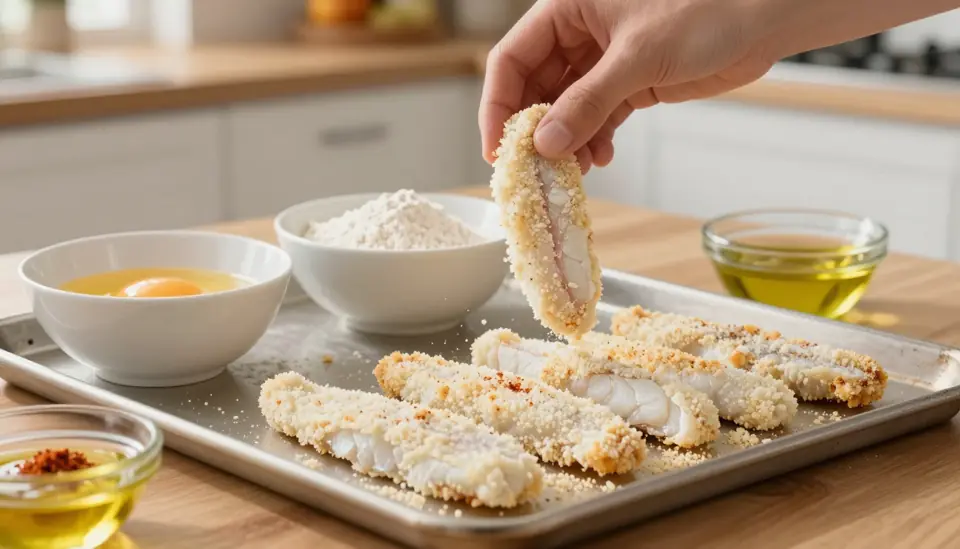
Put the flour in one bowl, the beaten egg in a second, and the breadcrumbs mixed with the paprika in a third.
- 40 g flour
- 1 large beaten egg
- 60 g breadcrumbs
- 1 pinch paprika
Coat the strips
Dip each fish strip first in flour, then in egg, then in breadcrumbs, pressing gently so the crumbs stick all over. Lay the strips on the tray without touching.
- 400 g fish strips from step 2
- 40 g flour from step 3
- 1 large egg from step 3
- 60 g breadcrumb mix from step 3
✅ Done when: every strip is fully and evenly coated
Bake until golden
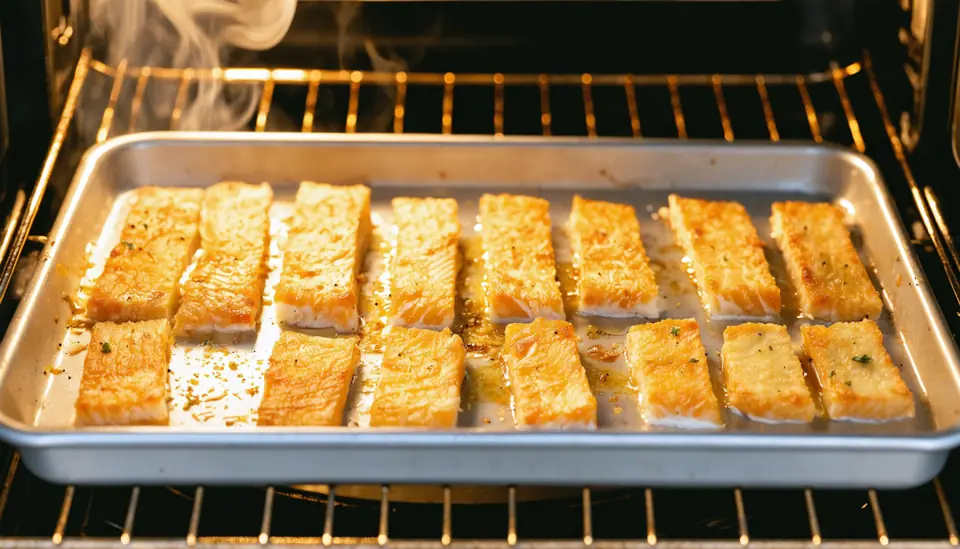
Drizzle the tops with the olive oil and bake for 8–10 minutes, flipping halfway, until golden all over.
- 1 tbsp olive oil
- all strips coated fish from step 4
✅ Done when: golden and crisp outside, fish flakes easily with a fork with no translucent center
Serve and have fun
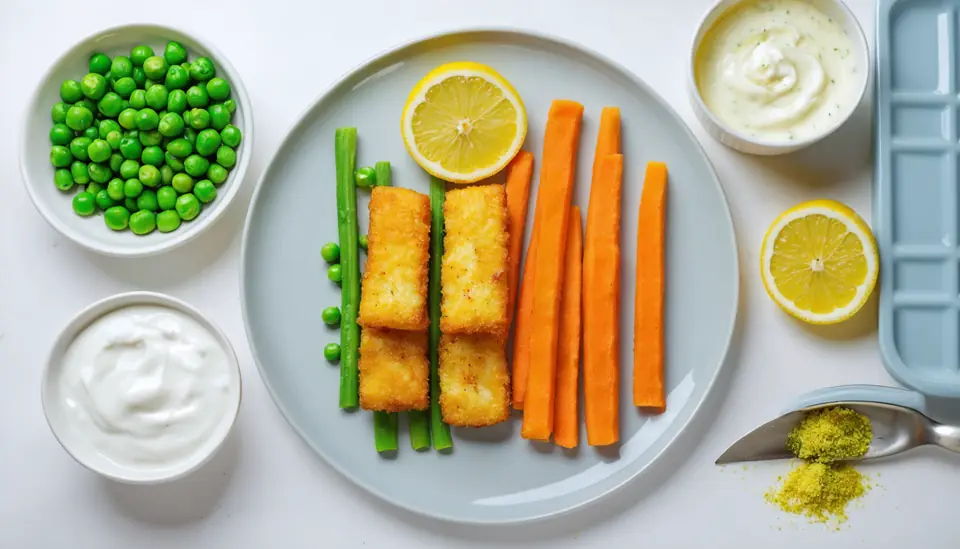
Steam the peas or cook the carrot sticks in a little water until soft while the fish bakes. Let the fish fingers cool for a minute, then plate with a generous portion of the vegetable side, a lemon wedge, and yoghurt or veg dip for dunking.
- 150 g peas or carrot sticks
- as needed water, for steaming
- to serve lemon wedges
- to serve yoghurt or veg dip
- all baked fish fingers from step 5
✅ Done when: vegetables are soft and everything is plated
Store or pack
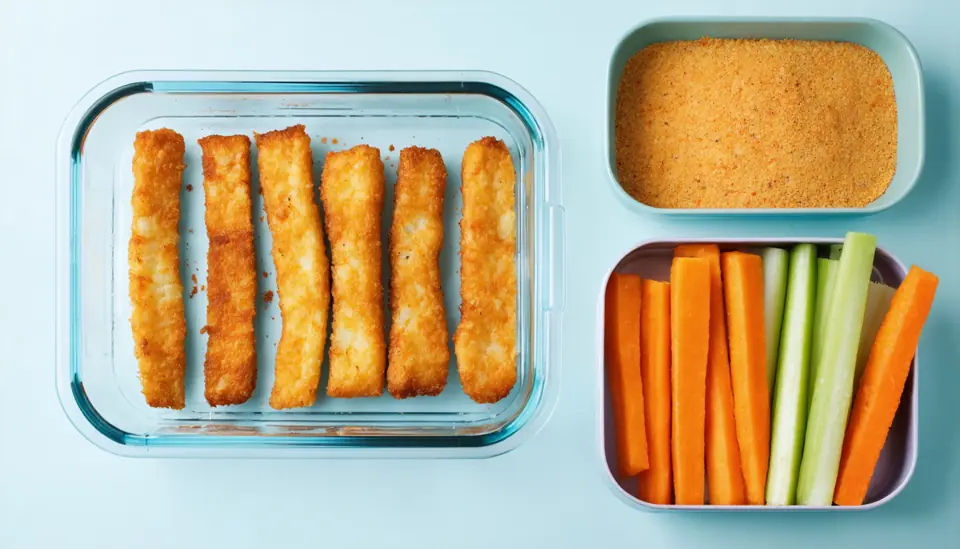
Cool the fish fingers completely before storing: keep in the fridge up to 2 days, or freeze in a single layer for up to 2 months. Reheat in a hot oven for a few minutes, or pack cold in a lunchbox with the vegetable side.
Heat the oven
Heat the oven to 220°C (425°F) and brush a baking tray with a little olive oil. Starting with a hot oven is what makes the coating crisp instead of soggy.
- a little, for the tray olive oil
✅ Done when: oven reaches 220°C (425°F) and tray is lightly oiled
Cut the fish
Pat the fish fillets dry with paper towel, then cut into finger-sized strips about 2 cm wide. Drying the fish well helps the coating stick properly.
- 400 g white fish fillets
✅ Done when: fish is dry and cut into even 2 cm strips
Set up three bowls
Put the flour in one bowl, the beaten egg in a second, and the breadcrumbs mixed with the paprika in a third.
- 40 g flour
- 1 large beaten egg
- 60 g breadcrumbs
- 1 pinch paprika
Coat the strips
Dip each fish strip first in flour, then in egg, then in breadcrumbs, pressing gently so the crumbs stick all over. Lay the strips on the tray without touching.
- 400 g fish strips from step 2
- 40 g flour from step 3
- 1 large egg from step 3
- 60 g breadcrumb mix from step 3
✅ Done when: every strip is fully and evenly coated
Bake until golden
Drizzle the tops with the olive oil and bake for 8–10 minutes, flipping halfway, until golden all over.
- 1 tbsp olive oil
- all strips coated fish from step 4
✅ Done when: golden and crisp outside, fish flakes easily with a fork with no translucent center
Serve and have fun
Steam the peas or cook the carrot sticks in a little water until soft while the fish bakes. Let the fish fingers cool for a minute, then plate with a generous portion of the vegetable side, a lemon wedge, and yoghurt or veg dip for dunking.
- 150 g peas or carrot sticks
- as needed water, for steaming
- to serve lemon wedges
- to serve yoghurt or veg dip
- all baked fish fingers from step 5
✅ Done when: vegetables are soft and everything is plated
Store or pack
Cool the fish fingers completely before storing: keep in the fridge up to 2 days, or freeze in a single layer for up to 2 months. Reheat in a hot oven for a few minutes, or pack cold in a lunchbox with the vegetable side.
The Story Behind the Dish
Breaded fish strips became a household favourite in the United States in the 1950s, when New England fishing companies like Gorton's, based in the fishing port of Gloucester, Massachusetts, began freezing breaded cod sticks for busy families. They were one of the first convenience foods built around mild, flaky white fish, designed to be quick, inexpensive and easy for kids to eat.
Since then, home cooks have kept making their own versions with fresh fish, flour, egg and breadcrumbs, baking instead of deep-frying for a lighter, everyday supper that still delivers the familiar crunch.
⭐ Why It's Famous
It turned fish, often a hard sell with children, into a crisp, familiar finger food that even picky eaters reach for.
💡 Fun Fact
Cod from the cold waters off New England was the original fish used, which is why cod and similarly mild whitefish remain the classic choice today.
New England, United States
42.62°N, -70.66°W
Related recipes
Comments (0)
No comments yet. Be the first to share your thoughts!