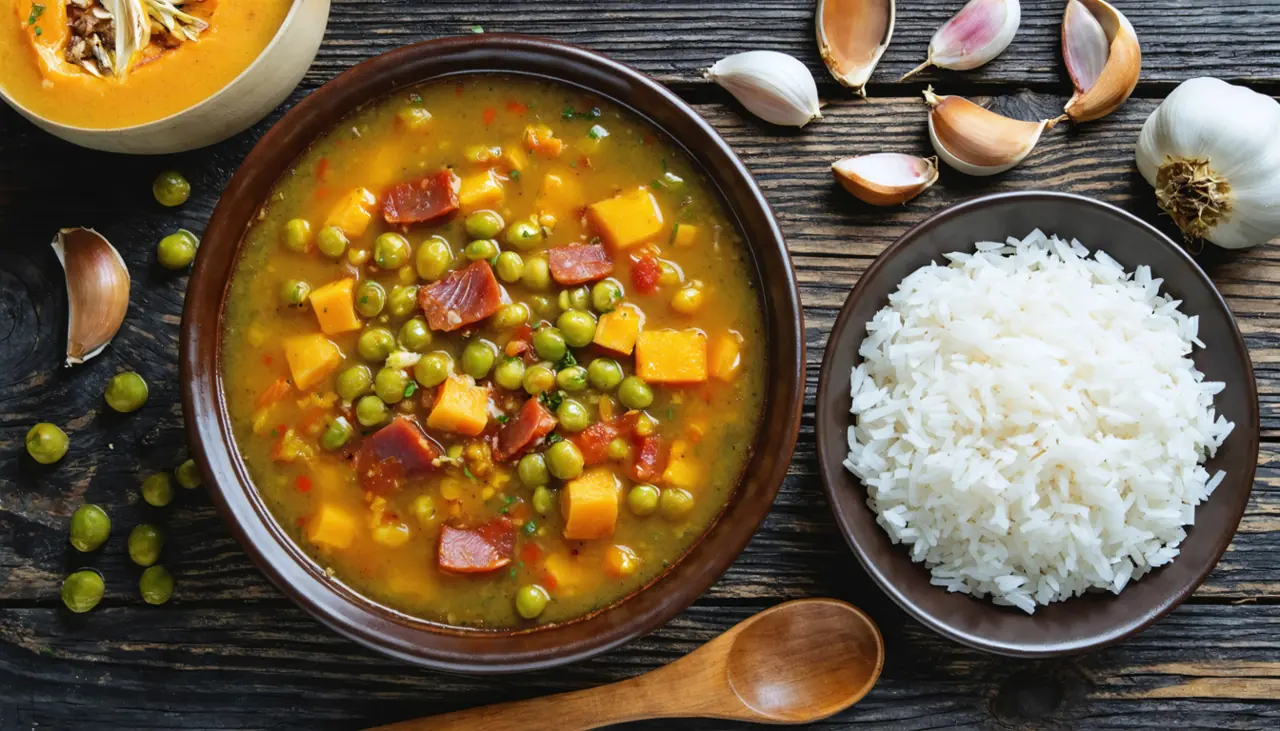
Cuban Split Pea Soup (Potaje de Chícharos)
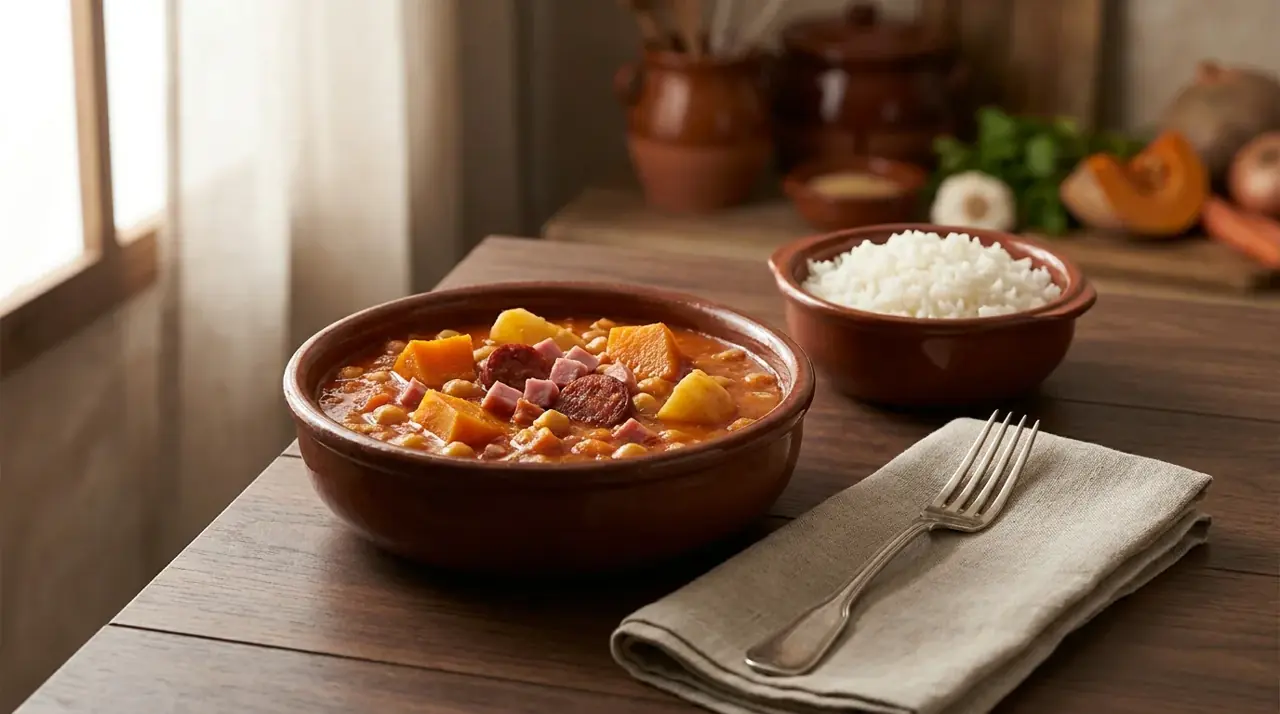
Green split peas simmered to velvety thickness with smoky ham, chorizo and sweet calabaza squash, finished with a deep garlic-and-cumin sofrito. A one-pot Cuban classic made for spooning over white rice.
Servings
Ingredients
Nutrition
Per serving
Steps
Cook the peas with ham
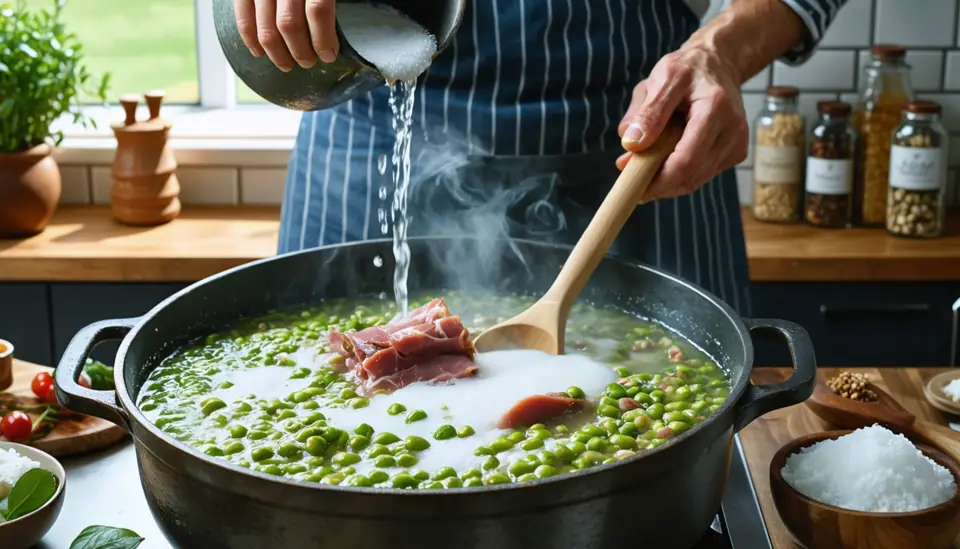
Put the rinsed split peas, water, ham hock and bay leaves in a large heavy pot. Bring to a boil, skim off any grey foam that rises, then lower the heat and simmer uncovered.
- 450 g split peas
- 2 litres water
- 1 ham hock
- 2 bay leaves
✅ Done when: the peas are soft and starting to break apart, and the broth looks pale and thick
Build the sofrito
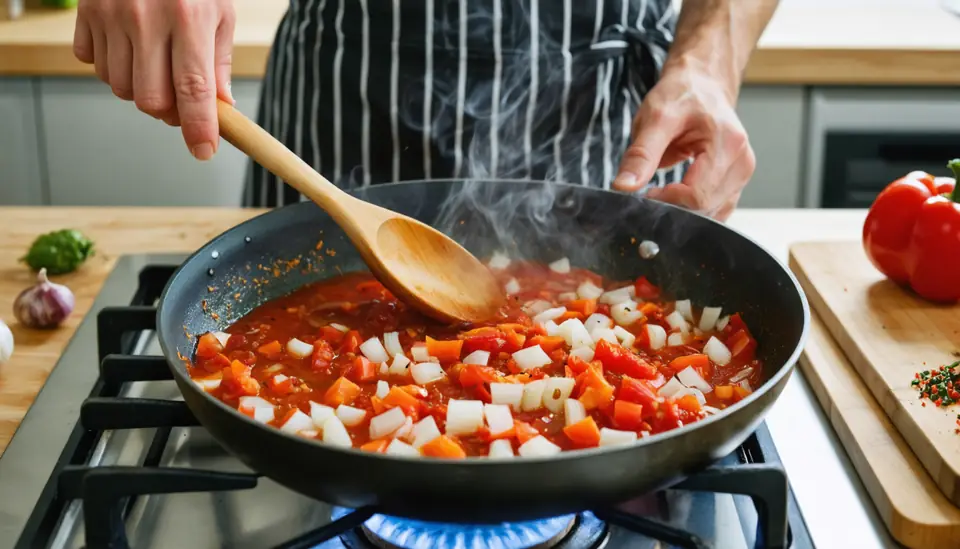
While the peas cook, heat the olive oil in a skillet over medium heat. Add the onion and bell pepper and cook, stirring, until soft and translucent, then add the garlic, cumin and oregano and cook for 1 minute more. Stir in the tomato sauce and wine and let it bubble until it deepens in color and smells toasted, not raw.
- 2 tbsp olive oil
- 1 medium onion
- 1 bell pepper
- 4 cloves garlic
- 1 tsp ground cumin
- 1 tsp dried oregano
- 120 ml tomato sauce
- 60 ml dry white wine
✅ Done when: the sofrito turns a deep brick-red and smells sweet and toasted, not sharp
Combine and shred the ham
This step is part of Foodie Premium. Subscribe to unlock the full method, cooking mode and every recipe in the library.
Add squash and chorizo
This step is part of Foodie Premium. Subscribe to unlock the full method, cooking mode and every recipe in the library.
Thicken the potaje
This step is part of Foodie Premium. Subscribe to unlock the full method, cooking mode and every recipe in the library.
Serve
This step is part of Foodie Premium. Subscribe to unlock the full method, cooking mode and every recipe in the library.
Cook the peas with ham
Put the rinsed split peas, water, ham hock and bay leaves in a large heavy pot. Bring to a boil, skim off any grey foam that rises, then lower the heat and simmer uncovered.
- 450 g split peas
- 2 litres water
- 1 ham hock
- 2 bay leaves
✅ Done when: the peas are soft and starting to break apart, and the broth looks pale and thick
Build the sofrito
While the peas cook, heat the olive oil in a skillet over medium heat. Add the onion and bell pepper and cook, stirring, until soft and translucent, then add the garlic, cumin and oregano and cook for 1 minute more. Stir in the tomato sauce and wine and let it bubble until it deepens in color and smells toasted, not raw.
- 2 tbsp olive oil
- 1 medium onion
- 1 bell pepper
- 4 cloves garlic
- 1 tsp ground cumin
- 1 tsp dried oregano
- 120 ml tomato sauce
- 60 ml dry white wine
✅ Done when: the sofrito turns a deep brick-red and smells sweet and toasted, not sharp
Combine and shred the ham
This step is part of Foodie Premium. Subscribe to unlock the full method, cooking mode and every recipe in the library.
Add squash and chorizo
This step is part of Foodie Premium. Subscribe to unlock the full method, cooking mode and every recipe in the library.
Thicken the potaje
This step is part of Foodie Premium. Subscribe to unlock the full method, cooking mode and every recipe in the library.
Serve
This step is part of Foodie Premium. Subscribe to unlock the full method, cooking mode and every recipe in the library.
The Story Behind the Dish
Split pea and lentil potajes arrived in Cuba with Spanish settlers, especially from the Canary Islands, who brought their legume stews and adapted them to island ingredients. Over time, Cuban cooks added their own sofrito of garlic, cumin and oregano, along with calabaza, ham and chorizo, turning a simple peasant pottage into something distinctly Cuban.
It became a staple of comida criolla, the everyday home cooking of the island, served in nearly every household and corner restaurant, almost always with white rice to soak up the thick broth.
⭐ Why It's Famous
It's the Cuban potaje people crave on a cool evening: thick, smoky and deeply savory, built to be eaten slowly with rice.
💡 Fun Fact
In Cuban kitchens, a potaje is judged by thickness as much as flavor — a good one should mound on a spoon, never run off like a thin soup.
Cuba, island-wide home cooking
23.11°N, -82.37°W
Related recipes
Comments (0)
No comments yet. Be the first to share your thoughts!