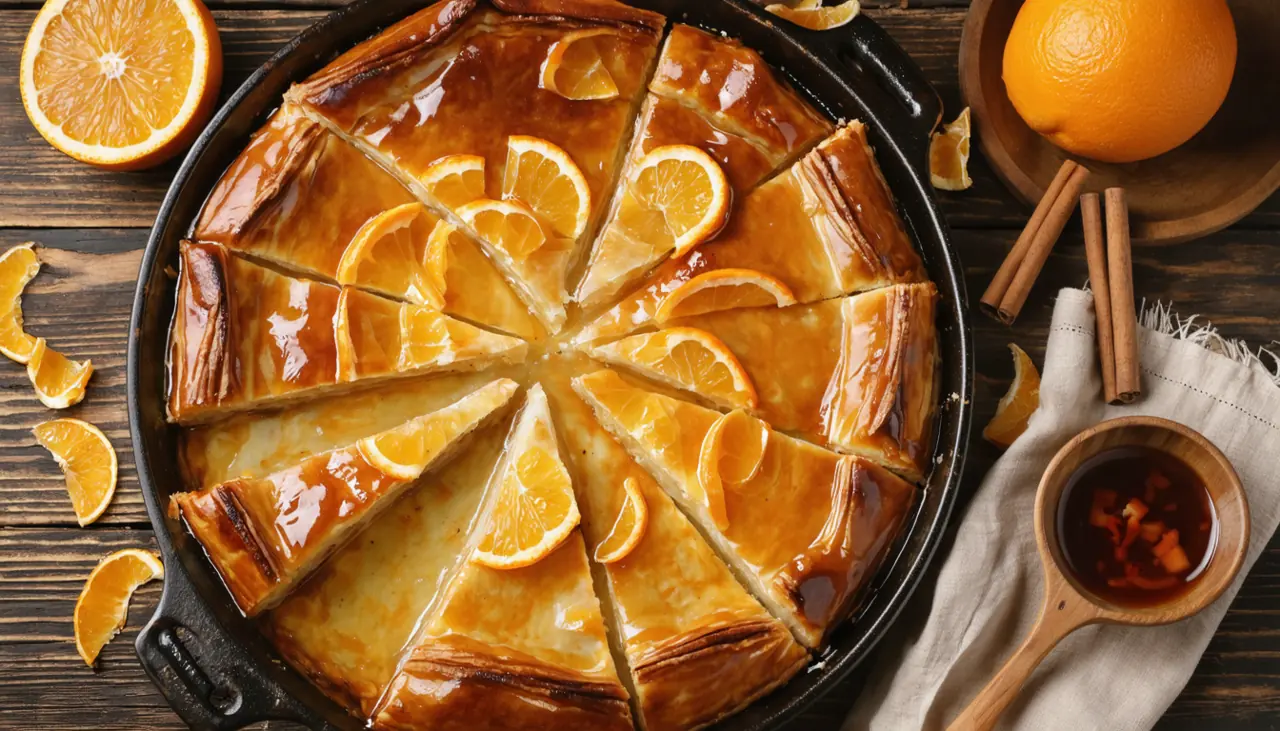
Orange Phyllo Cake (Portokalopita)
Shredded phyllo pastry baked into a soft, custardy cake with Greek yogurt and orange zest, then drenched in a fragrant orange-cinnamon syrup while still warm. Crisp edges, a tender middle, and sunny citrus flavour in every bite.
Servings
Ingredients
Nutrition
Per serving
Steps

Dry out the phyllo
Tear the phyllo sheets by hand into small, irregular pieces and spread them loosely on a tray. Leave uncovered at room temperature for 2–3 hours, or dry them in a low oven at 120°C (250°F) for about 10 minutes, until slightly brittle but not browned. This step matters: dry phyllo soaks up the syrup evenly later instead of turning gummy.
- 400 g torn phyllo sheets
✅ Done when: the pieces feel light, dry and slightly crisp between your fingers

Make the custard
In a large bowl, whisk the eggs with the sugar until pale and slightly foamy. Whisk in the yogurt, oil, orange zest, vanilla and salt, then sprinkle in the baking powder and whisk again until smooth.
- 6 eggs
- 220 g sugar
- 500 g Greek yogurt
- 200 ml vegetable oil
- 2 orange zest
- 4 tsp baking powder
- 1 tsp vanilla extract
- 1 pinch salt
✅ Done when: the mixture is smooth, pale and well combined, with no streaks of oil
Fold in the phyllo
This step is part of Foodie Premium. Subscribe to unlock the full method, cooking mode and every recipe in the library.
Bake the cake
This step is part of Foodie Premium. Subscribe to unlock the full method, cooking mode and every recipe in the library.
Make the syrup
This step is part of Foodie Premium. Subscribe to unlock the full method, cooking mode and every recipe in the library.
Soak and rest
This step is part of Foodie Premium. Subscribe to unlock the full method, cooking mode and every recipe in the library.
Dry out the phyllo
Tear the phyllo sheets by hand into small, irregular pieces and spread them loosely on a tray. Leave uncovered at room temperature for 2–3 hours, or dry them in a low oven at 120°C (250°F) for about 10 minutes, until slightly brittle but not browned. This step matters: dry phyllo soaks up the syrup evenly later instead of turning gummy.
- 400 g torn phyllo sheets
✅ Done when: the pieces feel light, dry and slightly crisp between your fingers
Make the custard
In a large bowl, whisk the eggs with the sugar until pale and slightly foamy. Whisk in the yogurt, oil, orange zest, vanilla and salt, then sprinkle in the baking powder and whisk again until smooth.
- 6 eggs
- 220 g sugar
- 500 g Greek yogurt
- 200 ml vegetable oil
- 2 orange zest
- 4 tsp baking powder
- 1 tsp vanilla extract
- 1 pinch salt
✅ Done when: the mixture is smooth, pale and well combined, with no streaks of oil
Fold in the phyllo
This step is part of Foodie Premium. Subscribe to unlock the full method, cooking mode and every recipe in the library.
Bake the cake
This step is part of Foodie Premium. Subscribe to unlock the full method, cooking mode and every recipe in the library.
Make the syrup
This step is part of Foodie Premium. Subscribe to unlock the full method, cooking mode and every recipe in the library.
Soak and rest
This step is part of Foodie Premium. Subscribe to unlock the full method, cooking mode and every recipe in the library.
The Story Behind the Dish
Portokalopita is a home-baker's dessert born from practicality: using up phyllo sheets that had gone a little dry rather than throwing them away. The shredded pastry, folded into a yogurt-egg custard scented with orange, bakes into a cake with a crisp top and a soft, moist crumb once soaked in syrup.
⭐ Why It's Famous
It became one of the most-loved cakes in Greek home kitchens because it is forgiving to make, needs no rolling or layering skill, and delivers the bright, sunny flavour of Greek oranges in every bite.
💡 Fun Fact
Despite the name, which simply means 'orange pie', it is really a syrup cake, part of the same family as the better-known semolina and walnut syrup cakes found across Greece.
Lefkada and the Ionian islands, Greece
38.80°N, 20.70°E
Related recipes

Comments (0)
No comments yet. Be the first to share your thoughts!