Earth-Oven Feast (Pachamanca)
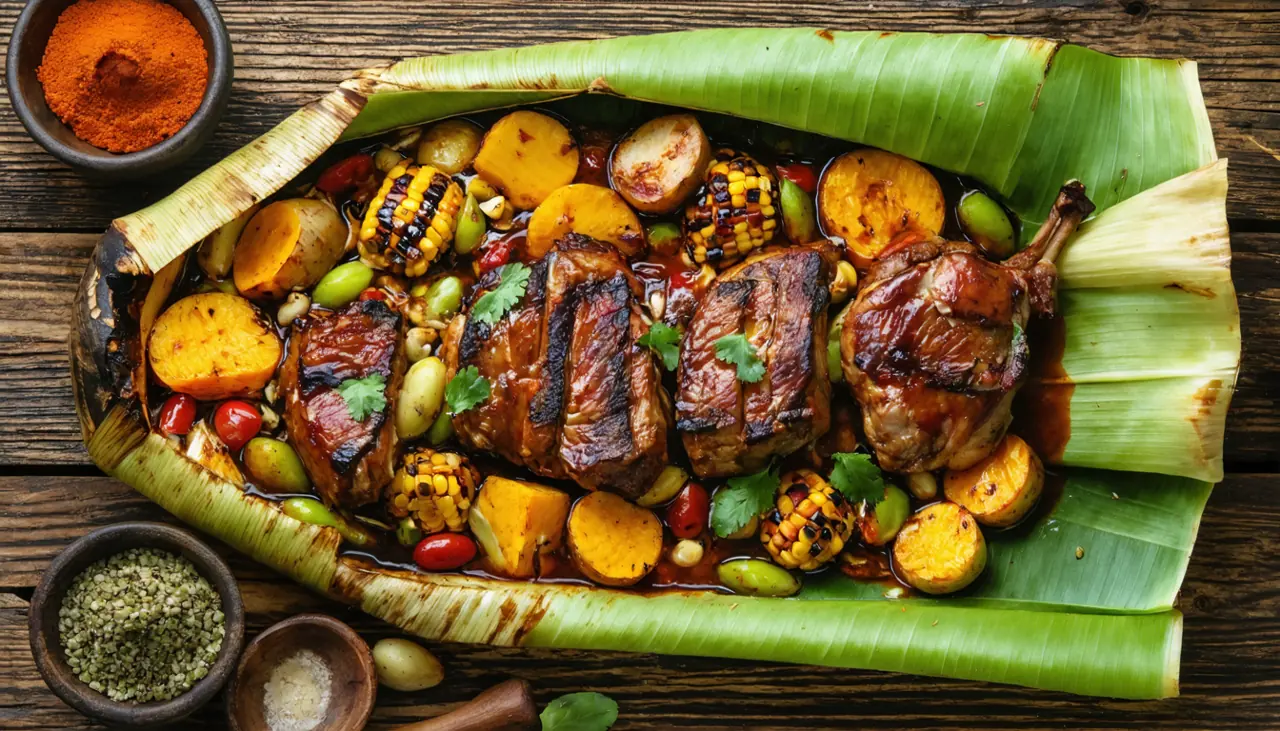
Pork, chicken and lamb marinated in ají panca and black mint, slow-roasted together with native potatoes, sweet potatoes, fava beans and corn until everything is smoky, tender and infused with each other's juices. This oven version captures the same sealed-in, earthy flavor as the traditional hot-stone pit.
Servings
Ingredients
Nutrition
Per serving
Steps

Marinate the meats
In a large bowl, mix the paste, garlic, cumin, oregano, , oil, salt and pepper. Add the pork, chicken and lamb, toss well to coat every piece, cover and refrigerate for at least 4 hours, or ideally overnight.
- 800 g pork
- 800 g chicken
- 500 g lamb
- 60 g paste
- 6 cloves garlic
- 1 tbsp cumin
- 1 tbsp oregano
- 250 ml or red wine
- 2 tbsp oil
- 2 tsp salt
- 1 tsp black pepper
✅ Done when: every piece of meat is deep red-brown and well coated in marinade

Soften the banana leaves
Pass each banana leaf quickly over an open flame or a hot dry skillet for a few seconds per side. This makes them soft and pliable instead of brittle, and gives off a faint smoky, grassy aroma that stands in for the hot stones. Use the leaves to line a very large heavy pot or roasting pan, letting the edges hang over the sides.
- 8 banana leaves
✅ Done when: the leaves turn glossy and bend easily without cracking

Layer the feast
Place the marinated meats in the bottom of the lined pot, as they would sit closest to the hot stones in the earth. Scatter half the leaves over them, then add the potatoes and sweet potato. Finish with the fava beans and corn on top, with the remaining tucked between the layers.
- 800 g pork (from step 1)
- 800 g chicken (from step 1)
- 500 g lamb (from step 1)
- 800 g yellow potatoes
- 500 g sweet potato
- 300 g fava beans
- 2 ears corn
- 10 leaves

Seal and bake
Fold the hanging banana leaf edges over the top to wrap everything in, then cover the pot tightly with its lid, adding a layer of foil underneath the lid if it doesn't seal well. Bake at 220°C (425°F) for 1 hour 40 minutes without opening the lid at any point — trapping the steam and smoke inside is what makes everything cook evenly and taste of instead of plain roasted meat.
✅ Done when: a knife slides easily into the potatoes and the meat is fully cooked through, with no pink near the bone and juices running clear

Let it rest sealed
Take the pot out of the oven and let it rest, still sealed, for 10 minutes before lifting the lid. The burst of fragrant steam when you finally open it is part of the celebration.
✅ Done when: the pot has stopped steaming forcefully when gently shaken

Serve
Unwrap the banana leaves and pile the meats, potatoes, sweet potato, fava beans and corn onto a large platter, ideally lined with a few fresh banana leaves. Serve with salsa criolla and lime on the side.
- to serve salsa criolla
Marinate the meats
In a large bowl, mix the paste, garlic, cumin, oregano, , oil, salt and pepper. Add the pork, chicken and lamb, toss well to coat every piece, cover and refrigerate for at least 4 hours, or ideally overnight.
- 800 g pork
- 800 g chicken
- 500 g lamb
- 60 g paste
- 6 cloves garlic
- 1 tbsp cumin
- 1 tbsp oregano
- 250 ml or red wine
- 2 tbsp oil
- 2 tsp salt
- 1 tsp black pepper
✅ Done when: every piece of meat is deep red-brown and well coated in marinade
Soften the banana leaves
Pass each banana leaf quickly over an open flame or a hot dry skillet for a few seconds per side. This makes them soft and pliable instead of brittle, and gives off a faint smoky, grassy aroma that stands in for the hot stones. Use the leaves to line a very large heavy pot or roasting pan, letting the edges hang over the sides.
- 8 banana leaves
✅ Done when: the leaves turn glossy and bend easily without cracking
Layer the feast
Place the marinated meats in the bottom of the lined pot, as they would sit closest to the hot stones in the earth. Scatter half the leaves over them, then add the potatoes and sweet potato. Finish with the fava beans and corn on top, with the remaining tucked between the layers.
- 800 g pork (from step 1)
- 800 g chicken (from step 1)
- 500 g lamb (from step 1)
- 800 g yellow potatoes
- 500 g sweet potato
- 300 g fava beans
- 2 ears corn
- 10 leaves
Seal and bake
Fold the hanging banana leaf edges over the top to wrap everything in, then cover the pot tightly with its lid, adding a layer of foil underneath the lid if it doesn't seal well. Bake at 220°C (425°F) for 1 hour 40 minutes without opening the lid at any point — trapping the steam and smoke inside is what makes everything cook evenly and taste of instead of plain roasted meat.
✅ Done when: a knife slides easily into the potatoes and the meat is fully cooked through, with no pink near the bone and juices running clear
Let it rest sealed
Take the pot out of the oven and let it rest, still sealed, for 10 minutes before lifting the lid. The burst of fragrant steam when you finally open it is part of the celebration.
✅ Done when: the pot has stopped steaming forcefully when gently shaken
Serve
Unwrap the banana leaves and pile the meats, potatoes, sweet potato, fava beans and corn onto a large platter, ideally lined with a few fresh banana leaves. Serve with salsa criolla and lime on the side.
- to serve salsa criolla
The Story Behind the Dish
Long before the Incas, Andean communities dug pits lined with hot stones to roast meat and tubers together as an offering to Pachamama, Mother Earth, giving the dish its name: pacha (earth) and manka (pot). The stones, heated for hours over a wood fire, were buried with layers of marinated meat, potatoes, favas and herbs, then sealed under earth and leaves to steam and smoke slowly.
Today pachamanca is still prepared this way for harvests, weddings and town festivals across the central highlands, and this oven version brings the same sealed, smoky, many-flavors-in-one spirit to a home kitchen.
⭐ Why It's Famous
It is Peru's great communal feast dish, prized for the way different meats, potatoes and herbs all cook together and share their juices, taking on a smoky flavor no stovetop method can fully copy.
💡 Fun Fact
The word pachamanca comes from Quechua pacha (earth) and manka (pot) — literally, 'earth pot'.
Andean highlands of central Peru (Ayacucho, Huancavelica, Junín)
-12.07°S, -75.20°W
Related recipes
Comments (0)
No comments yet. Be the first to share your thoughts!