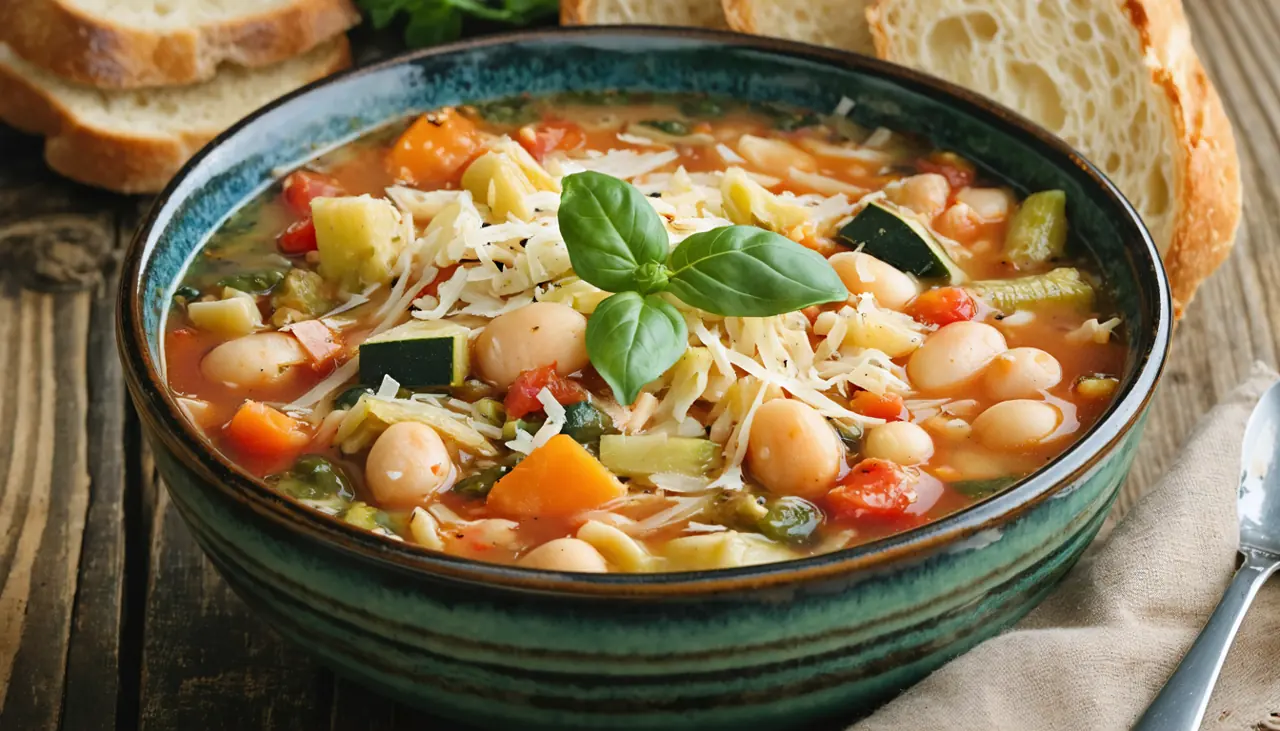
Italian Vegetable Soup (Minestrone)
A thick, rustic soup built on a slow-cooked soffritto of onion, celery and carrot, simmered with seasonal vegetables, cannellini beans and small pasta. Humble, nourishing and even better the next day.
Servings
Ingredients
Nutrition
Per serving
Steps

Build the soffritto
Heat 45 ml of the olive oil in a large, heavy pot over medium-low heat. Add the onion, celery and carrot and cook, stirring often, for 8–10 minutes. Keep the heat low enough that the vegetables soften without browning — this slow start is what gives the soup its deep flavor.
- 45 ml olive oil
- 1 onion
- 2 stalks celery
- 2 carrots
✅ Done when: the vegetables are soft, translucent and smell sweet, with no browning

Add garlic, tomatoes and broth
Stir in the garlic and cook for 1 minute until fragrant. Add the tomatoes, Parmesan rind, bay leaf and vegetable broth, then raise the heat and bring to a boil, scraping up anything stuck to the bottom of the pot.
- 2 cloves garlic
- 400 g canned tomatoes
- 1 piece Parmesan rind
- 1 bay leaf
- 1.5 litres vegetable broth
✅ Done when: the broth is bubbling steadily

Add potatoes and beans
Lower the heat so the soup simmers gently. Add the potatoes and cannellini beans, season with salt and pepper, and cook uncovered for 15 minutes.
- 300 g potatoes
- 400 g cannellini beans
- to taste salt and black pepper
✅ Done when: the potatoes are starting to soften at the edges

Add remaining vegetables
Stir in the zucchini, green beans and shredded cabbage. Simmer gently, uncovered, for about 15 minutes more, stirring occasionally.
- 200 g zucchini
- 150 g green beans
- 200 g savoy cabbage
✅ Done when: all the vegetables are tender when pierced with a fork

Cook the pasta
Stir in the pasta and cook until al dente, about 9–10 minutes, stirring every couple of minutes so it doesn't catch on the bottom. If the soup gets too thick as the pasta swells, loosen it with a splash of hot water or extra broth.
- 100 g small pasta
✅ Done when: the pasta is tender but still has a slight bite

Rest off the heat
Turn off the heat. Fish out the bay leaf, and the Parmesan rind if it hasn't melted away (chop any soft bits and stir them back in). Stir in the basil and taste, adjusting salt and pepper. Let the soup stand for 5 minutes before serving — this short rest is when really comes together and thickens to the right consistency.
- 1 bay leaf (to remove)
- 1 piece Parmesan rind (to remove)
- a handful fresh basil
✅ Done when: the soup has settled into a thick, spoonable consistency

Serve the soup
Ladle the into bowls and finish each one with a drizzle of good olive oil and a generous grating of Parmesan.
- 30 ml olive oil
- to serve grated Parmesan
Build the soffritto
Heat 45 ml of the olive oil in a large, heavy pot over medium-low heat. Add the onion, celery and carrot and cook, stirring often, for 8–10 minutes. Keep the heat low enough that the vegetables soften without browning — this slow start is what gives the soup its deep flavor.
- 45 ml olive oil
- 1 onion
- 2 stalks celery
- 2 carrots
✅ Done when: the vegetables are soft, translucent and smell sweet, with no browning
Add garlic, tomatoes and broth
Stir in the garlic and cook for 1 minute until fragrant. Add the tomatoes, Parmesan rind, bay leaf and vegetable broth, then raise the heat and bring to a boil, scraping up anything stuck to the bottom of the pot.
- 2 cloves garlic
- 400 g canned tomatoes
- 1 piece Parmesan rind
- 1 bay leaf
- 1.5 litres vegetable broth
✅ Done when: the broth is bubbling steadily
Add potatoes and beans
Lower the heat so the soup simmers gently. Add the potatoes and cannellini beans, season with salt and pepper, and cook uncovered for 15 minutes.
- 300 g potatoes
- 400 g cannellini beans
- to taste salt and black pepper
✅ Done when: the potatoes are starting to soften at the edges
Add remaining vegetables
Stir in the zucchini, green beans and shredded cabbage. Simmer gently, uncovered, for about 15 minutes more, stirring occasionally.
- 200 g zucchini
- 150 g green beans
- 200 g savoy cabbage
✅ Done when: all the vegetables are tender when pierced with a fork
Cook the pasta
Stir in the pasta and cook until al dente, about 9–10 minutes, stirring every couple of minutes so it doesn't catch on the bottom. If the soup gets too thick as the pasta swells, loosen it with a splash of hot water or extra broth.
- 100 g small pasta
✅ Done when: the pasta is tender but still has a slight bite
Rest off the heat
Turn off the heat. Fish out the bay leaf, and the Parmesan rind if it hasn't melted away (chop any soft bits and stir them back in). Stir in the basil and taste, adjusting salt and pepper. Let the soup stand for 5 minutes before serving — this short rest is when really comes together and thickens to the right consistency.
- 1 bay leaf (to remove)
- 1 piece Parmesan rind (to remove)
- a handful fresh basil
✅ Done when: the soup has settled into a thick, spoonable consistency
Serve the soup
Ladle the into bowls and finish each one with a drizzle of good olive oil and a generous grating of Parmesan.
- 30 ml olive oil
- to serve grated Parmesan
The Story Behind the Dish
Minestrone grew out of cucina povera, the resourceful 'poor kitchen' cooking of Italian farmhouses, where whatever vegetables were ripe or stored for winter went straight into the pot. Beans and pasta made it filling enough to be a meal on its own, not just a starter.
Every region, and often every family, has its own version: some add rice instead of pasta, some stir in a spoonful of pesto at the end, others skip meat entirely for a Lenten table. There is no single 'correct' recipe, only the shared idea of a thick, generous soup built from whatever the season gives.
⭐ Why It's Famous
It is the dish that best captures Italian home cooking's core instinct: turn simple, seasonal vegetables into something warming and satisfying through patient, careful cooking.
💡 Fun Fact
Minestrone tastes even better the day after it's made, once the vegetables and pasta have had time to absorb the broth — many Italian cooks make it a day ahead on purpose.
Italy, countrywide
41.87°N, 12.57°E
Related recipes
Comments (0)
No comments yet. Be the first to share your thoughts!