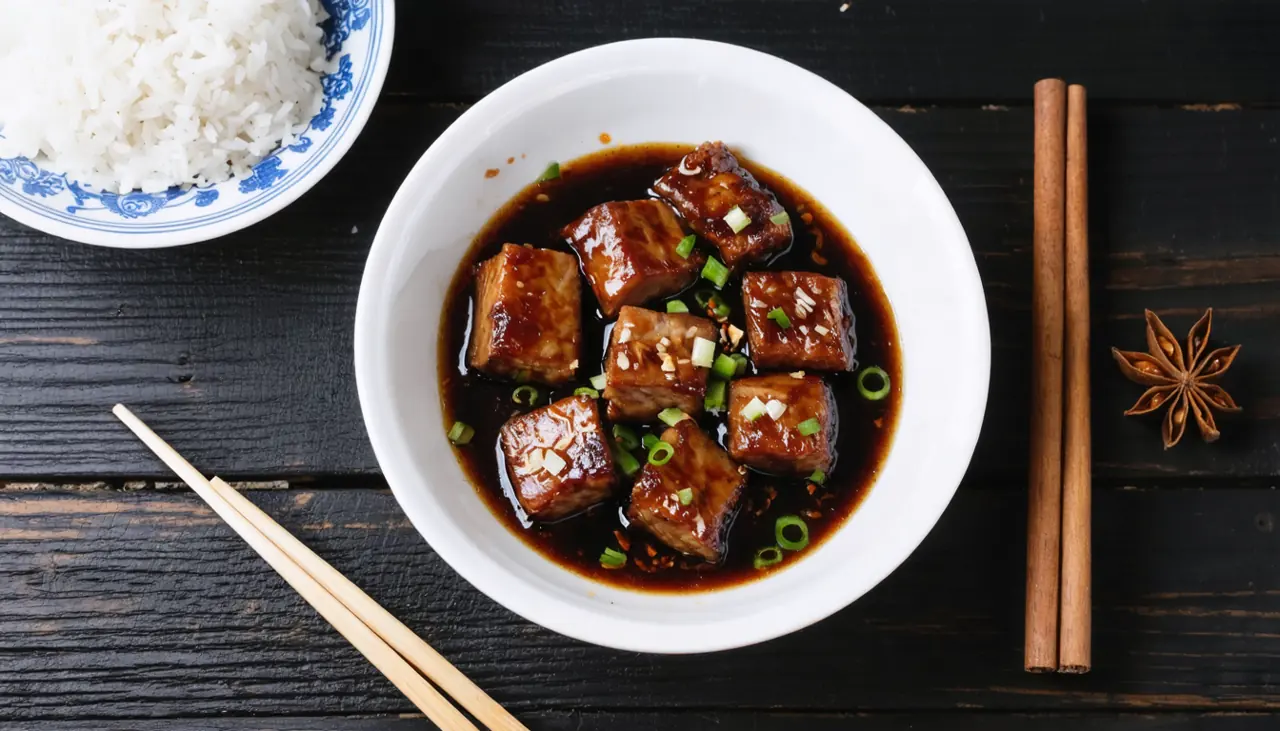
Red-Braised Pork Belly (Hong Shao Rou)
Cubes of pork belly slow-braised in soy sauce, rock sugar and Shaoxing wine until the sauce turns deep mahogany and the meat is glossy, melt-in-the-mouth tender. A beloved home-style classic from Chinese kitchens, served over steamed rice.
Servings
Ingredients
Nutrition
Per serving
Steps
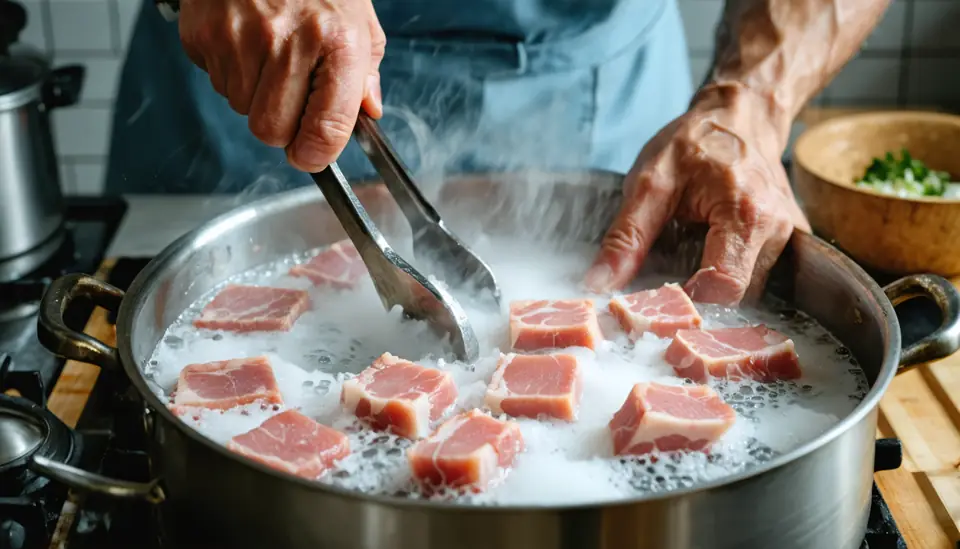
Blanch the pork
Bring a pot of water to a boil and add the pork cubes. Boil for 2–3 minutes until the surface turns pale gray and foam rises to the top, then drain and rinse under warm water. This step washes away blood and impurities so the finished dish tastes clean, not muddy.
- 900 g pork belly cubes
✅ Done when: the pork surface turns pale gray and foam has risen to the top of the water
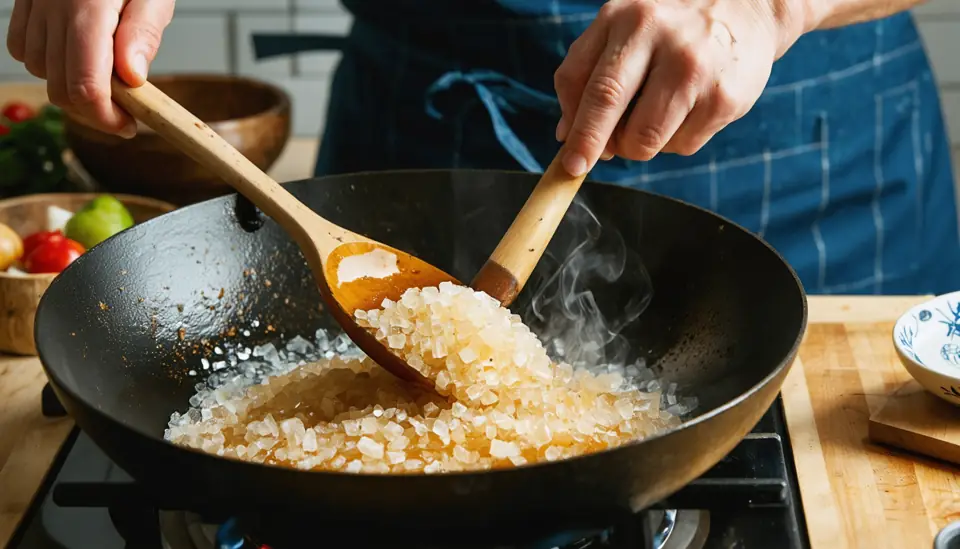
Caramelize the sugar
Heat the oil in a heavy pot or wok over medium-low heat, add the , and stir slowly as it melts. Watch closely: once it turns the deep amber color of melted caramel, move fast, as a few extra seconds will turn it bitter.
- 1 tbsp neutral oil
- 30 g
✅ Done when: the sugar has fully melted and turned a deep amber, caramel color
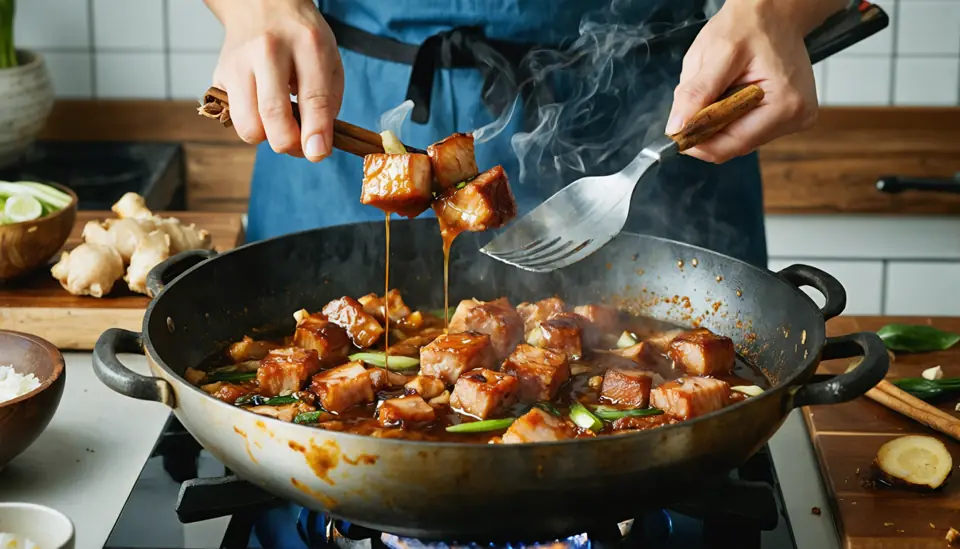
Sear the pork
Add the drained pork to the caramel and raise the heat to medium. Stir-fry for 3–4 minutes until every cube is coated in glossy caramel and lightly browned, then add the ginger, scallion whites, star anise, cinnamon stick and bay leaves, and stir for 1 minute until fragrant.
- 900 g pork belly (blanched)
- 3 slices ginger
- 2 scallion whites
- 2 star anise
- 1 small piece cinnamon stick
- 2 bay leaves
✅ Done when: the pork is coated in dark caramel and the aromatics smell fragrant
Add wine and soy sauce
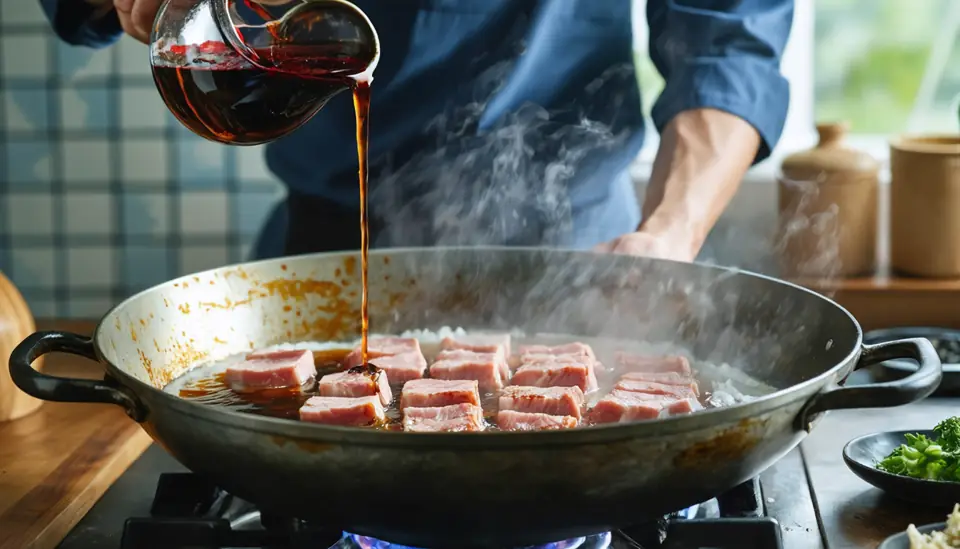
Pour in the , light soy sauce and dark soy sauce, stirring so every piece turns a deep mahogany color. Add the water, just enough to cover the pork, bring to a boil, and skim off any foam that rises.
- 3 tbsp Shaoxing rice wine
- 2 tbsp light soy sauce
- 1 tbsp dark soy sauce
- 600 ml water
✅ Done when: the liquid has come to a full boil and the surface is skimmed clean of foam
Braise low and slow
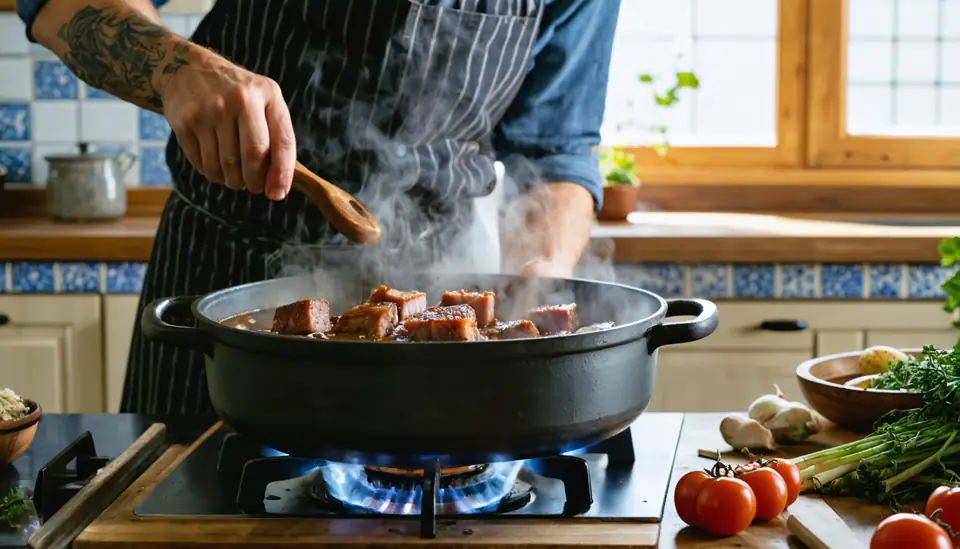
Cover the pot, lower the heat so the liquid barely bubbles, and simmer gently for 60–75 minutes, stirring occasionally. Keep the heat low throughout: this slow, steady simmer is what melts the collagen in the skin and renders the fat soft, instead of leaving it chewy.
✅ Done when: a chopstick slides easily through a piece of pork and the skin feels jelly-soft
Reduce the sauce
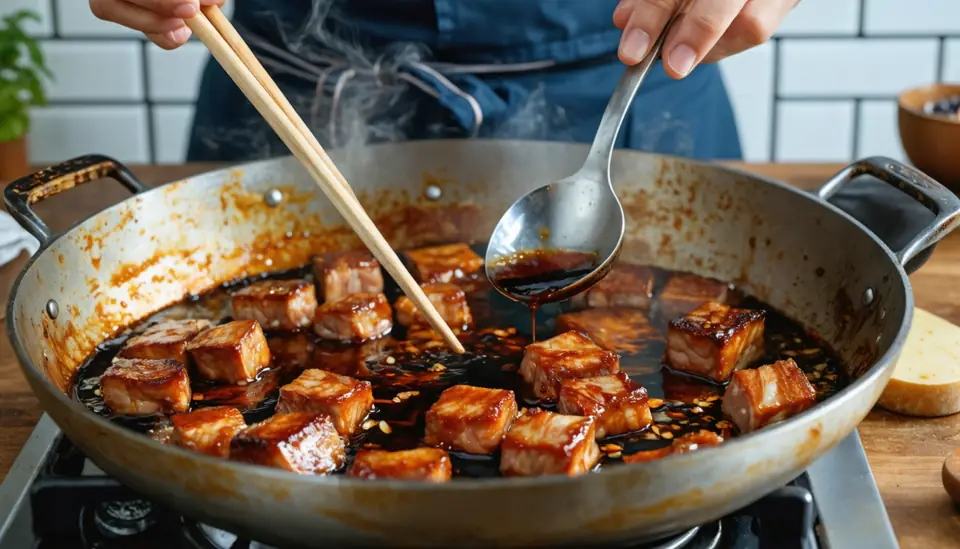
Uncover the pot, raise the heat to medium-high, and simmer uncovered for 8–10 minutes, turning the pork pieces often so they cook evenly in the thickening sauce. Remove the star anise, cinnamon stick and bay leaves once the sauce clings to the meat like a glossy syrup.
✅ Done when: the sauce has reduced to a thick, glossy glaze that coats each cube of pork
Serve and enjoy
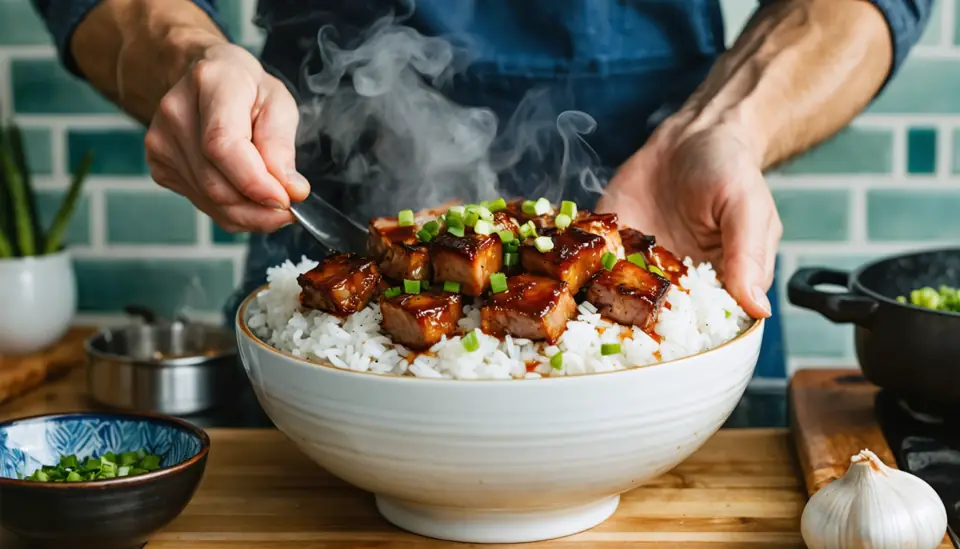
Spoon the pork and its glossy sauce over bowls of steamed white rice, and finish with the reserved sliced scallion greens on top.
- to garnish reserved scallion greens
- to serve steamed white rice
Blanch the pork
Bring a pot of water to a boil and add the pork cubes. Boil for 2–3 minutes until the surface turns pale gray and foam rises to the top, then drain and rinse under warm water. This step washes away blood and impurities so the finished dish tastes clean, not muddy.
- 900 g pork belly cubes
✅ Done when: the pork surface turns pale gray and foam has risen to the top of the water
Caramelize the sugar
Heat the oil in a heavy pot or wok over medium-low heat, add the , and stir slowly as it melts. Watch closely: once it turns the deep amber color of melted caramel, move fast, as a few extra seconds will turn it bitter.
- 1 tbsp neutral oil
- 30 g
✅ Done when: the sugar has fully melted and turned a deep amber, caramel color
Sear the pork
Add the drained pork to the caramel and raise the heat to medium. Stir-fry for 3–4 minutes until every cube is coated in glossy caramel and lightly browned, then add the ginger, scallion whites, star anise, cinnamon stick and bay leaves, and stir for 1 minute until fragrant.
- 900 g pork belly (blanched)
- 3 slices ginger
- 2 scallion whites
- 2 star anise
- 1 small piece cinnamon stick
- 2 bay leaves
✅ Done when: the pork is coated in dark caramel and the aromatics smell fragrant
Add wine and soy sauce
Pour in the , light soy sauce and dark soy sauce, stirring so every piece turns a deep mahogany color. Add the water, just enough to cover the pork, bring to a boil, and skim off any foam that rises.
- 3 tbsp Shaoxing rice wine
- 2 tbsp light soy sauce
- 1 tbsp dark soy sauce
- 600 ml water
✅ Done when: the liquid has come to a full boil and the surface is skimmed clean of foam
Braise low and slow
Cover the pot, lower the heat so the liquid barely bubbles, and simmer gently for 60–75 minutes, stirring occasionally. Keep the heat low throughout: this slow, steady simmer is what melts the collagen in the skin and renders the fat soft, instead of leaving it chewy.
✅ Done when: a chopstick slides easily through a piece of pork and the skin feels jelly-soft
Reduce the sauce
Uncover the pot, raise the heat to medium-high, and simmer uncovered for 8–10 minutes, turning the pork pieces often so they cook evenly in the thickening sauce. Remove the star anise, cinnamon stick and bay leaves once the sauce clings to the meat like a glossy syrup.
✅ Done when: the sauce has reduced to a thick, glossy glaze that coats each cube of pork
Serve and enjoy
Spoon the pork and its glossy sauce over bowls of steamed white rice, and finish with the reserved sliced scallion greens on top.
- to garnish reserved scallion greens
- to serve steamed white rice
The Story Behind the Dish
Hong shao rou belongs to China's technique of 'red cooking' (hong shao): braising meat slowly in soy sauce, sugar and wine until it turns a deep, lacquered color. Versions of this dish are found across Chinese home kitchens, with Jiangnan cooks favoring a sweeter, lighter-colored sauce and Hunan cooks adding dried chili for heat.
For generations it has been a dish families save for Sundays or special occasions, when there is time to let the pot simmer slowly and fill the kitchen with the smell of soy sauce, sugar and warm spice.
⭐ Why It's Famous
It shows off red-cooking at its best: a handful of pantry staples transform tough, fatty pork belly into something glossy, fragrant and so tender it barely needs chewing.
💡 Fun Fact
Mao Zedong, who came from Hunan, was known for his fondness for the spicier Hunan-style version of hong shao rou, which helped make the dish popular across China.
Jiangnan region (Shanghai, Jiangsu, Zhejiang) and Hunan province, China
31.23°N, 121.47°E
Related recipes
Comments (0)
No comments yet. Be the first to share your thoughts!