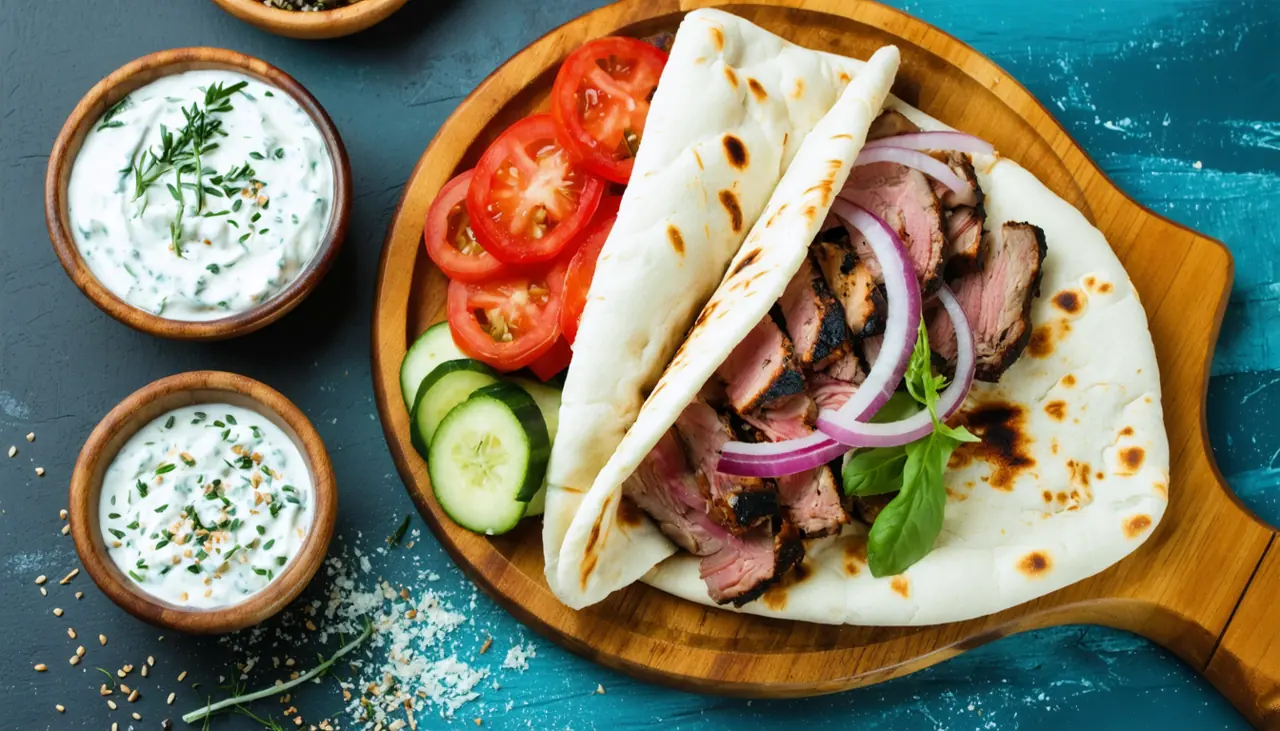
Gyro (Γύρος)
Garlicky, oregano-marinated pork seared hard until the edges turn dark and crisp, piled into warm pita with juicy tomato, sharp red onion and cool tzatziki. The closest you'll get to the spit without one.
Servings
Ingredients
Nutrition
Per serving
Steps

Marinate the pork
Slice the pork into thin strips, no thicker than a pencil — this is what lets the edges catch and char the way shaved meat does off a spit. Toss with olive oil, lemon juice, garlic, oregano, thyme, paprika, salt and pepper. Cover and marinate in the fridge at least 1 hour, ideally overnight.
- 800 g pork, sliced
- 60 ml olive oil
- 2 tbsp lemon juice
- 4 cloves garlic
- 2 tsp dried oregano
- 1 tsp dried thyme
- 1 tsp smoked paprika
- 1 tsp salt
- 1/2 tsp black pepper
✅ Done when: the pork has marinated for at least 1 hour and smells strongly of garlic and oregano

Make the tzatziki
Grate the cucumber on the coarse side of a box grater, then squeeze handfuls hard over the sink to wring out as much water as possible — this one step is what keeps thick instead of watery. Mix the squeezed cucumber with yogurt, garlic, vinegar, dill, olive oil and salt. Chill until needed.
- 1 medium cucumber
- 300 g Greek yogurt
- 2 cloves garlic
- 1 tbsp white wine vinegar
- 1 tbsp fresh dill
- 1 tbsp olive oil
- 1/2 tsp salt
✅ Done when: the tzatziki is thick enough to hold a spoon standing up and tastes bright with garlic

Cook the fries
If using, fry or bake the frozen fries according to the package until golden and crisp, around 190°C (375°F) if frying or 220°C (425°F) if baking. Keep them warm — a few hot, salty fries tucked inside the wrap is how most shops in Greece actually serve it.
- 200 g frozen fries
✅ Done when: the fries are golden and crisp outside

Sear the pork
Heat a cast-iron pan or griddle until very hot, almost smoking, around 200°C (392°F). Lay the pork strips in a single layer, not crowded, and let them sit without moving for a couple of minutes so the edges go dark and crisp before you flip. Cook in batches until no pink remains and the juices run clear, an internal temperature of at least 70°C (160°F).
- 800 g pork (from step 1)
✅ Done when: the pork is fully cooked through with deeply browned, crisp edges

Assemble the gyro
Warm the pita breads for about 30 seconds a side in a dry pan or over a flame until soft and lightly toasted. Pile on the seared pork, a few fries, tomato, red onion and a generous spoonful of , then finish with chopped parsley and wrap or fold to eat.
- 4 pita breads
- 2 tomatoes
- 1 small red onion
- a few sprigs fresh parsley
✅ Done when: the pitas are warm and pliable and each one is filled and wrapped
Marinate the pork
Slice the pork into thin strips, no thicker than a pencil — this is what lets the edges catch and char the way shaved meat does off a spit. Toss with olive oil, lemon juice, garlic, oregano, thyme, paprika, salt and pepper. Cover and marinate in the fridge at least 1 hour, ideally overnight.
- 800 g pork, sliced
- 60 ml olive oil
- 2 tbsp lemon juice
- 4 cloves garlic
- 2 tsp dried oregano
- 1 tsp dried thyme
- 1 tsp smoked paprika
- 1 tsp salt
- 1/2 tsp black pepper
✅ Done when: the pork has marinated for at least 1 hour and smells strongly of garlic and oregano
Make the tzatziki
Grate the cucumber on the coarse side of a box grater, then squeeze handfuls hard over the sink to wring out as much water as possible — this one step is what keeps thick instead of watery. Mix the squeezed cucumber with yogurt, garlic, vinegar, dill, olive oil and salt. Chill until needed.
- 1 medium cucumber
- 300 g Greek yogurt
- 2 cloves garlic
- 1 tbsp white wine vinegar
- 1 tbsp fresh dill
- 1 tbsp olive oil
- 1/2 tsp salt
✅ Done when: the tzatziki is thick enough to hold a spoon standing up and tastes bright with garlic
Cook the fries
If using, fry or bake the frozen fries according to the package until golden and crisp, around 190°C (375°F) if frying or 220°C (425°F) if baking. Keep them warm — a few hot, salty fries tucked inside the wrap is how most shops in Greece actually serve it.
- 200 g frozen fries
✅ Done when: the fries are golden and crisp outside
Sear the pork
Heat a cast-iron pan or griddle until very hot, almost smoking, around 200°C (392°F). Lay the pork strips in a single layer, not crowded, and let them sit without moving for a couple of minutes so the edges go dark and crisp before you flip. Cook in batches until no pink remains and the juices run clear, an internal temperature of at least 70°C (160°F).
- 800 g pork (from step 1)
✅ Done when: the pork is fully cooked through with deeply browned, crisp edges
Assemble the gyro
Warm the pita breads for about 30 seconds a side in a dry pan or over a flame until soft and lightly toasted. Pile on the seared pork, a few fries, tomato, red onion and a generous spoonful of , then finish with chopped parsley and wrap or fold to eat.
- 4 pita breads
- 2 tomatoes
- 1 small red onion
- a few sprigs fresh parsley
✅ Done when: the pitas are warm and pliable and each one is filled and wrapped
The Story Behind the Dish
Gyro grew out of the vertical rotisserie cooking brought to Greece by refugees and workers from Asia Minor in the early 1900s, close cousin to Turkish döner. Greek cooks seasoned the meat their own way, with lemon, oregano and olive oil, and served it tucked into pita with yogurt sauce instead of the flatbreads used elsewhere.
By the mid-20th century it had become the fast food of Greek cities, sold from small stands with the cone turning in the window, often finished with a handful of fries stuffed right into the wrap.
⭐ Why It's Famous
It is Greece's great street-food export: cheap, fast, and built on the contrast between crisp charred edges and cool, garlicky tzatziki.
💡 Fun Fact
The word 'gyro' simply means 'turn' in Greek, describing the slowly rotating cone the meat is shaved from.
Greece, especially Athens and Thessaloniki
37.98°N, 23.73°E
Related recipes
Comments (0)
No comments yet. Be the first to share your thoughts!