Fufu de Plátano (Cuban Mashed Green Plantain)
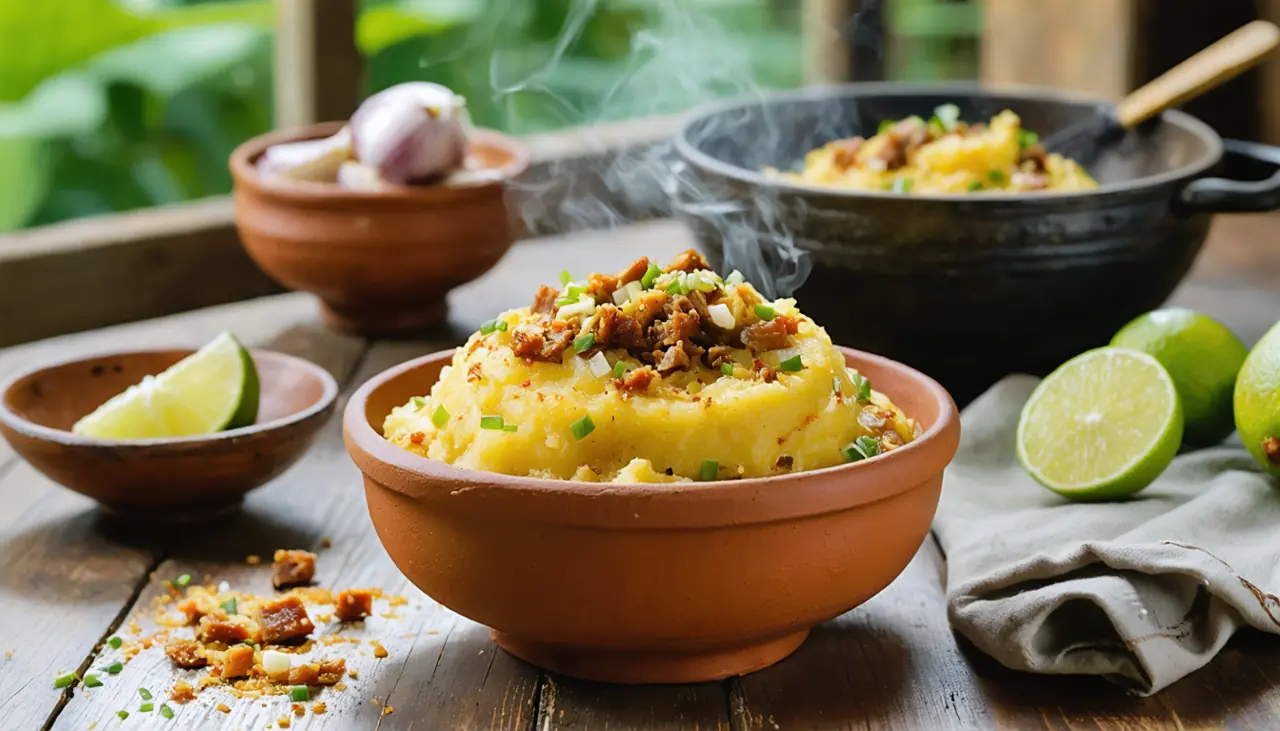
Boiled green plantains mashed with garlicky pork fat and folded with crispy fried pork bits, until dense, savory and deeply comforting. A classic Cuban side that turns humble plantains into something unforgettable.
Servings
Ingredients
Nutrition
Per serving
Steps
Peel the plantains
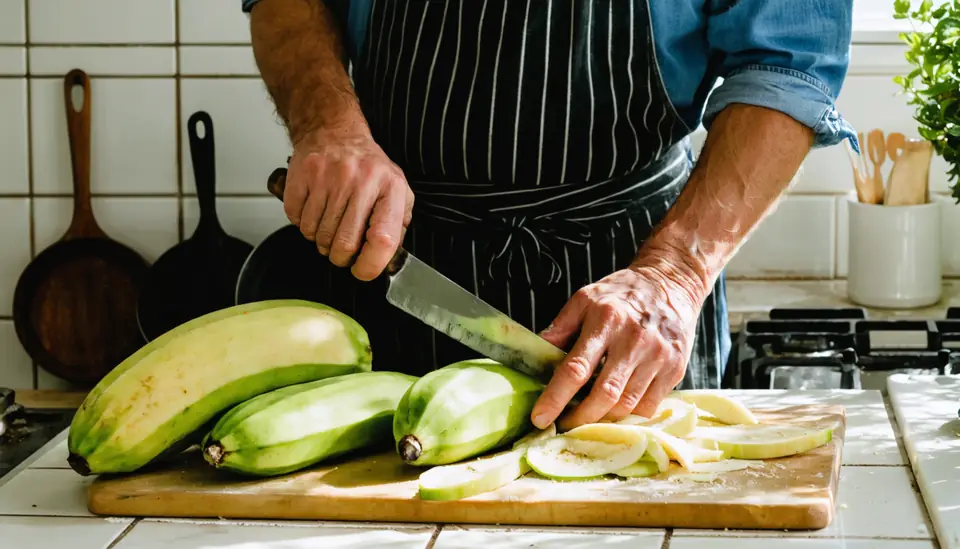
Cut off both ends of each plantain and score the skin lengthwise in 3–4 strips without cutting into the flesh, then pull the skin off with your fingers. Rub your hands with a little oil first, because green plantain sap stains badly.
- 6 (about 1.5 kg) green plantains
✅ Done when: all the green skin and white sap threads are removed and the plantains look pale yellow underneath
Boil until very tender
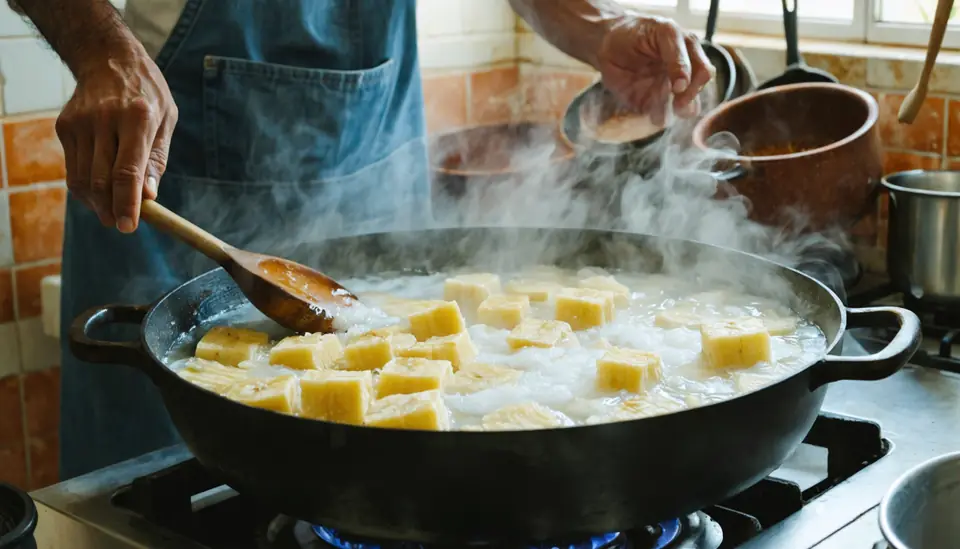
Cut the peeled plantains into thick chunks and put them in a large pot with the water and coarse salt. Bring to a boil, then simmer uncovered for about 25–30 minutes, until a fork slides in with no resistance.
- 6 (about 1.5 kg) green plantains, peeled
- 2 litres water
- 1 tbsp coarse salt
✅ Done when: the plantain chunks are completely soft all the way through and almost falling apart
Render fat, crisp the pork
This step is part of Foodie Premium. Subscribe to unlock the full method, cooking mode and every recipe in the library.
Make the garlic mojo
This step is part of Foodie Premium. Subscribe to unlock the full method, cooking mode and every recipe in the library.
Mash the plantains
This step is part of Foodie Premium. Subscribe to unlock the full method, cooking mode and every recipe in the library.
Fold in pork and serve
This step is part of Foodie Premium. Subscribe to unlock the full method, cooking mode and every recipe in the library.
Peel the plantains
Cut off both ends of each plantain and score the skin lengthwise in 3–4 strips without cutting into the flesh, then pull the skin off with your fingers. Rub your hands with a little oil first, because green plantain sap stains badly.
- 6 (about 1.5 kg) green plantains
✅ Done when: all the green skin and white sap threads are removed and the plantains look pale yellow underneath
Boil until very tender
Cut the peeled plantains into thick chunks and put them in a large pot with the water and coarse salt. Bring to a boil, then simmer uncovered for about 25–30 minutes, until a fork slides in with no resistance.
- 6 (about 1.5 kg) green plantains, peeled
- 2 litres water
- 1 tbsp coarse salt
✅ Done when: the plantain chunks are completely soft all the way through and almost falling apart
Render fat, crisp the pork
This step is part of Foodie Premium. Subscribe to unlock the full method, cooking mode and every recipe in the library.
Make the garlic mojo
This step is part of Foodie Premium. Subscribe to unlock the full method, cooking mode and every recipe in the library.
Mash the plantains
This step is part of Foodie Premium. Subscribe to unlock the full method, cooking mode and every recipe in the library.
Fold in pork and serve
This step is part of Foodie Premium. Subscribe to unlock the full method, cooking mode and every recipe in the library.
The Story Behind the Dish
Fufu de plátano traces its roots to West and Central African mashed-starch dishes, brought to Cuba by enslaved Africans and kept alive in the kitchens of Oriente, the island's eastern provinces. Over generations, cooks there adapted the dish to what grew nearby, using the green plantains that thrive in Cuba's fields in place of yams or cassava.
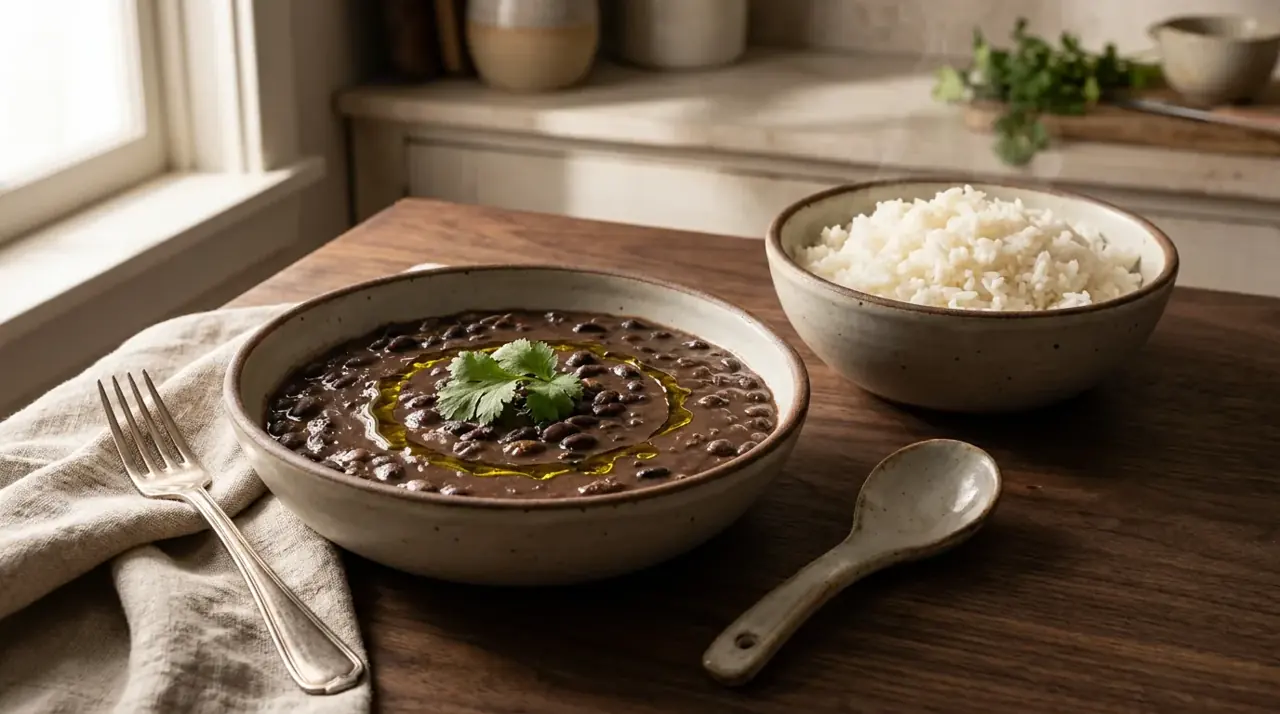
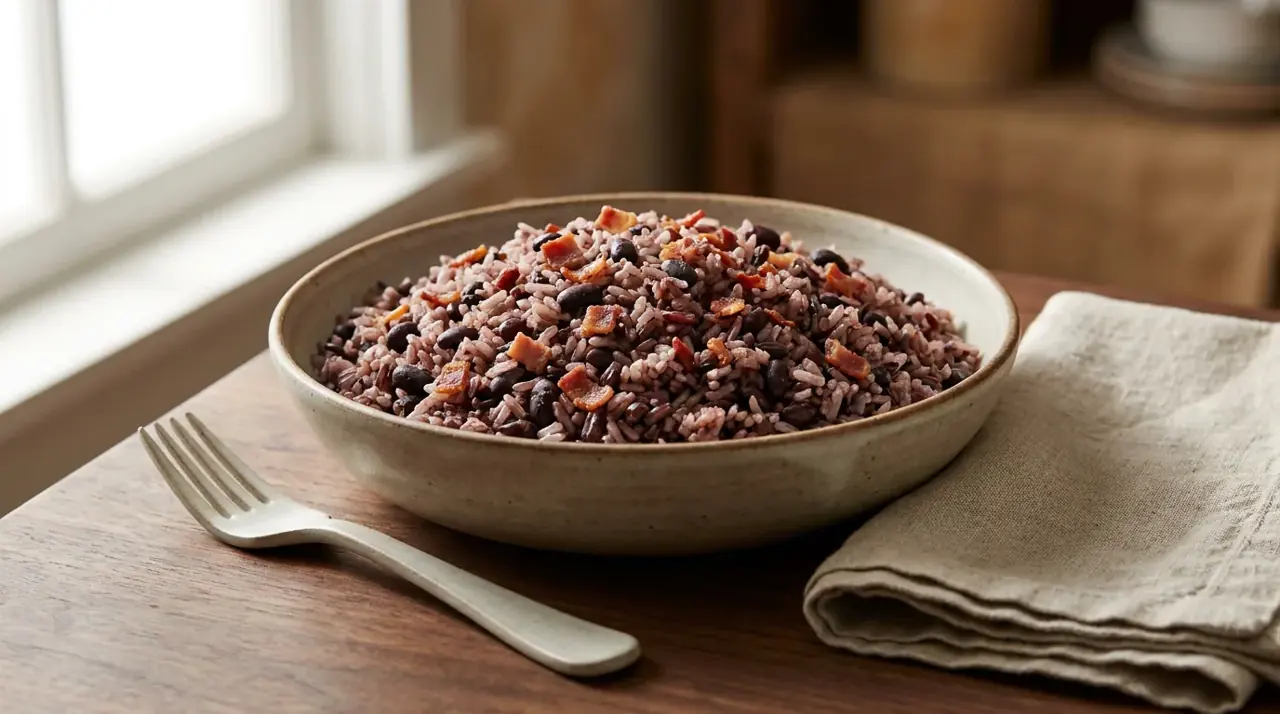
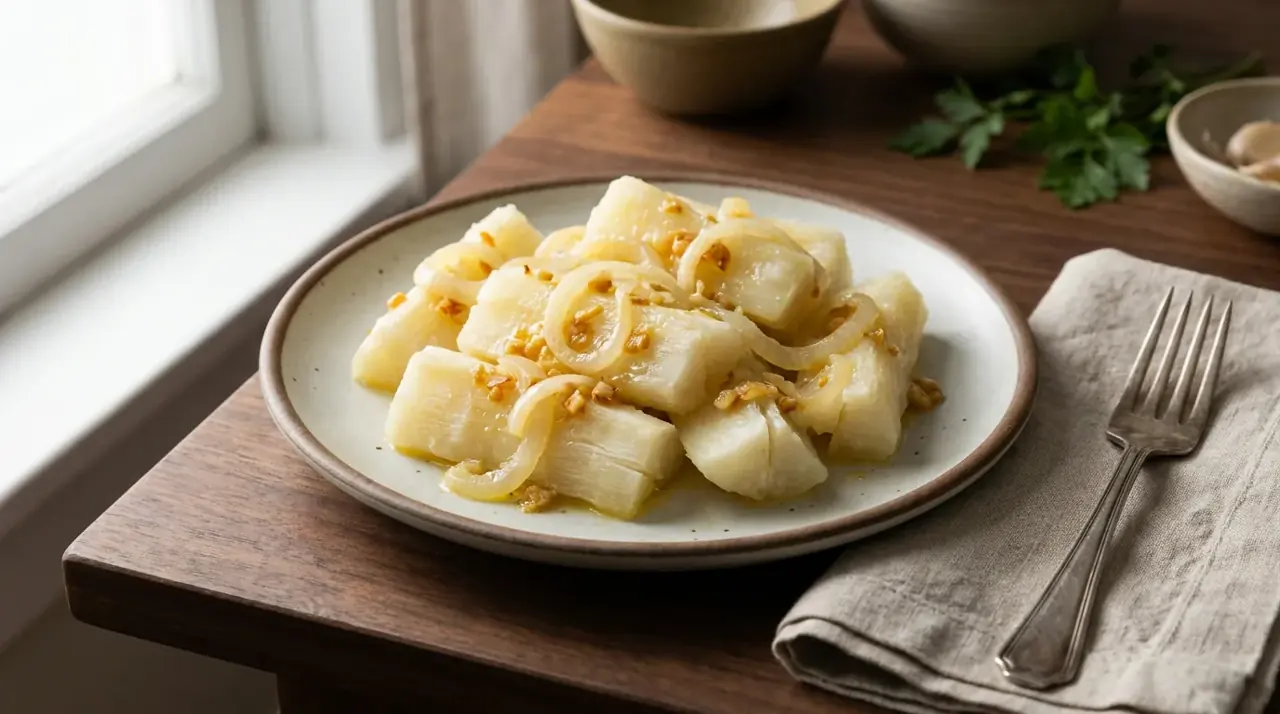
The Cuban version became distinct by folding in garlicky pork fat and crispy fried pork, turning a simple starchy mash into a rich, savory side dish anchored in the island's pork-loving cuisine. It remains a beloved staple in Cuban homes, especially in the east, often served alongside rice, beans or roasted meats.
⭐ Why It's Famous
It's cherished as one of the clearest living links between Cuban cooking and its African heritage, prized for its deep, savory flavor and comforting, hearty texture.
💡 Fun Fact
Similar mashed-plantain dishes appear across the Caribbean and West Africa under different names, like mangú in the Dominican Republic, showing how one simple idea traveled and took on local flavor wherever it landed.
Eastern Cuba, particularly the region around Santiago de Cuba
20.02°N, -75.84°W
Related recipes
Comments (0)
No comments yet. Be the first to share your thoughts!