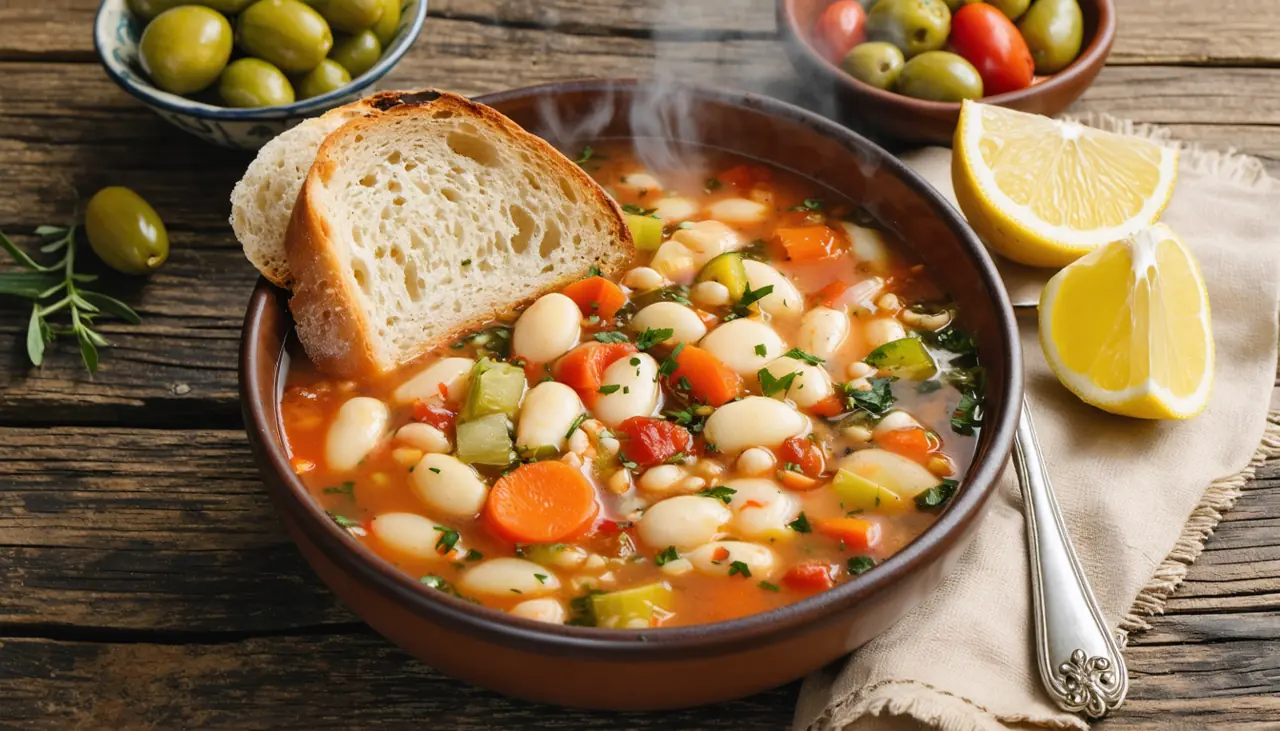
Greek Bean Soup (Fasolada)
Creamy white beans simmered slowly with tomatoes, carrots, celery and plenty of olive oil until the broth turns rich and velvety. Simple, warming and often called Greece's national dish.
Servings
Ingredients
Nutrition
Per serving
Steps

Soak the beans
Rinse the dried beans and put them in a large bowl, covered generously with cold water. Let them soak at room temperature overnight, about 10–12 hours; this softens them so they cook evenly later.
- 500 g dried white beans
- as needed water, to cover
✅ Done when: the beans have doubled in size and feel plump, not hard

Parboil and drain
Drain the soaked beans, cover with fresh water in a pot, and bring to a boil for 10 minutes. Drain again and discard this first water; it carries some of the compounds that make beans hard to digest, so starting the soup with a clean batch gives a lighter, better-tasting broth.
- 500 g beans (soaked)
- as needed fresh water, to cover
✅ Done when: the beans look slightly swollen and the foam has been washed away

Build the base
In a large, heavy pot, warm the olive oil over medium heat. Add the onion, carrot, celery and garlic, and cook gently, stirring often, until the vegetables soften and smell sweet.
- 150 ml olive oil
- 2 onions
- 3 carrots
- 3 stalks celery
- 4 cloves garlic
✅ Done when: the onion is translucent and the vegetables are tender but not browned

Simmer the soup
Add the parboiled beans to the pot along with enough fresh water to cover everything by about 4 cm (1.5 in), plus the crushed tomatoes, tomato paste and bay leaf. Bring to a gentle boil, then lower the heat and simmer, partly covered, for 60–75 minutes without stirring too much, so the beans stay whole instead of breaking apart.
- 500 g beans (parboiled)
- as needed fresh water, to cover
- 400 g crushed tomatoes
- 1 tbsp tomato paste
- 1 bay leaf
✅ Done when: the beans are fully tender and the broth has thickened slightly

Season and finish
Stir in the salt, pepper and oregano only now; salting beans too early can toughen their skins and keep them from softening properly. Simmer uncovered for 10 more minutes so the broth reduces a little, then remove from the heat and stir in the fresh parsley and a generous final drizzle of olive oil.
- 1 tsp dried oregano
- to taste salt and black pepper
- 1 handful fresh parsley
- to finish extra olive oil
✅ Done when: the broth is glossy and the beans are creamy, almost melting at the edges

Serve the soup
Ladle the soup into bowls while hot. Serve with lemon wedges to squeeze in at the table and plenty of crusty bread for dipping into the broth.
- to serve lemon wedges and crusty bread
Soak the beans
Rinse the dried beans and put them in a large bowl, covered generously with cold water. Let them soak at room temperature overnight, about 10–12 hours; this softens them so they cook evenly later.
- 500 g dried white beans
- as needed water, to cover
✅ Done when: the beans have doubled in size and feel plump, not hard
Parboil and drain
Drain the soaked beans, cover with fresh water in a pot, and bring to a boil for 10 minutes. Drain again and discard this first water; it carries some of the compounds that make beans hard to digest, so starting the soup with a clean batch gives a lighter, better-tasting broth.
- 500 g beans (soaked)
- as needed fresh water, to cover
✅ Done when: the beans look slightly swollen and the foam has been washed away
Build the base
In a large, heavy pot, warm the olive oil over medium heat. Add the onion, carrot, celery and garlic, and cook gently, stirring often, until the vegetables soften and smell sweet.
- 150 ml olive oil
- 2 onions
- 3 carrots
- 3 stalks celery
- 4 cloves garlic
✅ Done when: the onion is translucent and the vegetables are tender but not browned
Simmer the soup
Add the parboiled beans to the pot along with enough fresh water to cover everything by about 4 cm (1.5 in), plus the crushed tomatoes, tomato paste and bay leaf. Bring to a gentle boil, then lower the heat and simmer, partly covered, for 60–75 minutes without stirring too much, so the beans stay whole instead of breaking apart.
- 500 g beans (parboiled)
- as needed fresh water, to cover
- 400 g crushed tomatoes
- 1 tbsp tomato paste
- 1 bay leaf
✅ Done when: the beans are fully tender and the broth has thickened slightly
Season and finish
Stir in the salt, pepper and oregano only now; salting beans too early can toughen their skins and keep them from softening properly. Simmer uncovered for 10 more minutes so the broth reduces a little, then remove from the heat and stir in the fresh parsley and a generous final drizzle of olive oil.
- 1 tsp dried oregano
- to taste salt and black pepper
- 1 handful fresh parsley
- to finish extra olive oil
✅ Done when: the broth is glossy and the beans are creamy, almost melting at the edges
Serve the soup
Ladle the soup into bowls while hot. Serve with lemon wedges to squeeze in at the table and plenty of crusty bread for dipping into the broth.
- to serve lemon wedges and crusty bread
The Story Behind the Dish
Fasolada traces back to a long tradition of bean dishes eaten across Greece, where legumes have long been an affordable, filling staple for ordinary households. Over time it became a fixture of everyday cooking, especially during periods of fasting when meat was avoided and olive oil, vegetables and pulses carried the meal.
The soup is prepared in nearly every Greek home, often passed down with small variations from one family to the next. Its reputation as the country's national dish comes from how widely it is eaten and how closely it is tied to everyday Greek life rather than to festive or ceremonial occasions.
⭐ Why It's Famous
Fasolada is beloved for turning a few humble ingredients, dried beans, vegetables and olive oil, into a deeply satisfying, nourishing meal. Its simplicity and heartiness have made it a symbol of everyday Greek cooking.
💡 Fun Fact
Many Greeks consider fasolada the national dish of Greece, even though it has no official status, simply because it has been eaten so widely and for so long across the country.
Greece
37.98°N, 23.73°E
Related recipes

Comments (0)
No comments yet. Be the first to share your thoughts!