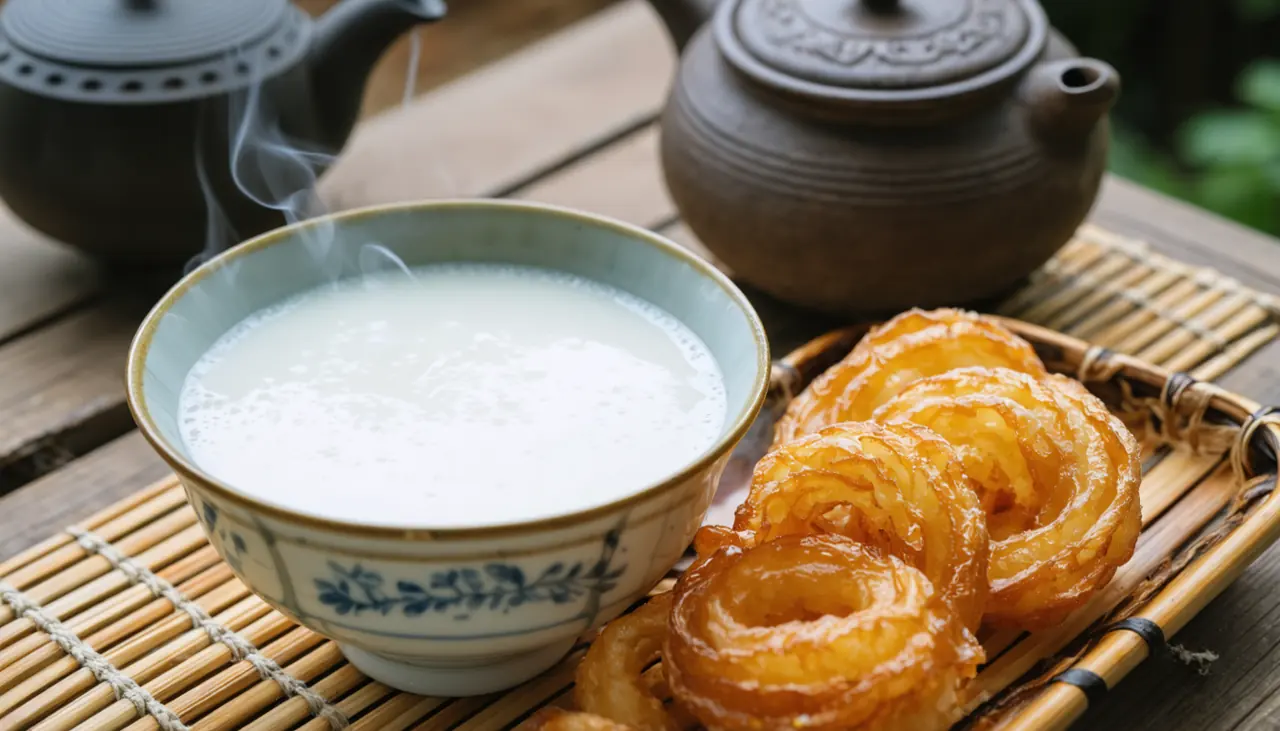
Fresh Soy Milk (Doujiang)
Dried soybeans are soaked, ground fresh with water, strained silky-smooth and simmered until the raw, grassy edge disappears, leaving a warm, nutty milk that's China's favourite breakfast drink. Pour it hot alongside crullers, or chill it for a cool, refreshing glass.
Servings
Ingredients
Nutrition
Per serving
Steps
Soak the soybeans
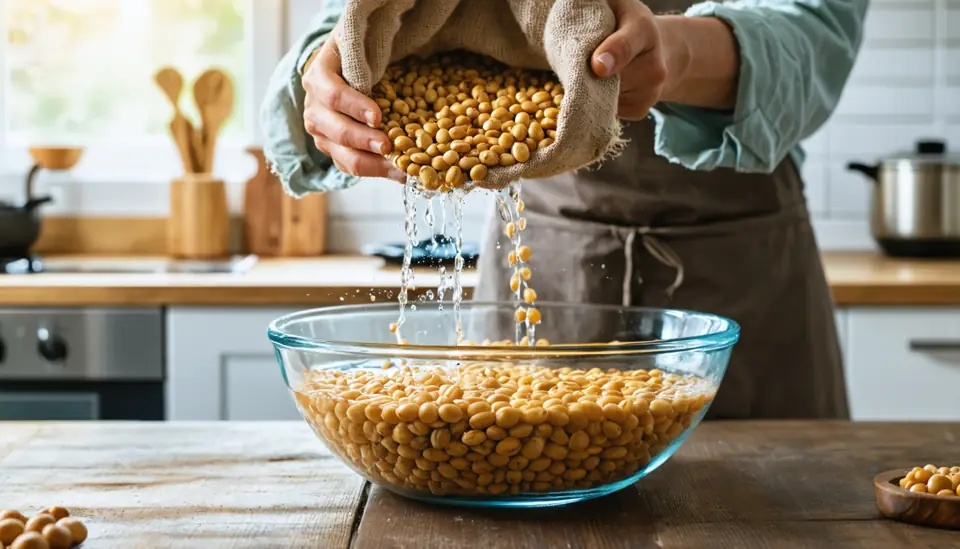
Rinse the dried soybeans well, then cover with the cold water in a large bowl. Soak at room temperature for 8–12 hours, or overnight; the beans will roughly double in size and feel soft when pressed.
- 200 g dried soybeans
- 1.5 litres cold water
✅ Done when: the beans are plump, pale and easy to squash between two fingers
Drain and rinse
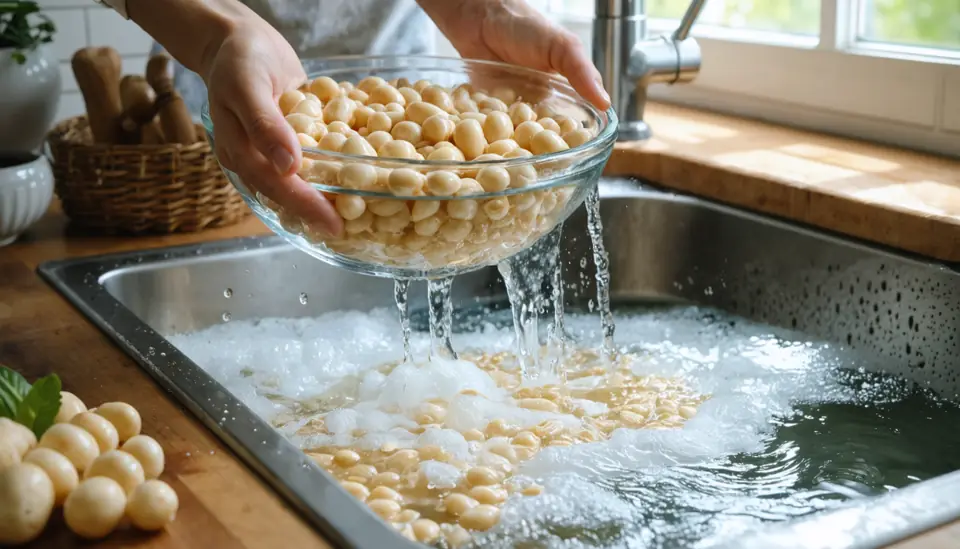
Drain off the soaking water completely and rinse the swollen beans once under fresh running water. This gets rid of the slightly sour smell soybeans can develop while soaking.
- 200 g soaked soybeans (from step 1)
✅ Done when: the beans look clean and smell fresh, not sour
Grind with water
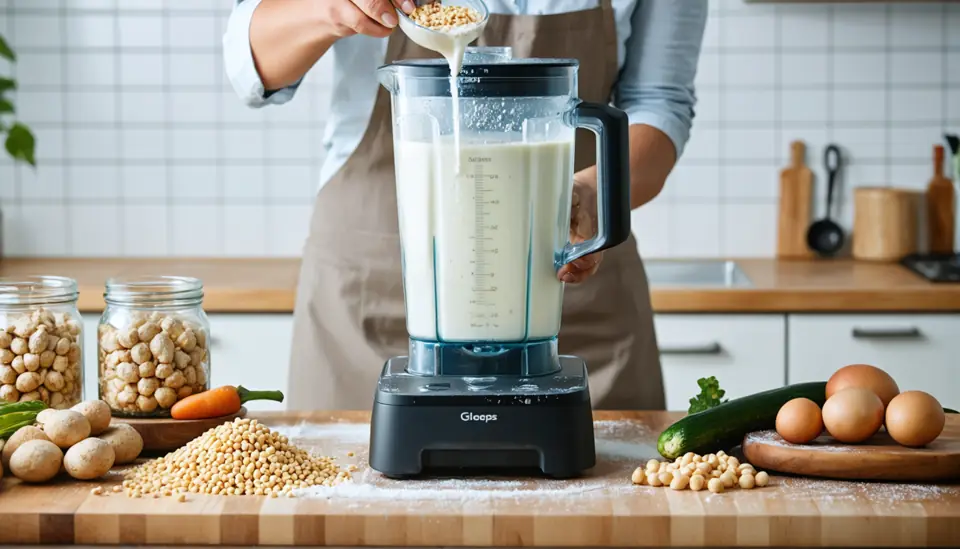
Working in two or three batches, blend the beans with the fresh water on high speed for 2–3 minutes per batch, until completely smooth with no gritty bits. A good blender ratio is about 1 part beans to 8 parts water, so the milk isn't too thick to simmer safely.
- 200 g soaked soybeans
- 1.8 litres fresh water
✅ Done when: the mixture looks like a smooth, pale, slightly frothy slurry with no visible bean pieces
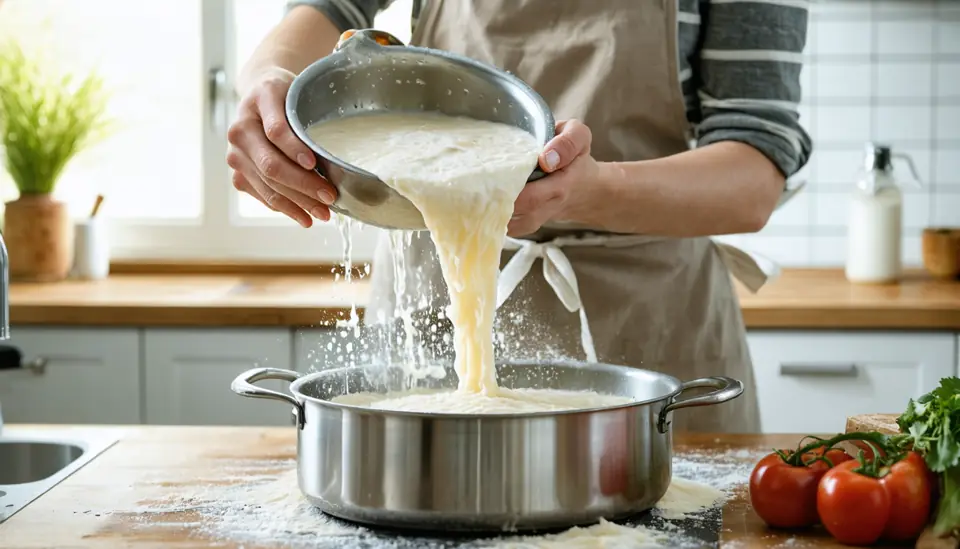
Strain the milk
Pour the slurry through a nut-milk bag or a few layers of cheesecloth set over a large pot, squeezing firmly to push out all the milk. For an extra-smooth cup, strain a second time through a finer cloth. Save the leftover pulp () for soups or baking if you like.
✅ Done when: the liquid runs smooth and milky, with the dry pulp left behind in the cloth
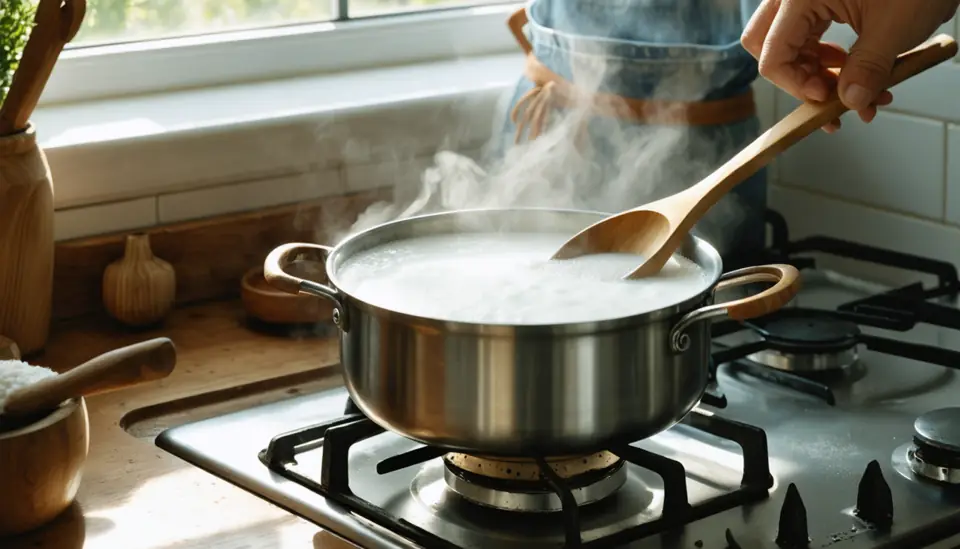
Simmer thoroughly
Bring the strained milk to a full boil over medium-high heat, stirring often so it doesn't catch on the bottom. As soon as foam rises to the top, turn the heat down and stir to settle it, then let it rise and settle two more times. This full boiling is essential: raw soy milk contains a compound that upsets the stomach, and only a proper simmer destroys it, so never drink it underboiled.
- 1.8 litres strained soy milk
✅ Done when: the milk has come to a full rolling boil and simmered gently for about 15 minutes, smelling toasty and nutty instead of raw and grassy
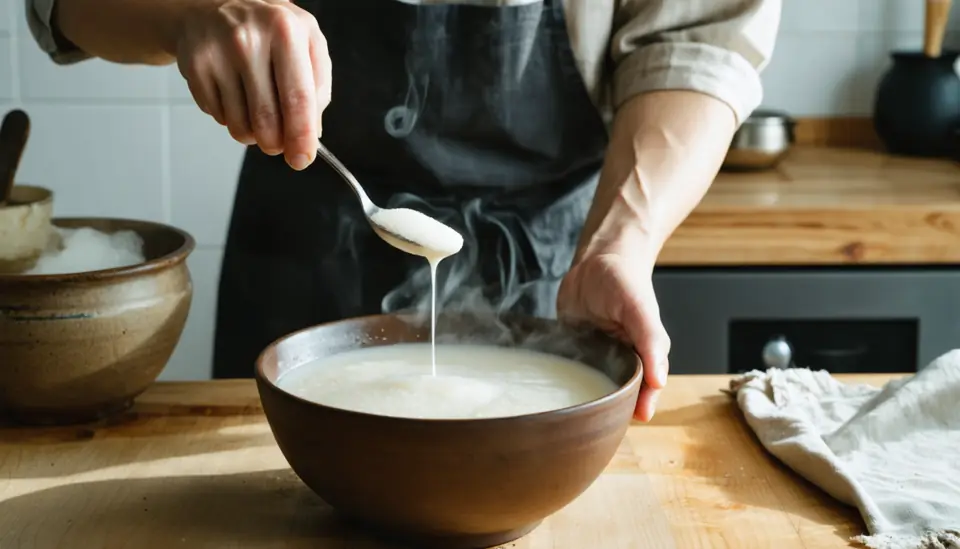
Sweeten and serve
Stir in sugar to taste while the milk is still hot, if you want it sweet; it dissolves instantly. Serve the hot in bowls or mugs, or cool it and chill for a refreshing cold drink.
- 40 g sugar (optional)
✅ Done when: the sugar is fully dissolved and the milk is at the temperature you like
Soak the soybeans
Rinse the dried soybeans well, then cover with the cold water in a large bowl. Soak at room temperature for 8–12 hours, or overnight; the beans will roughly double in size and feel soft when pressed.
- 200 g dried soybeans
- 1.5 litres cold water
✅ Done when: the beans are plump, pale and easy to squash between two fingers
Drain and rinse
Drain off the soaking water completely and rinse the swollen beans once under fresh running water. This gets rid of the slightly sour smell soybeans can develop while soaking.
- 200 g soaked soybeans (from step 1)
✅ Done when: the beans look clean and smell fresh, not sour
Grind with water
Working in two or three batches, blend the beans with the fresh water on high speed for 2–3 minutes per batch, until completely smooth with no gritty bits. A good blender ratio is about 1 part beans to 8 parts water, so the milk isn't too thick to simmer safely.
- 200 g soaked soybeans
- 1.8 litres fresh water
✅ Done when: the mixture looks like a smooth, pale, slightly frothy slurry with no visible bean pieces
Strain the milk
Pour the slurry through a nut-milk bag or a few layers of cheesecloth set over a large pot, squeezing firmly to push out all the milk. For an extra-smooth cup, strain a second time through a finer cloth. Save the leftover pulp () for soups or baking if you like.
✅ Done when: the liquid runs smooth and milky, with the dry pulp left behind in the cloth
Simmer thoroughly
Bring the strained milk to a full boil over medium-high heat, stirring often so it doesn't catch on the bottom. As soon as foam rises to the top, turn the heat down and stir to settle it, then let it rise and settle two more times. This full boiling is essential: raw soy milk contains a compound that upsets the stomach, and only a proper simmer destroys it, so never drink it underboiled.
- 1.8 litres strained soy milk
✅ Done when: the milk has come to a full rolling boil and simmered gently for about 15 minutes, smelling toasty and nutty instead of raw and grassy
Sweeten and serve
Stir in sugar to taste while the milk is still hot, if you want it sweet; it dissolves instantly. Serve the hot in bowls or mugs, or cool it and chill for a refreshing cold drink.
- 40 g sugar (optional)
✅ Done when: the sugar is fully dissolved and the milk is at the temperature you like
The Story Behind the Dish
Soy milk has been made in China for over two thousand years, with legend crediting its invention to the Han-dynasty prince Liu An, who is said to have discovered it while experimenting with ground soybeans near Huainan. Whether or not the story is exactly true, soybeans and simple stone grinding tools were common in that era, and the drink became deeply woven into Chinese home cooking long before refrigeration or blenders existed.
For generations, doujiang has been sold hot from street carts and breakfast stalls at dawn, poured into bowls alongside crisp fried dough sticks for dunking, and it remains one of the most common ways Chinese families start the day.
⭐ Why It's Famous
It's cheap, protein-rich, dairy-free and endlessly comforting, the Chinese answer to a glass of warm milk, and the classic partner for youtiao at breakfast stalls across the country.
💡 Fun Fact
Doujiang can be sweet or savoury: in the south it's often served slightly sweetened, while in the north a savoury version called xian dou jiang is seasoned with soy sauce, vinegar, chili oil and crunchy toppings, more like a light soup than a drink.
China, nationwide
32.65°N, 116.99°E
Related recipes
Comments (0)
No comments yet. Be the first to share your thoughts!