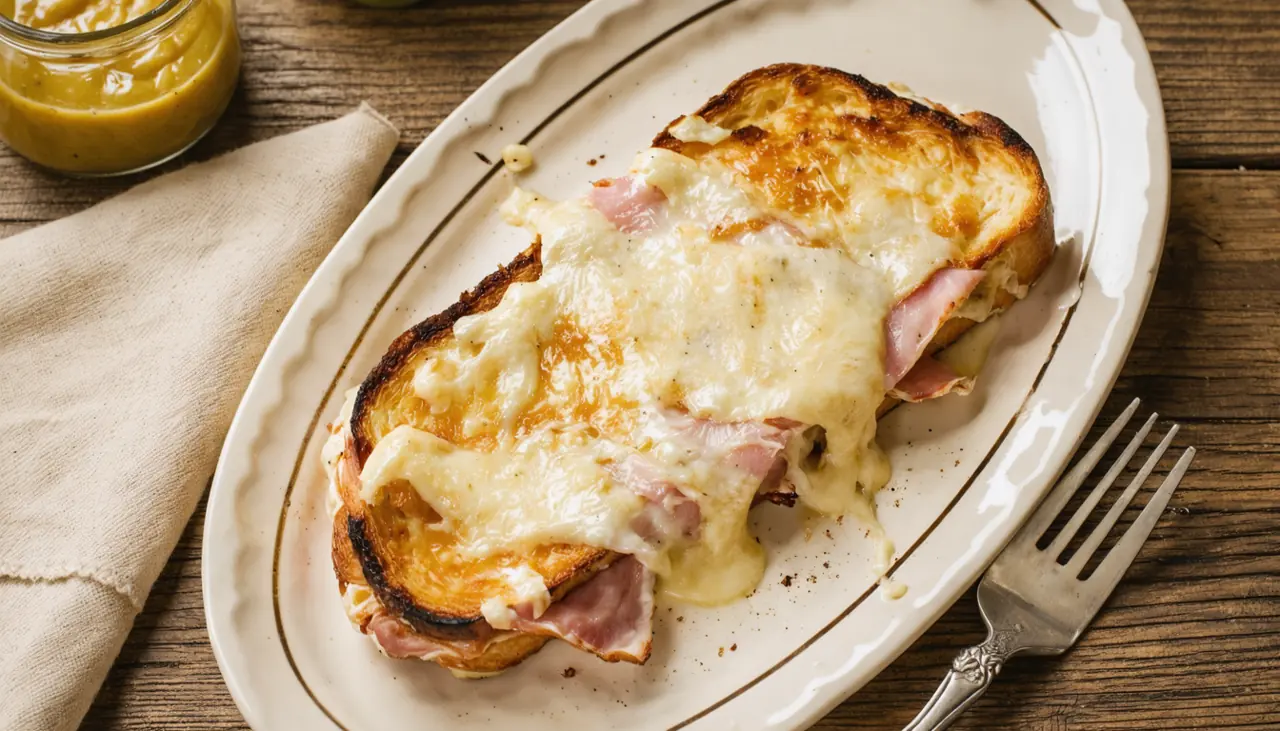
Croque Monsieur
A toasted ham and cheese sandwich bathed in creamy béchamel and melted Gruyère, baked until golden and bubbling. The classic bistro snack of every Parisian café terrace.
Servings
Ingredients
Nutrition
Per serving
Steps

Make the roux
Melt the 30 g of butter in a small saucepan over low heat. Whisk in the flour and cook, stirring, for 1 minute without letting it brown; this cooks out the raw flour taste and is the base of the .
- 30 g butter
- 30 g flour
✅ Done when: the mixture is pale, foamy and smells lightly toasted, not browned

Whisk in the milk
Take the pan off the heat and pour in the milk gradually, whisking constantly so no lumps form. Return to low heat and simmer gently, whisking often, until thick enough to coat the back of a spoon. Season with nutmeg, salt and pepper.
- 350 ml milk
- 1 pinch nutmeg
- to taste salt and black pepper
✅ Done when: the béchamel is thick, smooth and holds a ribbon when you lift the whisk

Assemble the sandwiches
Heat the broiler (grill) to high and set a rack in the upper third of the oven. Spread one side of each bread slice with mustard. On 4 slices, layer ham, a little grated Gruyère, then close with the second mustard-side-down slice.
- 2 tbsp mustard
- 200 g ham
- 60 g Gruyère (reserve the rest for the top)
- 8 slices bread

Butter and top
Butter the outsides of the sandwiches lightly and set them on a baking sheet. Spoon the warm generously over the top of each sandwich, letting it drip slightly down the sides, then sprinkle with the remaining Gruyère.
- 20 g butter
- 120 g Gruyère

Grill until golden
Slide the tray under the broiler for 4–6 minutes, watching closely, until the is bubbling and deeply golden in spots. If your oven runs hot, move the rack down slightly to avoid burning before the inside is hot — the sandwich should be hot all the way through, not just toasted on top.
✅ Done when: the cheese is melted, blistered and golden-brown, and the sandwich is hot in the centre

Serve
Let the sandwiches rest for 1 minute off the heat — the firms up slightly, making them easier to cut. Serve hot, with a knife and fork, ideally with a small green salad.
Make the roux
Melt the 30 g of butter in a small saucepan over low heat. Whisk in the flour and cook, stirring, for 1 minute without letting it brown; this cooks out the raw flour taste and is the base of the .
- 30 g butter
- 30 g flour
✅ Done when: the mixture is pale, foamy and smells lightly toasted, not browned
Whisk in the milk
Take the pan off the heat and pour in the milk gradually, whisking constantly so no lumps form. Return to low heat and simmer gently, whisking often, until thick enough to coat the back of a spoon. Season with nutmeg, salt and pepper.
- 350 ml milk
- 1 pinch nutmeg
- to taste salt and black pepper
✅ Done when: the béchamel is thick, smooth and holds a ribbon when you lift the whisk
Assemble the sandwiches
Heat the broiler (grill) to high and set a rack in the upper third of the oven. Spread one side of each bread slice with mustard. On 4 slices, layer ham, a little grated Gruyère, then close with the second mustard-side-down slice.
- 2 tbsp mustard
- 200 g ham
- 60 g Gruyère (reserve the rest for the top)
- 8 slices bread
Butter and top
Butter the outsides of the sandwiches lightly and set them on a baking sheet. Spoon the warm generously over the top of each sandwich, letting it drip slightly down the sides, then sprinkle with the remaining Gruyère.
- 20 g butter
- 120 g Gruyère
Grill until golden
Slide the tray under the broiler for 4–6 minutes, watching closely, until the is bubbling and deeply golden in spots. If your oven runs hot, move the rack down slightly to avoid burning before the inside is hot — the sandwich should be hot all the way through, not just toasted on top.
✅ Done when: the cheese is melted, blistered and golden-brown, and the sandwich is hot in the centre
Serve
Let the sandwiches rest for 1 minute off the heat — the firms up slightly, making them easier to cut. Serve hot, with a knife and fork, ideally with a small green salad.
The Story Behind the Dish
The croque monsieur first appeared on Parisian café menus in the early 1900s, a quick, satisfying bite for workers and café regulars that could be made in a flash from basic pantry staples: bread, ham and cheese. The name itself plays on the French verb croquer, meaning 'to crunch,' and the generic monsieur for a gentleman customer.
Over the decades it became fixed in its classic café form, grilled with béchamel and Gruyère, and spread far beyond France as a brunch and snack staple.
⭐ Why It's Famous
It turns a simple ham and cheese sandwich into something luxurious: the béchamel keeps it moist inside while the top turns golden and crisp under the broiler, a textural contrast that is pure comfort food.
💡 Fun Fact
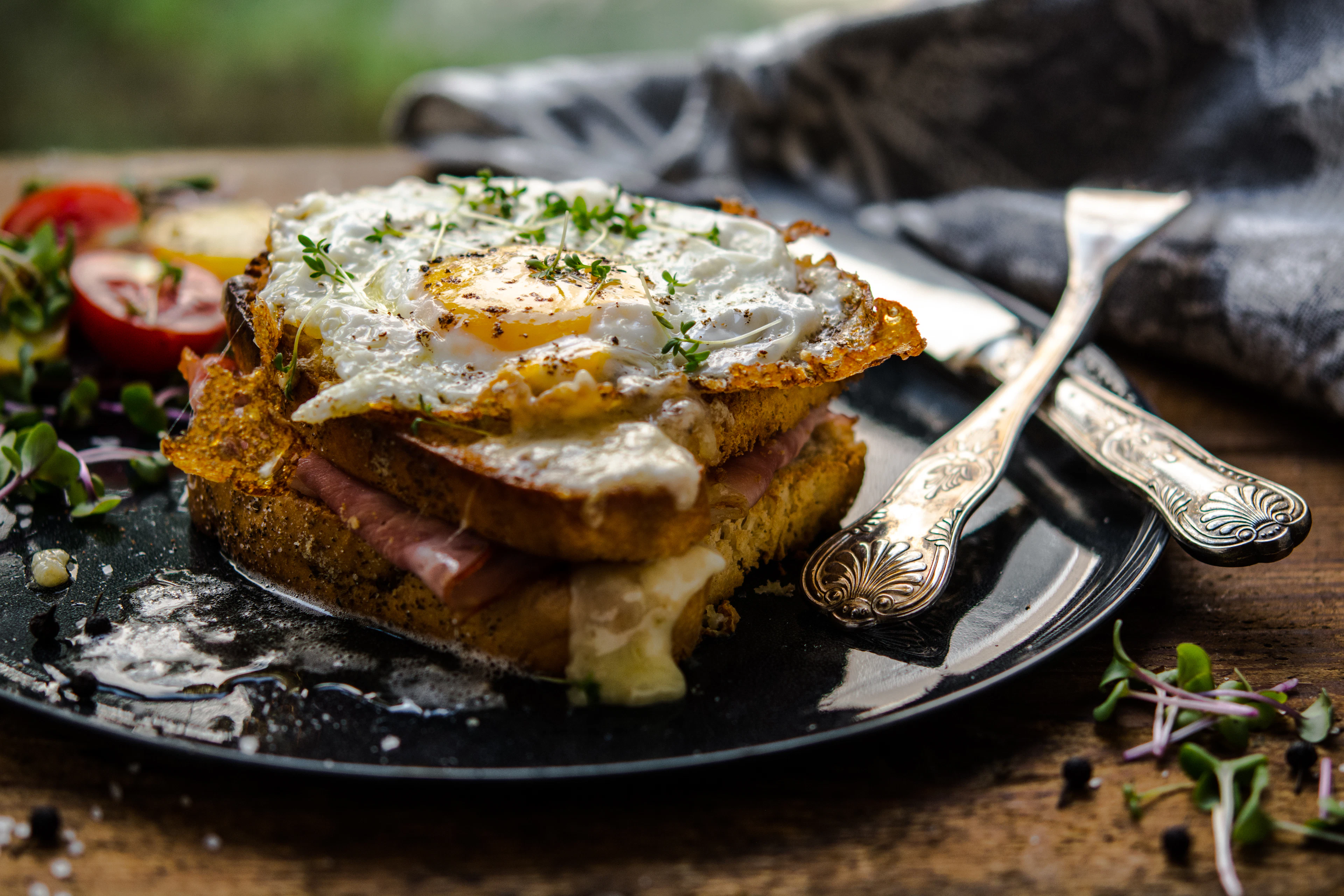
Top it with a fried egg and it becomes a croque madame — the egg is said to resemble a lady's hat.
Paris, France
48.86°N, 2.35°E
Related recipes


Comments (0)
No comments yet. Be the first to share your thoughts!