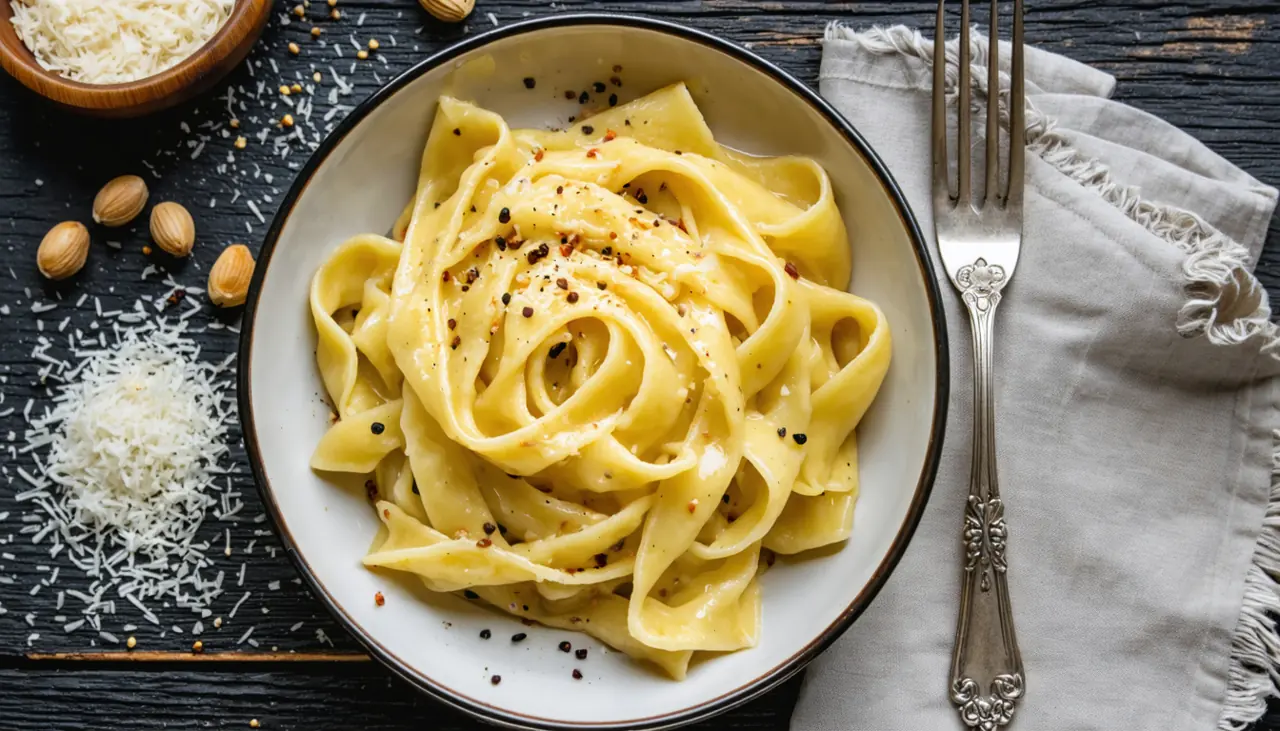
Cacio e Pepe (Cheese and Pepper Pasta)
A Roman classic of just three ingredients — pasta, Pecorino Romano and black pepper — turned into a glossy, peppery, cheese-coated sauce with nothing but starchy pasta water. Simple, but there is a real technique to get it silky instead of clumpy.
Servings
Ingredients
Nutrition
Per serving
Steps

Toast the pepper
Crush the peppercorns coarsely with a mortar or the bottom of a pan. Toast them in a dry, wide skillet over low heat for about 1 minute, just until fragrant. Turn off the heat and set the pan aside; this wakes up the oils in the pepper and tames any raw bite.
- 2 tsp black peppercorns
✅ Done when: the pepper smells toasty and the kitchen fills with its aroma

Cook pasta al dente
Bring a pot of water to the boil and salt it lightly (Pecorino is salty, so go easy). Cook the pasta 1–2 minutes less than the package says, so it stays very firm; it will finish cooking in the sauce. Before draining, scoop out at least 300 ml of the starchy cooking water and set it aside.
- 320 g or spaghetti
- to taste fine salt
✅ Done when: the pasta still has a firm bite at the centre, not fully soft

Make the cheese cream
In a bowl, whisk the grated Pecorino with about 120 ml of the reserved pasta water, a splash at a time, until you get a smooth, pourable cream with no lumps. Using water that has cooled slightly rather than scalding hot keeps the cheese from seizing into strings.
- 160 g (most of the cheese)
✅ Done when: the mixture looks like a smooth, loose paste with no dry clumps

Combine pasta and pepper
Lift the drained pasta straight into the skillet with the toasted pepper (no heat under it). Add a splash of the reserved pasta water and toss well so every strand picks up the pepper.
- 320 g cooked pasta
- 2 tsp toasted pepper (from step 1)

Add cheese cream off heat
With the pan off the heat (this is the key step: direct heat on hot pasta will make the cheese clump), pour in the cheese cream and toss vigorously, adding more pasta water a little at a time, until the sauce turns glossy and coats the pasta like a light cream. If it looks tight or stringy, add a touch more water and keep tossing.
- 20 g remaining , for finishing
✅ Done when: the sauce clings to the pasta smoothly, with no stringy or grainy bits

Serve right away
Divide onto warm plates immediately, finishing with an extra crack of black pepper and a little more grated Pecorino if you like. Cacio e pepe waits for no one — it is best eaten the moment it is tossed, while the sauce is still silky.
Toast the pepper
Crush the peppercorns coarsely with a mortar or the bottom of a pan. Toast them in a dry, wide skillet over low heat for about 1 minute, just until fragrant. Turn off the heat and set the pan aside; this wakes up the oils in the pepper and tames any raw bite.
- 2 tsp black peppercorns
✅ Done when: the pepper smells toasty and the kitchen fills with its aroma
Cook pasta al dente
Bring a pot of water to the boil and salt it lightly (Pecorino is salty, so go easy). Cook the pasta 1–2 minutes less than the package says, so it stays very firm; it will finish cooking in the sauce. Before draining, scoop out at least 300 ml of the starchy cooking water and set it aside.
- 320 g or spaghetti
- to taste fine salt
✅ Done when: the pasta still has a firm bite at the centre, not fully soft
Make the cheese cream
In a bowl, whisk the grated Pecorino with about 120 ml of the reserved pasta water, a splash at a time, until you get a smooth, pourable cream with no lumps. Using water that has cooled slightly rather than scalding hot keeps the cheese from seizing into strings.
- 160 g (most of the cheese)
✅ Done when: the mixture looks like a smooth, loose paste with no dry clumps
Combine pasta and pepper
Lift the drained pasta straight into the skillet with the toasted pepper (no heat under it). Add a splash of the reserved pasta water and toss well so every strand picks up the pepper.
- 320 g cooked pasta
- 2 tsp toasted pepper (from step 1)
Add cheese cream off heat
With the pan off the heat (this is the key step: direct heat on hot pasta will make the cheese clump), pour in the cheese cream and toss vigorously, adding more pasta water a little at a time, until the sauce turns glossy and coats the pasta like a light cream. If it looks tight or stringy, add a touch more water and keep tossing.
- 20 g remaining , for finishing
✅ Done when: the sauce clings to the pasta smoothly, with no stringy or grainy bits
Serve right away
Divide onto warm plates immediately, finishing with an extra crack of black pepper and a little more grated Pecorino if you like. Cacio e pepe waits for no one — it is best eaten the moment it is tossed, while the sauce is still silky.
The Story Behind the Dish
Cacio e pepe grew out of the simple, portable meals of shepherds in the Lazio countryside, who carried hard sheep's cheese, dried pasta and pepper on long days away from home. Pecorino kept well without refrigeration, and pepper was a prized, long-lasting spice, so together with pasta they made a filling meal from almost nothing.
Over time the dish moved into Roman trattorias, where it became one of the four pillars of Roman pasta alongside carbonara, amatriciana and gricia, all built on the same cured-cheese-and-pork pantry.
⭐ Why It's Famous
It proves that with just three humble ingredients and the right technique, you can make a sauce as rich and comforting as any cream-based pasta.
💡 Fun Fact
There is no cream, butter or oil in a true cacio e pepe; the sauce is entirely cheese, pepper and the starchy water the pasta cooked in.
Rome, Lazio
41.90°N, 12.50°E
Related recipes
Comments (0)
No comments yet. Be the first to share your thoughts!